Axolotl
Ambystoma mexicanum · Mexican Walking Fish
The cool-water oddball that breaks every fish rule
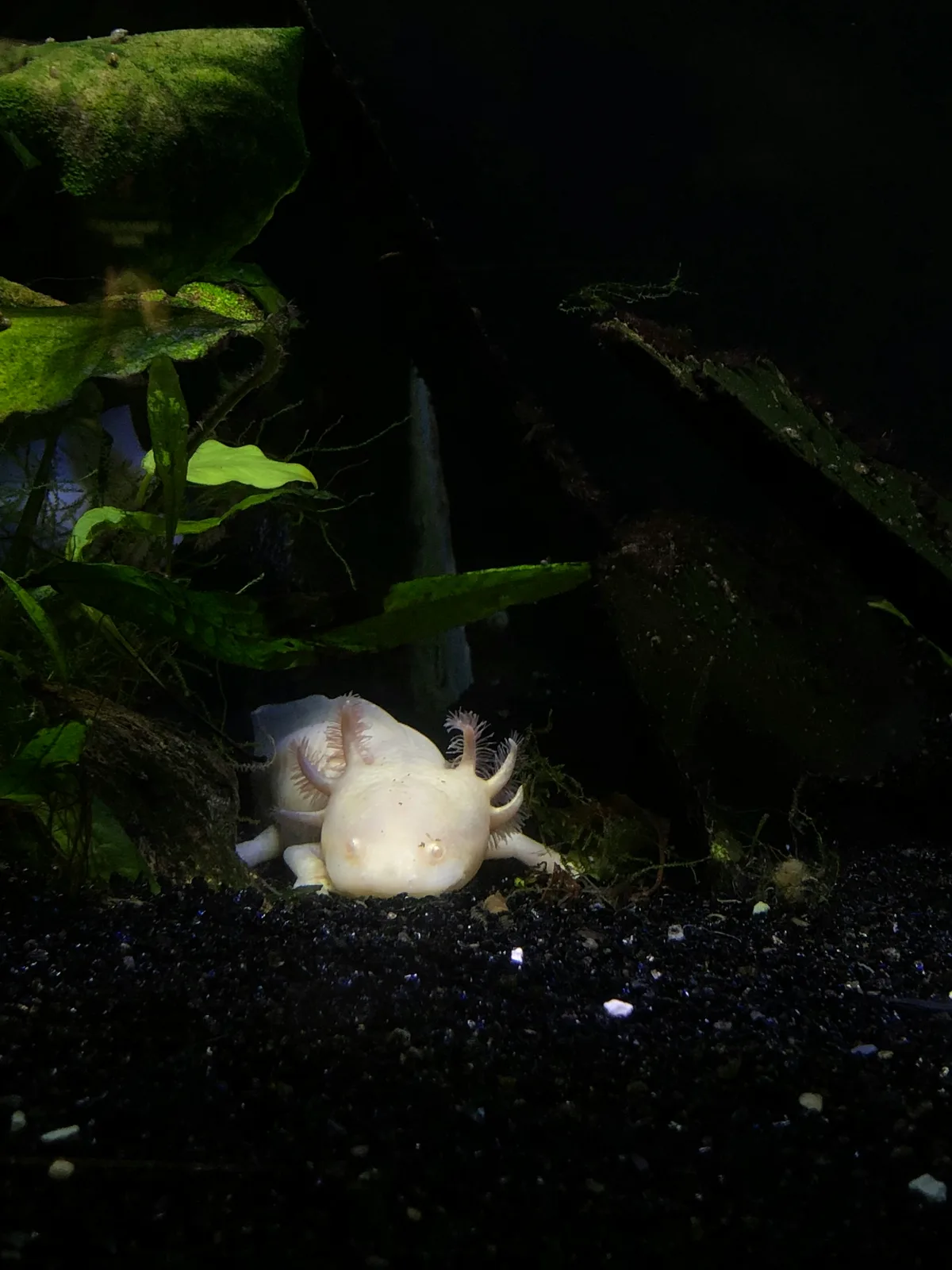
The axolotl (Ambystoma mexicanum) is a neotenic salamander from the lake complex around Mexico City that keeps its larval form — feathery gills, finned tail, fully aquatic — for its entire life. In a home tank it's kept as a solo, cool-water showpiece: no heater, no gravel big enough to swallow, and no fish tankmates. Hobbyists are drawn to them for their expressive faces, their famous ability to regenerate lost limbs and gills, and their 10–15 year lifespan — the same things that make them very different from any fish on this site.
- Tank size
- 20 gallons (75 L) for one, 30+ gallons (110 L) for a pair
- Temperature
- 16–18°C (60–64°F), never above 22°C (72°F)
- pH
- 7.4–7.6
- Hardness
- 7–14 dGH, moderately hard
- Temperament
- Solitary; no fish tankmates
- Diet
- Carnivore; earthworms, blackworms, sinking axolotl pellets
- Max size
- 23–30 cm (9–12 in)
- Lifespan
- 10–15 years
- Origin
- Lake Xochimilco, Mexico
Care
Axolotl care revolves around three things fish-keepers routinely get wrong: keeping the water cool (no heater), keeping the substrate safe (bare or fine sand), and keeping other animals out of the tank. This section covers the daily and weekly routine that keeps an axolotl healthy over its 10–15 year lifespan.
Tank Size
Adult axolotls need real floor space, not water column — they live on the bottom. A single axolotl wants 20 gallons minimum, and a pair needs 30+. This section walks through why smaller tanks fail and what footprint actually works.
Tank Setup
The axolotl tank is a gentle, cool, low-flow environment with no gravel that could be swallowed. This section covers substrate choice (bare or fine sand only), filter baffling, lighting, hides, and the lid every axolotl tank needs.
Water Parameters
Axolotls are extremely sensitive to ammonia and need a fully cycled tank with moderate hardness and neutral-to-slightly-alkaline pH. This section covers the ideal ranges, water sources, and how often to do water changes.
Water Temperature
Axolotls are cool-water animals — they don't tolerate aquarium heater temperatures and start to suffer above 22°C. This section covers the target range, why they don't need a heater, and how to cool a tank during summer heat.
Diet
Axolotls are carnivores that hunt by suction feeding. A good adult diet centers on earthworms, blackworms, and sinking axolotl pellets, with bloodworms and shrimp as variety. This section covers what to feed, how often, and what to avoid.
Tank Mates
The short answer for most axolotl keepers is: nothing. Fish nip at their gills, and axolotls will try to eat anything that fits in their mouth. This section covers why most common tankmates fail and when cohabiting two axolotls does and doesn't work.
Behavior
Axolotls rest on the bottom most of the day, yawn, gulp air at the surface, and come alive at feeding time. This section covers normal behavior, signs of a happy axolotl, and what stress looks like when water quality or temperature is off.
Breeding
Adult axolotls will spawn readily in home tanks once they're mature, and a single clutch can produce hundreds of eggs. This section covers sexing, what triggers spawning, and what to do with the eggs — breeding on purpose is easy; raising the fry is the hard part.
Lifespan
A well-kept axolotl lives 10–15 years in captivity. Most premature deaths come from a small list of causes: warm water, ammonia, gravel impaction, and fish tankmates. This section covers realistic lifespan and how to avoid the common early-death patterns.
Diseases
Axolotls mostly get sick from their water, not from pathogens. Fungus, bacterial infections, ammonia burn, and impaction are the big four. This section covers symptoms, treatment (including tubbing), and when to call a vet.
Morphs
Axolotls come in a wide range of color morphs thanks to decades of selective breeding. Wild type, leucistic, albino, melanoid, GFP, copper, and rarer morphs like mosaic and piebald all exist. This section covers what the common morphs look like and how rare each one actually is.
Regeneration
Axolotls can regrow limbs, tails, gills, and parts of their organs — it's one of the reasons they're studied in labs and one of the reasons hobbyists are often surprised how often they regrow after a nip or a scrape. This section covers what regenerates, how fast, and when to worry about an injury.
Metamorphosis
Axolotls are neotenic: they keep their larval form their entire lives and almost never metamorphose naturally. But it can happen — either spontaneously or through stress — and a morphed axolotl lives a very different (and shorter) life on land. This section covers why they usually stay larval and what metamorphosis actually means for the animal.
Floating
A floating axolotl is one of the most common panic questions in the hobby, and the causes range from benign (recent meal, stress) to serious (impaction, gas). This section covers how to tell what's going on and how to fix it.
Tubbing
Tubbing is the axolotl hobby's first-line treatment for fungus, wounds, and stress: you move the axolotl into a plain tub of dechlorinated cold water and do a 100% change every day. This section covers when to tub, how to set it up, and how long to keep at it.
Baby Axolotls
Baby axolotls — from hatchling larvae to small juveniles — need a very different setup and diet than adults. Live baby brine shrimp, frequent feedings, and separate housing are the basics. This section covers growth stages, feeding, and raising young axolotls.
For Beginners
Axolotls are often marketed as beginner pets because they're docile and exotic, but the cool-water requirement and no-tankmates rule trip up a lot of first-timers. This section covers what to expect, what goes wrong, and whether an axolotl is the right first aquarium pet.