How old is a 7 inch axolotl?
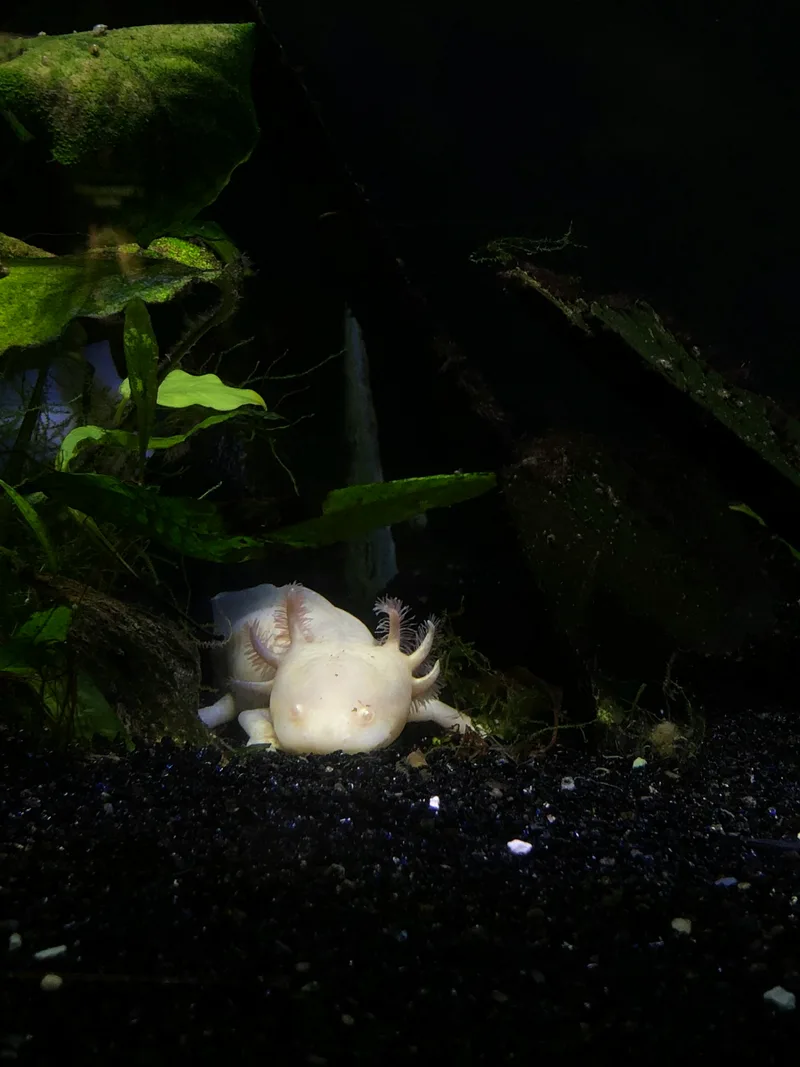
A 7-inch axolotl (Ambystoma mexicanum) is most likely around 6 to 9 months old, a juvenile that's grown most of the way to adult length but isn't fully grown or ready to breed. The catch is that size barely tracks age at all: that same 7 inches could mean anywhere from 5 months to well over a year. An axolotl grows as fast as it's fed, and breeders often slow that feeding down on purpose, so two animals the same length can be born months apart.
So How Many Months Old Is It, Roughly?
Six to nine months is the most likely answer. At 7 inches, your axolotl is a large juvenile, well past the tiny stage but not yet at full adult size.
The rule of thumb most keepers use is roughly an inch of growth per month for the first half-year or so, then a slowdown. A hatchling is barely a centimeter long. By a few months it's a few inches, by six months it's often pushing 6 or 7 inches, and after that the pace eases off as it approaches its adult length. So a 7-inch animal has usually put in most of that first fast stretch of growing.
Here's a rough way to place your own axolotl by size:
| Approximate length | Rough age |
|---|---|
| ~3 inches | 3 to 4 months |
| ~5 inches | 5 to 6 months |
| ~7 inches | 6 to 9 months |
| ~9 inches | 10 to 12 months, approaching adult |
Treat every row as a loose estimate, not a measurement. Two axolotls the same length can easily be months apart in age, and it's worth knowing why.
Why Can't You Just Tell Its Age From Its Size?
Because size follows food, not the calendar. An axolotl that's been fed well and often hits 7 inches months sooner than one on a leaner diet, even though both are the same animal with the same potential. Growth rate is the variable; age is just along for the ride.
This gets stretched even wider by breeders. Many of them deliberately hold back on feeding to keep young axolotls from growing too fast, because a smaller juvenile is easier to house, ship, and sell. An axolotl raised that way can be genuinely older than its length suggests. It isn't unhealthy, it's just been kept on the slow track on purpose.
There's a second reason a big axolotl doesn't automatically mean a young-but-fast one. Axolotls have what's called indeterminate growth, meaning they never fully stop growing. The pace crawls to almost nothing once they're adults, but it never hits zero. So a large axolotl might not be a fast grower at all. It might simply be old, having added a little length year after year.
Did you know? Most of an axolotl's growing happens in its first year, and that window doesn't reopen. An axolotl that was underfed as a juvenile won't fully catch up later, even once it's eating well. It tends to stay a bit smaller for the rest of its life. The early months set the ceiling.
Does 7 Inches Mean It's Fully Grown or Old Enough to Breed?
No on both counts. At 7 inches your axolotl is a large juvenile with growing left to do. Adults commonly reach 9 to 12 inches, so there are still a couple of inches ahead, added slowly over the coming months.
Being old enough to breed is a separate thing from length, and it comes with age rather than size. Axolotls usually reach sexual maturity somewhere around 18 months, and a fast-grown one can be physically large well before it's actually mature. A 7-inch axolotl shouldn't be bred. Breeding is hard on the female especially, and an animal that's still growing isn't ready for it. If yours is smaller and you want the estimate at the younger end of the range, the same size-tracks-feeding logic applies to a 3-inch axolotl's likely age.
Chasing an exact age is the wrong goal anyway. The only one who really knows when your axolotl hatched is the breeder who raised it. What actually matters for you is recognizing what 7 inches tells you: this is a still-growing juvenile, not a finished adult. Feed it accordingly, give it room to reach full size, and let the exact number stay a ballpark. The care is the part you control.