Do axolotls need a heater in the winter?
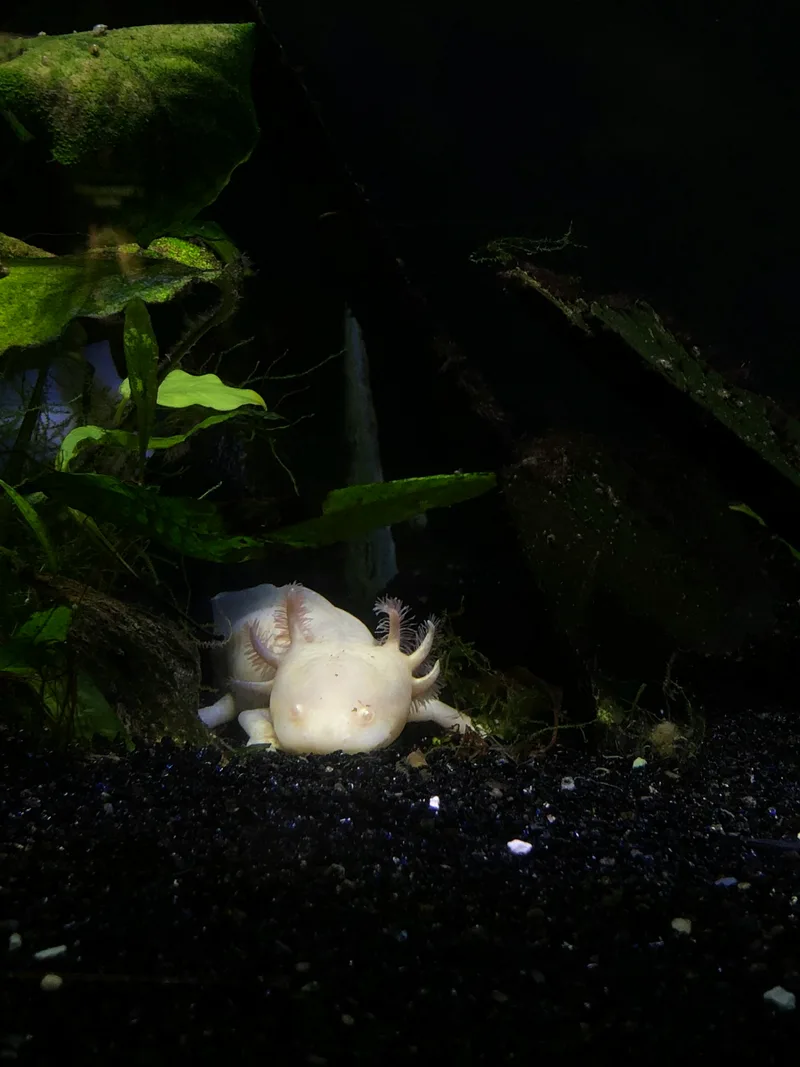
No, an axolotl almost never needs a heater in winter. Axolotls (Ambystoma mexicanum) are cold-water animals that stay healthy down into the low 50s°F (around 10 to 12°C), so a cooling tank is drifting toward their comfort zone, not away from it, and a heater is far more likely to harm them than help. There is one number worth watching this season, but it isn't a cold one. It's how fast the temperature moves.
How cold is actually too cold for an axolotl?
The ideal range for an axolotl is 60 to 64°F (16 to 18°C), but "ideal" and "safe" are two different lines. They stay perfectly healthy well below that, down into the low 50s°F and lower for short stretches. The number that should actually worry you is much colder than most winter tanks ever get: sustained water near or below about 41°F (5°C) is where cold becomes a genuine problem.
Compare that to the warm end. Anything above roughly 72°F (22°C) is the real danger zone, where an axolotl starts to suffer heat stress that can turn serious. The water has to be cold-blooded comfortable, not warm. So when your tank cools off in winter, you're drifting toward the safe side of the range, not away from it. A cool tank is the easy direction to err in.
| Temperature | What it means |
|---|---|
| 60 to 64°F (16 to 18°C) | Ideal. The comfortable target range. |
| 50 to 60°F (10 to 16°C) | Safe but cool. Fine all winter; the axolotl just slows down. |
| Below 41°F (5°C), sustained | Too cold. The one cold reading worth acting on. |
| Above 72°F (22°C) | Too warm. The genuine danger, and the reason heaters cause trouble. |
If the cold is fine, what's the real risk in winter?
The risk in winter isn't a low number on the thermometer. It's a fast change in that number. An axolotl is cold-blooded, which means it doesn't make its own body heat. Its whole metabolism, every chemical reaction keeping it alive, runs at the temperature of the water around it. When the water cools slowly, the animal's body shifts down to match and everything keeps ticking along, just slower. When the water changes fast, the body has to scramble to keep up, and that frantic catch-up is what stresses the animal.
This is exactly why the most common winter mistake backfires. A worried keeper sees a cold tank, pours in a jug of warm water to "help," and feels better for an hour. Then the warm water mixes and cools, the tank temperature spikes up and crashes back down, and the axolotl has been put through the one thing it can't handle gracefully. Steady and cool beats warm and bouncing, every time. If you do nothing at all, the water in a normal room moves slowly enough that the axolotl never notices.
Did you know? An axolotl is so committed to cool water that its wild relatives in the Lake Xochimilco complex near Mexico City never had any reason to handle warmth. The same trait that makes a chilly winter tank a non-problem is what makes a hot summer one genuinely dangerous.
What should you actually do if your room gets very cold?
For almost every home, the answer is to do nothing. A tank sitting at room temperature through winter sits well within the range an axolotl handles fine, even if the reading dips into the 50s°F. The instinct to intervene is the thing to resist.
If your room genuinely drops toward freezing, the goal shifts from heating to stabilizing. You want to slow down how fast the cold can reach the water, not warm the water up. Here's the order to work through, from least to most intervention:
- Leave it alone at stable room temperature. If the room stays above the low 50s°F, the tank is fine and touching it only adds risk.
- Move the tank off cold floors and away from drafty windows and exterior walls, which is where the fastest temperature swings come from.
- Insulate the sides of the tank with foam board or a blanket to slow heat loss and keep the water steady.
- As a true last resort, add a heater set to a low floor of around 60°F (16°C), purely to stop a near-freezing crash. The heater exists to catch a fall, never to warm the tank up.
Whatever you adjust, make the change slowly. A worried keeper confirming they don't need a heater usually wants to know the target range for an unheated axolotl tank next, and the short version is that room temperature is doing the job. The winter worry, it turns out, is backwards. A cool tank is the axolotl living squarely in its comfort zone, and the urge to warm it up is the single move most likely to cause the harm you were trying to prevent.