What are the signs of a sick axolotl?
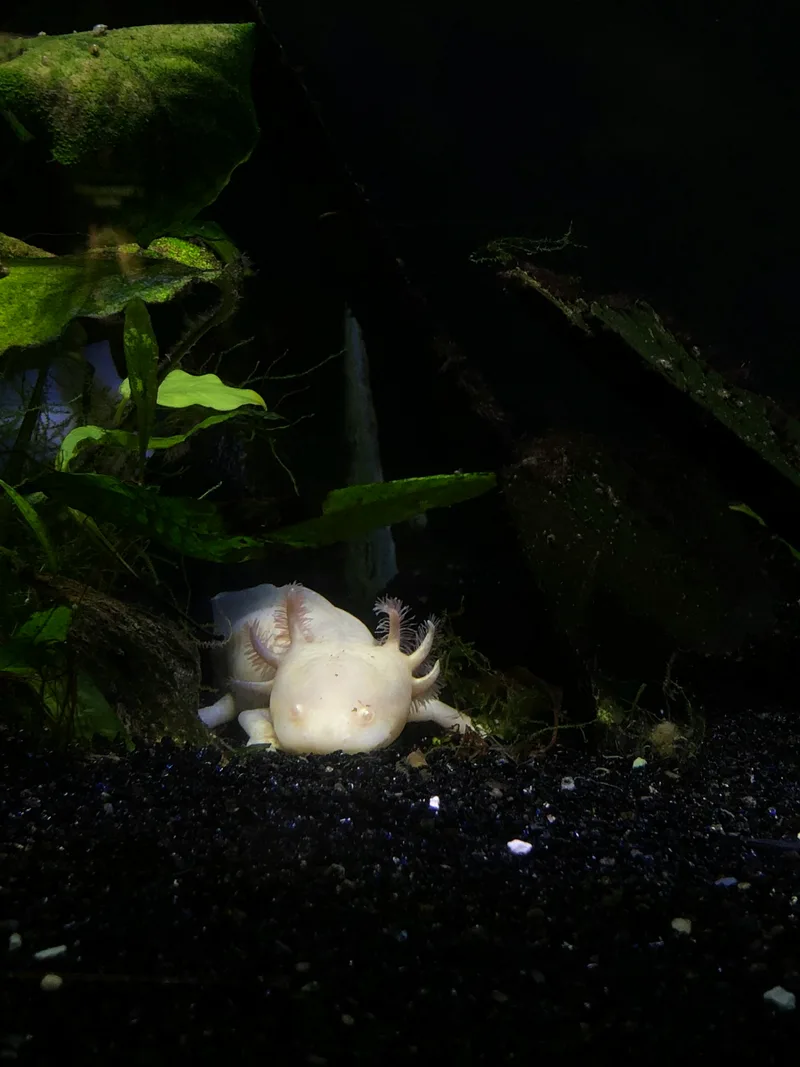
A sick axolotl (Ambystoma mexicanum) tells you through its body and the way it moves: gills that curl forward or shrink to bare stalks, a refusal to eat for more than a day or two, and floating it can't sink out of. Here's the part that catches owners off guard. Most of those signs aren't a disease the axolotl caught from anywhere. They're its skin and gills reacting to the water or the temperature, so the same handful of symptoms can mean very different things. And a few of them look almost exactly like an ordinary, healthy axolotl just being itself. Telling the real warning signs from the normal quirks, and knowing which ones mean act today, is the whole game.
What Should I Actually Look For?
Run your eyes over the animal head to tail and compare what you see against what a healthy axolotl looks like. Most of the difference between "sick" and "fine" is in the gills and the way the body sits and moves, and you can check all of it in about a minute.
- Gills: Curling forward over the head, or shrinking until the feathery filaments thin out and the stalks look bare, is a warning sign. Healthy gills stand out to the sides and wave gently, full and fringed, with fine filaments along each branch.
- Appetite: Turning down food for more than a day or two, especially food it usually lunges at, is worth watching. A healthy axolotl snaps at a worm with obvious interest, even if it's a slow, deliberate snap.
- Buoyancy: Floating it can't pull itself down from, or tipping and rolling, points to trouble. A healthy axolotl rests flat on the bottom and can sink or rise whenever it wants. A short, deliberate trip to the surface and back is normal.
- Color and skin: Pale, washed-out patches, red veins showing through the skin, red flushing in the toes or gill stalks, or a fuzzy white growth like cotton wool are all real signs. Healthy skin is smooth and evenly colored for its morph, and the gills carry a clean pink or red from blood flow, not an angry red flush.
- Sores and wounds: Open sores, raw patches, or whitened dead-looking tissue need attention. Small nicks and the odd missing toe usually heal on their own, since an axolotl regrows limbs and gills readily.
- Movement: Frantic darting around the tank, or the opposite, lying unresponsive and ignoring you when you come near, both signal stress or worse. A healthy axolotl is calm and a little lazy, mostly still, walking the bottom on its own schedule.
The single most useful comparison isn't against any checklist. It's against your own animal a week ago. Gills that looked fuller last Tuesday, a buoyancy that's new this morning, an appetite that dropped off over a few days. Change is the signal.
Which Signs Mean I Need to Act Today?
Not every sign on that list is an emergency, and treating them all as one leads to panic or to reaching for medication you don't need. Sort them by how fast the cause does damage.
Act today if you see red veins showing through the skin, red flushing in the toes, or a fuzzy white fungus taking hold. Red veins and red toes usually mean the water has gone toxic, with ammonia or nitrite building up to a level that's burning the tissue, and that gets worse by the hour. Fungus that's spreading is a real infection that takes ground if it isn't checked.
Fix the water now, then watch, if the main signs are curled gills and a lost appetite. These almost always trace back to water quality slipping or the temperature creeping up past where an axolotl can cope. They're the body responding to its surroundings rather than a disease, and once you correct the cause, recovery usually follows on its own.
Don't panic over a single skipped meal or a brief rest in an odd spot. Axolotls are slow, deliberate animals, and one quiet day is rarely the start of anything.
Whatever the sign, the first move is the same. Test your water for ammonia, nitrite, and nitrate, and check the temperature. That one step resolves the large majority of cases before any treatment enters the picture. If you've confirmed a genuine warning sign and need the actual treatment steps, the right way to nurse a sick axolotl back to health starts with stabilizing those exact conditions.
Why Do So Many of These Signs Trace Back to the Water?
An axolotl breathes largely through its skin and those external gills, so its whole body sits in constant chemical contact with the water around it. There's no thick scaly barrier between the animal and its tank the way there is on most fish. The gill filaments in particular are thin, richly supplied with blood, and fully exposed, which is exactly what makes them such good breathing surfaces and exactly what makes them the first thing to react when something in the water is off.
When ammonia or nitrite climbs, or the water warms past the high teens Celsius (the low 60s Fahrenheit), that exposed tissue responds directly. The gills curl forward and the filaments shrink back, pulling themselves away from water that's irritating them. Veins flush red as the tissue inflames. None of this requires a pathogen. The animal isn't "diseased" in any infectious sense yet, it's chemically reacting, the way your own eyes water and redden in a smoky room before anything is actually wrong with them.
That's the reason one piece of care advice, cool and clean and properly cycled water, prevents most of the signs in the checklist at once. And it's why reaching for medication before you've tested the water usually misses the real cause. The exact numbers to test for and aim at are spelled out in the target ranges for ammonia, nitrite, temperature, and pH, and hitting them undoes more symptoms than any treatment in a bottle.
Is It Sickness, or Just a Stressed-Out Axolotl?
The early signs of illness and the signs of plain stress overlap so much that a worried owner can easily read too much into normal behavior. Knowing which side of the line you're on changes what you do next.
Curled gills, a tail tip that hooks upward, and hiding more than usual are stress responses. They're the axolotl reacting to something it doesn't like, warm water, a too-bright light, a tankmate crowding it, or being handled recently, and they tend to settle once you remove whatever's causing them. Caught early and fixed, stress signs like these rarely turn into actual disease.
What's crossed over into real sickness is different in kind, not just degree. A fuzzy white fungus, open sores, whitened dead tissue, red veins flushing through the skin. Those won't resolve just because you dimmed the lights or dropped the temperature a couple of degrees, because there's now a process running that needs treating, not just a stressor to remove.
If your read is that the cause is stress rather than illness, the fuller picture of what a stressed axolotl looks like and what sets it off is worth knowing, because most of what looks like the start of disease is an animal telling you to fix its environment. Reading an axolotl, in the end, is less about memorizing a list of diseases and more about noticing change. The same animal, looked at against how it was last week, is the most reliable diagnostic you own, and getting the water right answers most of what the body is reporting.