How fast do axolotls regenerate?
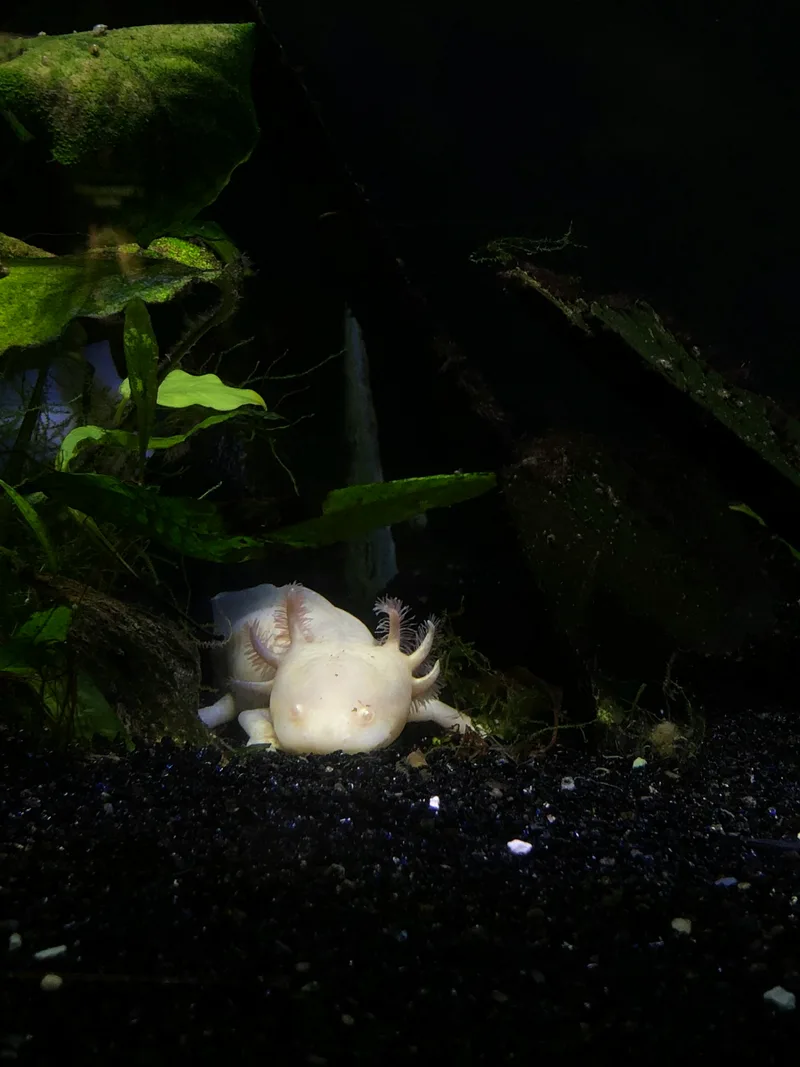
A young axolotl (Ambystoma mexicanum) regrows a small lost limb in roughly 40 to 60 days, with a pale bud showing within the first week or two. Gills come back faster, often in a few weeks; a whole leg takes longer. Here is the part that catches owners out: warming the tank to speed things along will slow healing down or stop it cold, because the one lever that actually governs the pace is temperature, and an axolotl heals best in cool water.
How long does a lost limb or gill actually take to grow back?
Give it time measured in weeks, not days. In the first week or two after an injury, the wound closes over and a pale rounded bud forms at the stump. This bud is the blastema, a mass of unspecialized cells that will become the new limb. Over the following weeks it lengthens, tiny digits or filaments push out, and color fills in. For a young axolotl, a small limb is usually back to full shape somewhere around 40 to 60 days.
Different body parts run on different clocks. Feathery gills, which are soft and simple, come back fastest. A nipped toe is quick. A whole leg, with its bone, muscle, and joints, is the slowest of the common injuries because there is simply more to rebuild.
These are ranges, not a stopwatch. A healthy adult is slower than a juvenile, and a large ragged wound takes longer than a clean small one. If your axolotl is eating, active, and the stump looks smooth rather than fuzzy or red, slow progress is still progress.
| Body part | Rough timeframe (young axolotl) | Notes |
|---|---|---|
| Gills | A few weeks | Fastest to return; soft tissue, simple structure |
| Toe or digit | 2 to 4 weeks | Small clean wounds close and rebuild quickly |
| Tail tip | 4 to 8 weeks | Depends heavily on how much was lost |
| Whole limb | 40 to 60 days | The slowest common injury; bone, muscle, and joints all rebuild |
Does tank temperature change how fast it heals?
Yes, but not in a way you should ever use. Regeneration is a metabolic process, and like most things an axolotl's body does, it runs faster in warmer water and slower in cold. The temptation is obvious: nudge the heater up, heal faster. Don't.
Axolotls are cool-water animals, comfortable at 16 to 18°C (60 to 64°F) and stressed above about 22°C (72°F). Warming the tank to rush a regrowing limb does the opposite of what you want. Heat stresses the animal, weakens its ability to fight off infection, and invites fungus into an open wound. An infected stump derails healing far more than cool water ever slows it. You can lose weeks, or the limb, chasing a few days.
The reason cool water still works is that the tissue rebuilds at whatever pace the animal's metabolism allows, and a calm, unstressed axolotl in stable conditions has the steadiest metabolism of all. There is nothing for you to speed up. Stable, clean, cool water lets healing proceed at its natural safe rate, which is the fastest rate that doesn't cost the animal anything.
Does age, size, or the type of injury change the speed?
Three things move the number: age, size, and how the injury happened.
Juveniles regenerate fastest and most completely. A young axolotl rebuilds a limb cleanly, with every digit in place. As an axolotl gets older and larger, regeneration slows, and the regrown part can come back slightly less perfect than the original. This is normal. An older animal taking longer is not a sign that something is wrong, just a sign that it is older.
The injury itself matters too. A clean, small wound, like a single nipped toe, closes quickly and regrows on the faster end of the range. A large or ragged injury, the kind that happens when two axolotls are housed together and one bites the other, takes longer because there is more tissue to repair and a bigger opening for infection. This is one of the practical reasons axolotls are kept alone: limb nipping between tankmates is common, and every bite restarts the clock.
Did you know? An axolotl can lose and regrow the same limb over and over across its life with almost no loss of quality. Where most animals seal a wound with scar tissue, an axolotl rebuilds the original structure, bone and all, every single time.
What should a healthy regrowing limb look like week by week?
A normal regrowth follows a recognizable order. First the wound closes over and stops looking raw. Then a pale, smooth, rounded bud forms at the stump, the blastema. Over the next few weeks the bud lengthens and tiny digits or gill filaments begin to appear, looking almost translucent at first. Finally color and detail fill in until the new part matches the rest of the animal. The early bud often looks like a small white nub, and that white nub is exactly what you want to see.
What you do not want to see is fungus. A fungal infection shows up as cottony white fuzz, often with a stringy or fluffy texture, which is different from the smooth, solid surface of a healthy blastema. Reddening, swelling, or a stump that makes no visible progress over many weeks are also signs to check your water and consider a vet rather than wait. Gills that stay shrunken or never get their feathery shape back are often the clearest sign of a water-quality problem holding axolotl gills back, since gill condition tracks water cleanliness more directly than almost anything else on the animal.
The honest line for a worried owner is this. Smooth bud, slow and steady change, animal still eating: normal. Cottony fuzz, redness, swelling, or no change at all over weeks: time to act. Your job is not to speed regeneration up but to stay out of its way. Keep the water cool and clean and the animal unstressed, and the axolotl's own machinery does something most of the animal kingdom can't, rebuilding the limb from scratch. The fastest healing is the one you don't interfere with.