Why is my axolotl always floating?
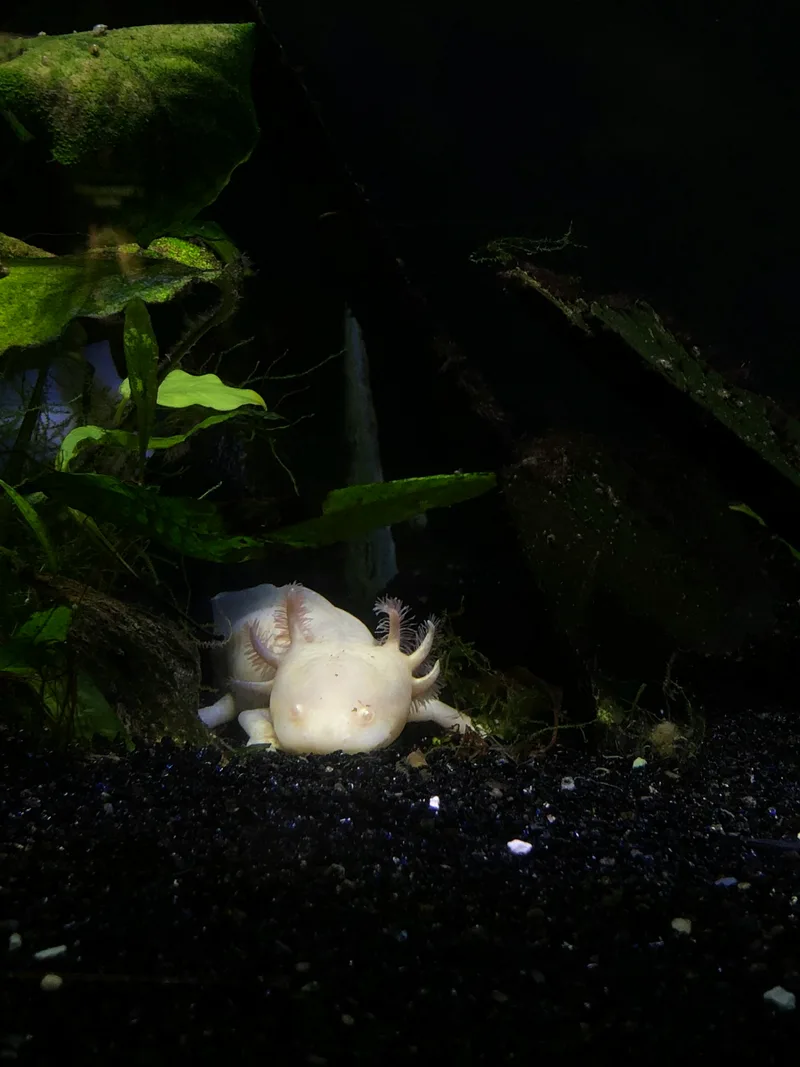
Your axolotl is parked at the top of the tank, tail-up, paddling back down only to drift right back to the surface. It's floating because gas is trapped inside its body, usually swallowed air or gas from digestion, and an occasional bob up like this is normal. What matters is whether it can stay down once it gets there. An axolotl that pops straight back up every time, or rides at the surface for days, is dealing with constipation, a backed-up gut, or bad water rather than a stray bubble. Telling those two apart is the whole game, and the test takes about a minute.
Is This Floating Normal, or a Problem?
Before anything else, find out which kind of floating you're dealing with. Gently nudge your axolotl down toward the bottom with a soft net or a light puff of water from a turkey baster. If it settles and stays, walks the bottom, and goes back to acting normal, it's just carrying a bit of air and there's nothing to fix. If it pops straight back up and can't hold itself down, or it's been stuck at the surface for days, treat it as a problem.
The animal's other behavior tells you as much as the floating itself. A healthy axolotl that happens to be buoyant still eats, still moves around, and holds its gills out in relaxed feathery stalks. One in trouble starts refusing food, curls its gills forward against its head, and may tip onto its side or roll belly-up.
Here's the quick read, harmless on the left, worth acting on the right:
- Settles when you nudge it down vs. pops right back up to the surface
- Still eating normally vs. refusing food for more than a day
- Gills held out and relaxed vs. gills curled forward against the head
- Walking the bottom between trips up vs. stuck at the surface for days
- Floating on an even keel vs. tipped sideways or upside-down
If your axolotl checks the boxes on the left, you can relax and wait it out. If it's landing on the right, the next two sections sort out why and what to do.
What's Actually Making My Axolotl Float?
Floating isn't one problem, it's a handful of different causes that all end the same way: gas inside the body the animal can't easily shed. Matching your situation to the right cause is what tells you whether to wait or to act.
Swallowed air is the most innocent version. An axolotl that eats fast, or sits under a strong air stone or a filter outflow that churns the surface, gulps air along with everything else. This usually passes on its own within a day or two and needs nothing from you.
Constipation or impaction is the most common cause that actually needs attention. The gut backs up, gas builds behind the blockage, and the animal floats higher than it should. The usual trigger is gravel small enough to swallow, which axolotls do readily because they feed by suction and take in whatever's near their food. A single heavy meal can do it too. This is the floating that lingers and comes paired with a refused dinner.
Waterlogged or unsoaked food is a quieter cousin of impaction. Dry pellets dropped straight into the tank keep swelling after they're eaten, expanding in the gut and producing gas.
Poor water quality is the one that masquerades as a buoyancy problem but is really a chemistry problem. Ammonia in an uncycled or dirty tank irritates the animal, and it responds by sitting at the surface with its gills curled forward. The floating is a symptom of the water, not the gut.
Of these four, impaction and ammonia are the two that need you to do something. The other two resolve on their own.
| Likely cause | What you'd also notice | What it means |
|---|---|---|
| Swallowed air | Acts normal otherwise, eating fine, floats briefly then settles | Harmless, passes in a day or two on its own |
| Constipation / impaction | Refusing food, floating for days, recent gravel or a big meal | Needs action: fast it, and escalate if it doesn't clear |
| Waterlogged food | Floating after meals, dry pellets fed straight from the tub | Easy fix: presoak food, fast briefly to let the gut clear |
| Ammonia / bad water | Curled-forward gills, surface-sitting, uncycled or dirty tank | Needs action: test the water and do a water change now |
If you're trying to gauge how much danger your axolotl is actually in while it floats, it's worth knowing exactly when a floating axolotl is in real trouble versus when the bobbing is harmless.
How Do I Get My Axolotl to Stop Floating?
Start with the cause you matched in the section above, because the right fix for one is the wrong fix for another. Fasting helps a gassy, recently-fed axolotl and does nothing for an ammonia problem; a water change fixes the ammonia and is pointless if the issue is a swallowed bubble.
If it's swallowed air or a recent meal, the fix is patience. Don't feed for two or three days and let the gut work through what's in there. The air will pass and the animal will settle back down.
If pellets are the problem, soak them in a cup of tank water for a few minutes before feeding so they finish swelling outside the axolotl instead of inside it. Earthworms and blackworms don't have this issue, which is one reason they make a better staple.
If the water is the cause, test for ammonia and do a water change right away to bring the level down, then deal with the reason it rose in the first place. An uncycled tank, a missed cleaning, or too few water changes are the usual culprits, and the floating won't truly resolve until the tank is holding stable, safe readings. Getting the water dialed in to the levels axolotls actually need is what keeps this from coming back.
When fasting alone doesn't clear a stubborn case, two escalation steps help. Tubbing means moving the axolotl into a tub of fresh, cool, dechlorinated water that you change every day, which gives it clean water away from whatever was wrong in the main tank. Fridging takes that a step further by keeping the tub in the refrigerator at around 41 to 46°F (5 to 8°C), which slows the gut down and eases a difficult bout of constipation. Both are real tools, but reach for them when the simpler steps haven't worked, not as the first thing you try the moment you see a float.
Why Do Axolotls Float in the First Place?
An axolotl is fully aquatic, but it doesn't have the swim bladder a fish uses to park itself mid-water and adjust its depth on the fly. Its buoyancy comes down to plain physics: whatever's inside its body. Add trapped gas, whether a swallowed bubble or gas churned out by a backed-up gut, and the animal becomes lighter than the water around it and rides up. It can paddle down for a while, but it can't valve the gas off the way a fish can bleed off its bladder, so it bobs back up until the gas actually leaves its body.
That's also why so many floating cases trace straight back to fish-keeper habits applied to an animal that isn't a fish. Gravel sized for a community tank is small enough for an axolotl to suck down with its food and block the gut. Water kept at tropical-fish temperatures runs the gut faster and stresses an animal built for cold lakes. A tank cycled and stocked on a fish-keeper's timeline leaves ammonia in the water the axolotl has to sit in. The fixes all work because they target the same thing from different angles: get the gas out, and stop putting more in.
Did you know? Axolotls breathe three ways at once. They pull oxygen through their feathery external gills, absorb it straight through their skin, and gulp air at the surface into a pair of simple lungs. A trip up for a mouthful of air is so routine that an occasional float barely registers as out of the ordinary.
So when your axolotl floats, it isn't broken. It's carrying gas it can't easily shed, and floating is the symptom, not the disease. Once you know which cause you're dealing with, the bobbing is almost always something you can fix at home: clear what's trapped, stop whatever let it build up, and the animal sits level on the bottom again.