What temperature should an axolotl be without a heater?
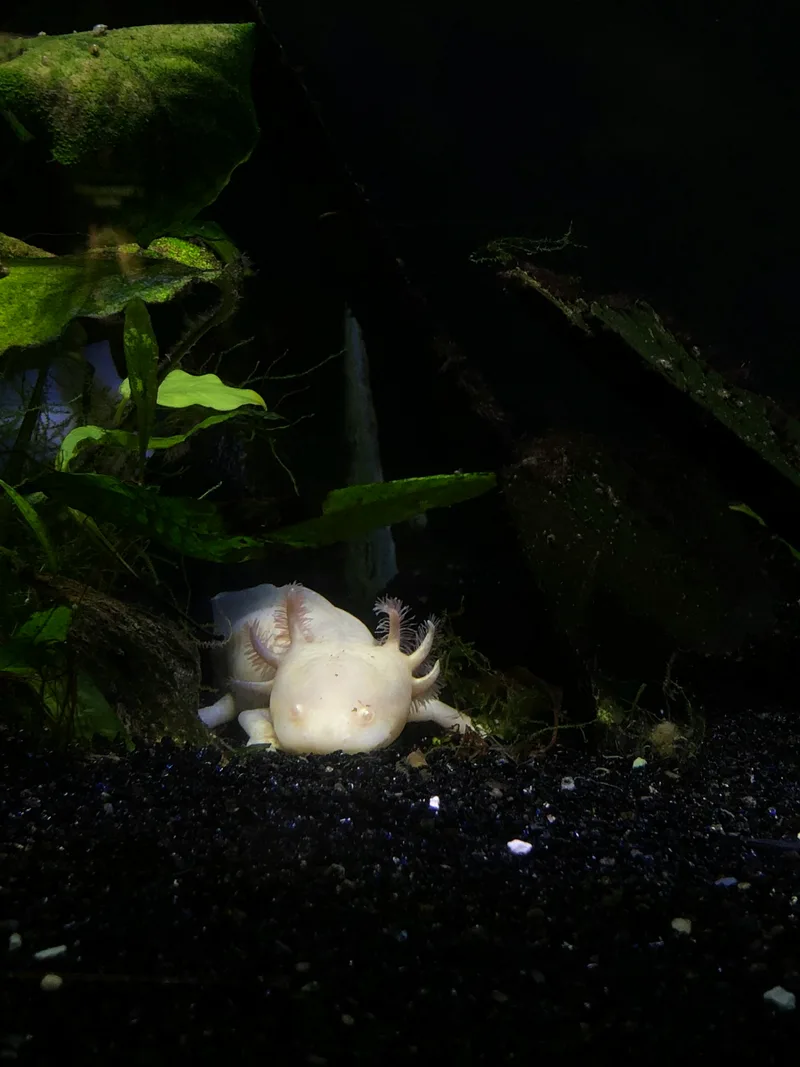
Axolotls (Ambystoma mexicanum) are one of the few aquarium animals where the heater is the wrong purchase entirely. They need cool water, 60 to 64°F (16 to 18°C), and a room that stays in that range gives them everything they need. The real risk runs the other direction: rooms that climb above 68°F (20°C) push water temperatures into a zone that stresses them within days, and most axolotl health problems trace back to summer heat creeping up unnoticed.
What Is the Safe Temperature Range Without a Heater?
The usable range runs from around 60°F (16°C) up to a ceiling of 68°F (20°C). The sweet spot is 60 to 64°F (16 to 18°C), where axolotls are fully comfortable and eat and behave normally. From 65 to 68°F (18 to 20°C), they can manage, but it's worth watching closely. Once the water climbs above 68°F (20°C), stress sets in. Above 72°F (22°C), conditions become genuinely dangerous.
A cool room eliminates any need for a heater. The goal here is entirely the opposite of what most aquarium animals require: you're trying to keep the water from getting too warm, not from getting too cold.
| Temperature Range | Status | What It Means for the Axolotl |
|---|---|---|
| Below 50°F (10°C) | Dangerously cold | Too cold for safe long-term keeping |
| 50 to 60°F (10 to 16°C) | Survivable but suboptimal | Metabolism slows; immune function is reduced |
| 60 to 64°F (16 to 18°C) | Ideal | Best range for health, appetite, and activity |
| 65 to 68°F (18 to 20°C) | Acceptable, monitor closely | Fine for short periods; watch for signs of stress |
| Above 68°F (20°C) | Stress begins | Immune suppression, appetite loss; act before it climbs further |
| Above 72°F (22°C) | Dangerous | Rapid health decline; intervention needed immediately |
Why Does Warm Water Hit Axolotls Harder Than Most Aquarium Fish?
Most aquarium fish come from tropical or subtropical environments and tolerate warmth because their bodies are built for it. Axolotls are salamanders that retain juvenile features into adulthood, a trait called neoteny, and they come from a high-altitude lake in central Mexico where their immune and metabolic systems evolved for cold water.
When the water warms above their threshold, three things happen at once. Their metabolism accelerates, which burns through energy faster than their food intake can keep up with. Their immune function drops, leaving them susceptible to infections they'd normally shrug off. And ammonia toxicity increases, because warmer water amplifies the effects of nitrogen compounds in a way that adds extra physiological load on top of everything else. None of these is a preference. They're physiology. The upper ceiling is a hard biological limit, not a sliding scale where a little extra warmth is mostly fine.
Did you know? Axolotls can regenerate lost limbs, gill filaments, and even parts of their heart. That regenerative machinery runs in cold water, and studies have found it slows significantly above 68°F (20°C). The same conditions that stress the animal also compromise the biology that makes axolotls so remarkable.
What If Your Room Runs Warm in Summer?
If your ambient temperature regularly pushes above 68°F (20°C), room temperature alone won't keep the tank in a safe range. Your options, roughly in order of cost and intervention:
- Move the tank to a cooler room or basement. If you have the space, this is the most effective option. An interior room without direct sun often stays several degrees cooler than the rest of the house.
- Run a clip-on fan across the water surface. Evaporative cooling can drop the surface temperature by 3 to 6°F. This works best when combined with keeping the tank away from windows and heat sources, and it does increase evaporation, so you'll need to top off more frequently.
- Float a sealed bottle of ice water. Fill a plastic bottle with water and freeze it, then drop it in the tank. It cools the water without introducing tap water directly. Rotating two or three bottles through the freezer keeps temperatures more stable than a single large change.
- Use a dedicated aquarium chiller. The most reliable option for climates that stay warm all summer. Chillers are an upfront investment, but they hold temperature within a precise range without the daily management the passive methods require.
Once ambient temperatures are consistently above 75 to 78°F (24 to 26°C), passive methods become unreliable for sustained periods. A chiller stops being optional at that point.
What Does Heat Stress Actually Look Like?
The first sign is usually the gills. When water chemistry shifts under heat, gill tissue reacts directly to the water it's in contact with, often before anything else changes visibly. Gills curling forward toward the body rather than fanning out naturally is one of the clearest early indicators.
Other signs to watch for: unusual floating or buoyancy problems, lethargy, and a loss of interest in food that persists across multiple feedings. Rapid gill movement is another. Any of these in warm weather should prompt you to check the water temperature immediately.
If you catch heat stress early, a partial water change with cooler dechlorinated water is the first move. Replacing 20 to 30% of the tank volume with water that's a few degrees cooler can bring the temperature down quickly without shocking the animal. Do it gradually rather than all at once. An axolotl floating near the surface without obvious cause is worth investigating as a possible temperature issue before looking elsewhere.
Does the Temperature Rule Change in Winter?
The same range applies year-round. Axolotls don't need warmer water in winter, and if your rooms stay in the 60 to 64°F (16 to 18°C) zone through the colder months, the tank is already where it needs to be. A home in a temperate climate often runs closer to ideal in winter than in summer.
If your winter rooms stay cool, your axolotl's tank is probably fine without any intervention at all. For most keepers in temperate climates, an axolotl tank without a heater isn't a compromise. It's the correct setup. The challenge isn't warming the water enough; it's stopping it from getting too warm. That inversion separates axolotl keeping from almost every other aquarium animal. Winter water temperatures for axolotls stay in the same range, and cooler rooms just make it easier to hold.