How to cure a sick axolotl?
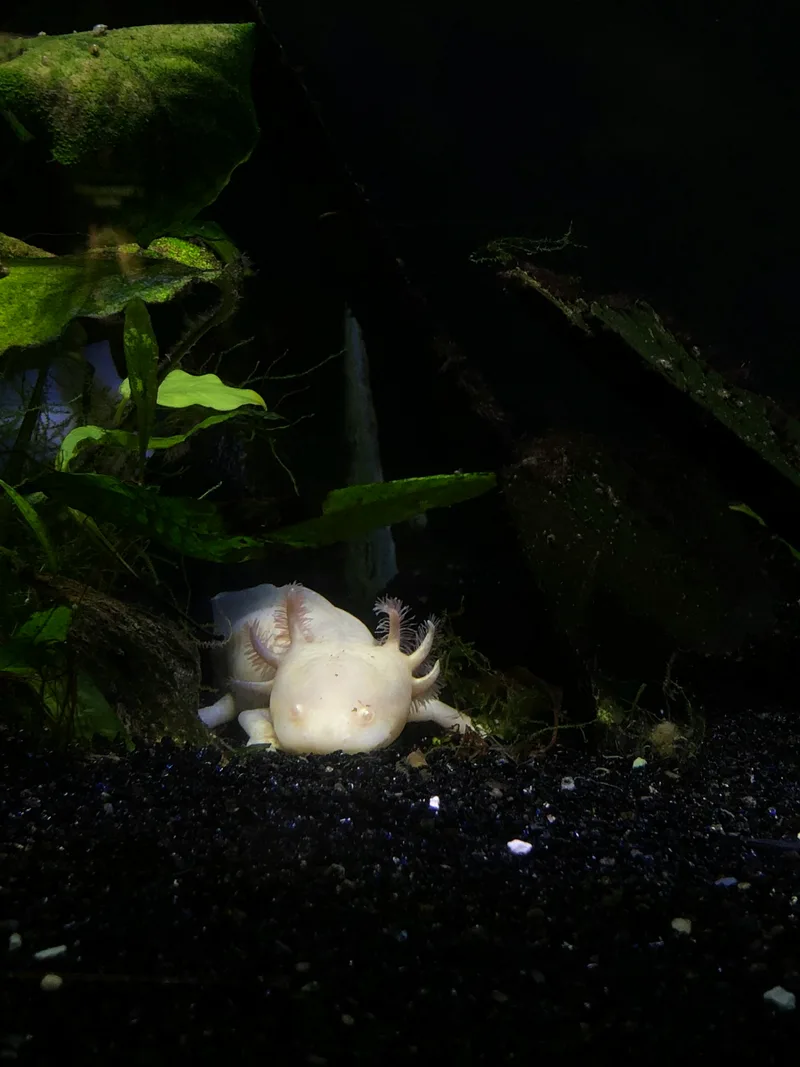
For almost any sick axolotl, the single most powerful thing you can do is get it into cool, clean, dechlorinated water, because most axolotl illness traces back to warm water and ammonia, and fixing the water alone resolves a surprising number of cases. But clean water is the foundation, not the whole cure. A cottony patch of true fungus and the fast-spreading white film of columnaris look almost identical on the body, and they call for nearly opposite handling. Telling those two apart, before you start treating the wrong one, is where curing a sick axolotl actually gets decided.
What Should I Do Right Now?
Stabilize first, diagnose second. Before you try to figure out exactly what is wrong, get the basics right, because the same few moves help almost any sick axolotl no matter the cause. Cool, clean water buys you time and often starts the recovery on its own.
Here is what to do in the next hour:
- Test the water for ammonia and nitrite. Any reading above zero on either is a problem, and ammonia is the most common reason an axolotl gets sick in the first place.
- Do a large water change, at least 50 percent, with cool dechlorinated water. Match the temperature so you are not shocking the animal with a sudden swing.
- Get the temperature down. Axolotls want water in the low 60s°F (around 16 to 18°C). Cool the room, turn off any lights or pumps adding heat, or float a sealed bottle of frozen water in the tank.
- If the axolotl is distressed, set up a clean tub. A plain plastic container of cool dechlorinated water, no substrate, no filter, with a full water change every day, is the safest place for a sick animal.
- Stop feeding for now. A sick or stressed axolotl will not miss a few meals, and uneaten food just fouls the water you are trying to clean up.
None of this requires a diagnosis. You are removing the things that make an axolotl sick and giving its body a calm place to recover. Once the animal is stable, you can slow down and work out what you are actually dealing with.
How Do I Tell What's Actually Wrong?
Most axolotl problems announce themselves on the body, so start by looking closely and matching what you see to a likely cause. You are not diagnosing a disease by name here, you are figuring out which direction to head.
| What you see | Likely cause | First response |
|---|---|---|
| Cottony or fuzzy tufts on one spot, often an old injury | True fungus | Cool clean water, then a salt or tea bath for the patch |
| Fast-spreading white or grayish film, frayed gill tips | Columnaris (bacterial) | Isolate in a clean tub, daily water changes, often a vet |
| Red, inflamed, or unusually pale gills; irritated skin | Ammonia burn | Test and fix the water immediately; this is a water problem |
| Floating, or sinking and refusing food | Impaction or gut stress | Fridging in cool clean water, stop feeding, no gravel access |
| Gills curled forward, skin sitting away from the body | General stress, poor water | Cool clean water and reduce disturbance |
The most useful thing about looking first is that it tells you whether you are facing a water problem or an infection. Red or pale gills and irritated skin point straight back at the water, and those cases often clear up with nothing more than the steps above. Cottony patches and spreading film point at fungus or bacteria, which need a little more.
Did you know? When an axolotl curls its feathery gills forward against its body, it is not sulking. The gill filaments are in direct chemical contact with the water, so the tissue reacts to ammonia or poor conditions before the animal does anything you would call a decision.
Is It Fungus or Columnaris?
This is the one distinction worth slowing down for, because fungus and columnaris look similar at a glance and are treated almost oppositely. Mistaking one for the other is the most common way home treatment fails.
True fungus shows up as discrete cottony tufts, like little wisps of cotton wool, usually on one specific spot. It tends to take hold on an old injury or a patch of damaged skin, and it stays put. Mild fungus is one of the more forgiving things an axolotl can get.
Columnaris is a bacterial infection, and it behaves differently. Instead of neat tufts, it spreads as a fuzzy white or grayish film across the skin, and it moves fast. It often hits the gills, fraying or eating away at the feathery tips. If what you are looking at is spreading across the body over hours rather than sitting in one place, treat it as columnaris, not fungus.
The reason this matters is that the treatments diverge. Salt baths and tea baths are gentle, and they help mild fungus. They are not enough for columnaris, which needs aggressive clean-water isolation in a tub with daily water changes and, in many cases, antibiotics from a vet. Treating columnaris as if it were fungus just buys the bacteria more time to spread, and on an animal whose gills can be lost in a day, time is the thing you cannot get back.
There is one mechanism worth knowing, because it ties both problems together: fungus and columnaris both take hold when warm water stresses the animal's immune defenses. A healthy axolotl in cool water fights off the same organisms it succumbs to when it is overheated. That is why cooling the water is step one no matter which of the two you are facing.
Did you know? Those feathery external gills are living tissue sitting right out in the water, which is why gill damage from bad water or columnaris shows up so quickly. It is also why those same gills can regrow once the water is fixed and the animal is healthy again.
How Do I Actually Treat It at Home?
Match the treatment to how serious things look, and lean on cool clean water for most of the work. The methods below run from mild to more involved, and for a lot of axolotls the first one is all you need.
Tubbing or fridging does most of the heavy lifting. Tubbing means keeping the animal in a plain container of cool dechlorinated water with a full water change every single day. Fridging is the same idea taken further, moving that container into a refrigerator to hold the water in the low 40s to low 50s°F (around 5 to 11°C). The cold slows any infection down and lowers the animal's metabolic load, which means less waste and less strain while it heals. The daily water change is the other half of the method: it keeps bacteria from rebuilding faster than the animal can fight them. If you are going to set this up properly, it helps to know how long an axolotl should stay tubbed and how to manage the daily changes.
Salt baths are the standard next step for mild fungus. A short bath in a measured aquarium-salt solution, done outside the main tub, helps lift a cottony patch. This is for fungus, not columnaris, and not for the gut or floating problems.
Indian almond leaf or black tea baths soothe irritated skin and gills. The tannins they release have a mild calming, protective effect, and they are about as gentle a remedy as exists for an axolotl. They will not cure a serious bacterial infection, but they help an animal that is stressed and raw recover its footing.
One warning that matters more than any dose: many fish medications are unsafe for axolotls. Axolotls are amphibians, not fish, and their permeable skin absorbs things a scaled fish would shrug off. Reaching for a bottle off the fish-medicine shelf can do more harm than the illness. When an axolotl genuinely needs medication, that is the point to involve a vet rather than guess.
What If It's Not Getting Better, or It's Serious?
Some cases are past what cool clean water can fix on its own, and it helps to know the signs so you do not wait too long. If the water is clean and cold and the animal is still going downhill, that is your signal to escalate.
Watch for the symptoms that point at a deeper, systemic problem: bloating or swelling, listlessness that does not lift, sores that keep spreading even in clean water, and a refusal to eat that stretches on for a week or more. These suggest a bacterial infection that has gotten into the body rather than something living on the skin, and that is not something baths and water changes reach.
This is where an exotics or amphibian vet earns their keep. A vet can prescribe proper antibiotics dosed for an amphibian, take a culture to identify what is actually growing, and treat the animal in ways you safely cannot at home. Not every town has one, but a call ahead to find the nearest exotics vet is worth making before you need them.
Some advanced cases are not survivable, no matter how well you care for the animal. If you have gotten the water cold and clean, isolated the animal, and it is still failing, you have not done something wrong. Some illnesses are simply too far along by the time they show, and knowing that ahead of time is its own kind of ground to stand on.
How Do I Keep This From Happening Again?
Nearly every illness on this page traces back to the same short list of husbandry mistakes, which is the good news: prevention is mostly about getting a few things right and then leaving them alone. Water too warm, ammonia from a tank that was never cycled or is overstocked, and stress from the wrong setup account for the large majority of sick axolotls.
The biggest single lever is temperature. Axolotls are cool-water animals, and keeping the tank reliably cool prevents the stress that lets fungus and bacteria take hold in the first place. It is worth working out how to hold an axolotl tank in the right range without a heater, since most homes run warmer than an axolotl wants.
The other lever is the water itself. A fully cycled tank that stays on top of ammonia and nitrite is the difference between an animal that rarely gets sick and one that is always fighting something, so it pays to lock in the water conditions an axolotl actually needs. Get those two things steady and most of what is on this page never comes up.
In the end, curing a sick axolotl is less about finding the right medication and more about giving the animal the cool, clean, low-stress water its body needs to heal itself. These are creatures that can regrow a whole limb. Most of the time the cure is not something you add to fix them, it is removing whatever was making them sick and letting the animal do the rest.