Is it dangerous if my axolotl is floating?
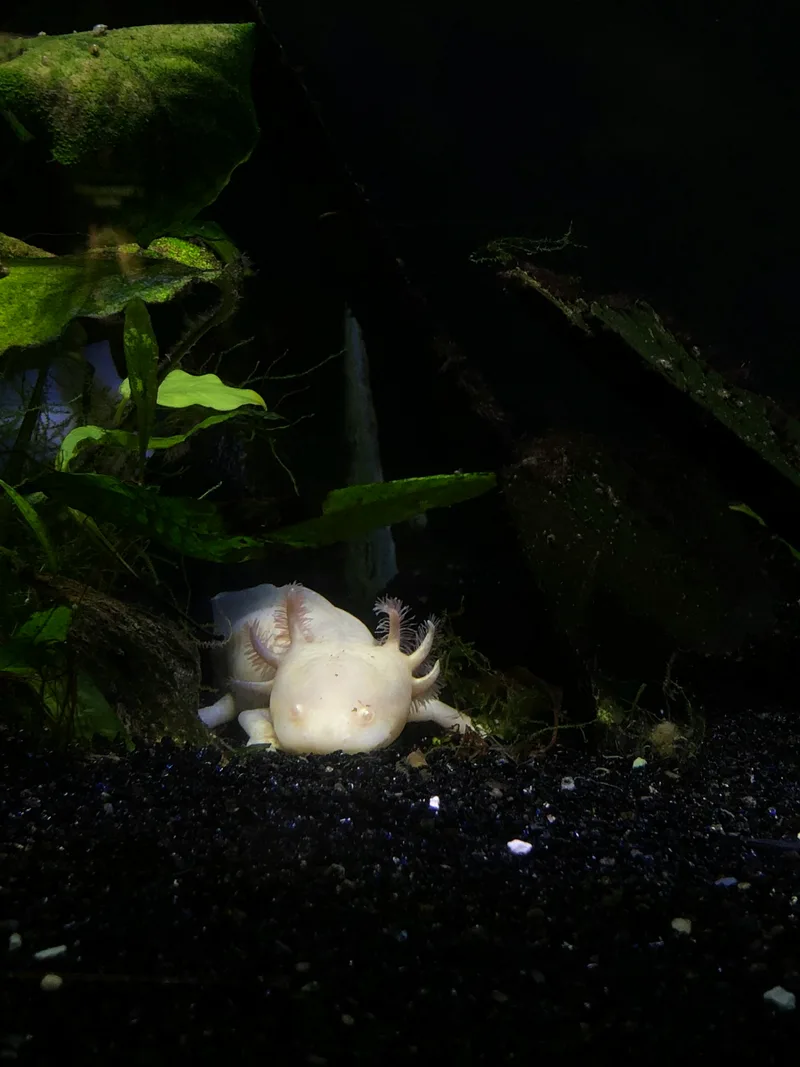
Floating on its own is usually not dangerous. Most axolotls (Ambystoma mexicanum) float because they gulped a little air at the surface or have some gas built up in the gut, and they settle back to the bottom within a day or two. But two axolotls can look identical bobbing at the surface, and one is fine while the other is in trouble. The difference isn't the floating. It's whether the animal can still right itself and walk back down to the bottom when it wants to, or whether it's stuck up there. That one distinction, a float it controls versus a float it can't escape, is what tells you whether to wait and watch or act now.
How Do I Tell a Harmless Float From a Dangerous One?
Here's the single test that sorts almost every case: gently nudge your axolotl or let a soft puff of water move it, and watch what it does. If it can paddle, sink, and reach the bottom under its own power, and it's still eating, the float is on the harmless end. If it's stuck at the surface no matter what it tries, or it's refusing food and looking sluggish, that's the side that needs action.
The benign floats come from gas the animal will work out by itself. A bit of swallowed air, a slow or slightly constipated gut, or a normal post-feeding bloat will all lift an axolotl for a while and then let it back down. None of these are emergencies, and none of them need you to do much beyond keep an eye on things.
The floats that need action come from somewhere the animal can't just digest its way out of. Swallowed gravel that blocks the gut, ammonia or other water-quality stress, and constant upside-down floating all fall here. Floating paired with refusing food is the combination to treat as a real warning, not a wait-and-see.
| What you're seeing | Likely cause | How worried to be | What to do |
|---|---|---|---|
| Floats sometimes but can swim back down | Swallowed air or mild gut gas | Not worried | Watch it; it'll settle on its own |
| Floats after eating | Normal post-meal bloat | Not worried | Withhold the next feeding or two |
| Floats constantly but stays upright and eats | Building gut gas or mild constipation | Mildly | Fast a few days, check the water |
| Floats upside down but is active and alert | Trapped gas, hard to release | Moderately | Test water, fast, lower the water level |
| Floats and won't eat or seems sluggish | Impaction, ammonia, or illness | Take it seriously | Test water now; consult an exotics vet if it persists |
Why Is My Axolotl Floating in the First Place?
An axolotl doesn't float the way a sick fish does, and the reason is built into its body. A fish floating belly-up usually has a problem with its swim bladder, the gas-filled organ that controls where it sits in the water. Axolotls never developed a working version of that organ. They're made to walk the bottom on four legs, not to hover. So when one ends up at the surface, it isn't a buoyancy organ misfiring. It's gas trapped somewhere in the body, lifting the animal whether it wants to rise or not.
That gas comes from one of two places. Either the axolotl gulped air at the surface, which can happen during feeding or in a tank with poor flow, or gas is building up inside a gut that's moving slowly or is blocked. Both are really digestion stories, not swimming stories. And that's the good news hiding in the biology: most trapped gas works its way out the same way any gas in a gut does, given a little time. The float passes because the cause passes.
Did you know? Unlike most aquarium fish, axolotls never developed a working swim bladder. They're built to walk the bottom on four legs, so when one bobs at the surface, it's gas in the body doing the lifting, not a buoyancy organ gone wrong.
What Should I Actually Do While My Axolotl Is Floating?
For a float that looks benign, you're mostly helping the gut clear and making sure nothing in the water is making things worse. Start by ruling out the one cause that won't fix itself, then give the digestion time.
- Test the water for ammonia and nitrite first. This is the cause that won't pass on its own, so rule it out before anything else. Both should read zero; if they don't, a water change is your first move.
- Gently guide the axolotl down to the bottom. Confirm it can reach the substrate and stay there when helped. If it can, you're on the harmless side.
- Withhold food for a few days. An empty gut has nothing to ferment and nothing to block, so fasting gives a gassy or slightly constipated axolotl the best chance to clear itself out.
- Lower the water level slightly. A shallower tank means the animal isn't fighting as much depth to reach the bottom, which takes the strain off while it sorts itself out.
- Pre-soak pellets going forward. Dry pellets can swell and trap air in the gut. Soaking them first keeps that from happening at the next feeding.
- Know when to escalate. If the float lasts past several days, the axolotl still won't eat, or it's looking worse, that's the point to research fridging (a controlled cool-down some keepers use for stubborn gut issues) and to consult a vet who treats exotics. Fridging is a step to look into if things drag on, not a first response.
Is Floating More Serious in a Baby Axolotl?
A young axolotl floats more easily and has less strength to fight its way back down, so the same float that's a shrug in an adult reads as a little more pressing in a juvenile. Their smaller bodies mean a small amount of trapped gas goes a longer way, and they tire faster trying to reach the bottom. The causes are the same, but the margin for waiting is thinner. If you're watching a young axolotl bob at the surface, the age-specific signs and timing are worth knowing before you decide to wait or act.
Whatever the age, the thing to keep your eyes on is the animal, not the float. The floating is almost never the emergency itself. It's a readout. What actually tells you whether your axolotl is in trouble is the rest of it: whether it's still eating, still able to reach the bottom when it tries, its gills full and its color normal. Watch those, and most of the time you'll see the float resolve the quiet way it usually does, with the axolotl walking itself back down to the bottom.