Is 50 degrees too cold for an axolotl?
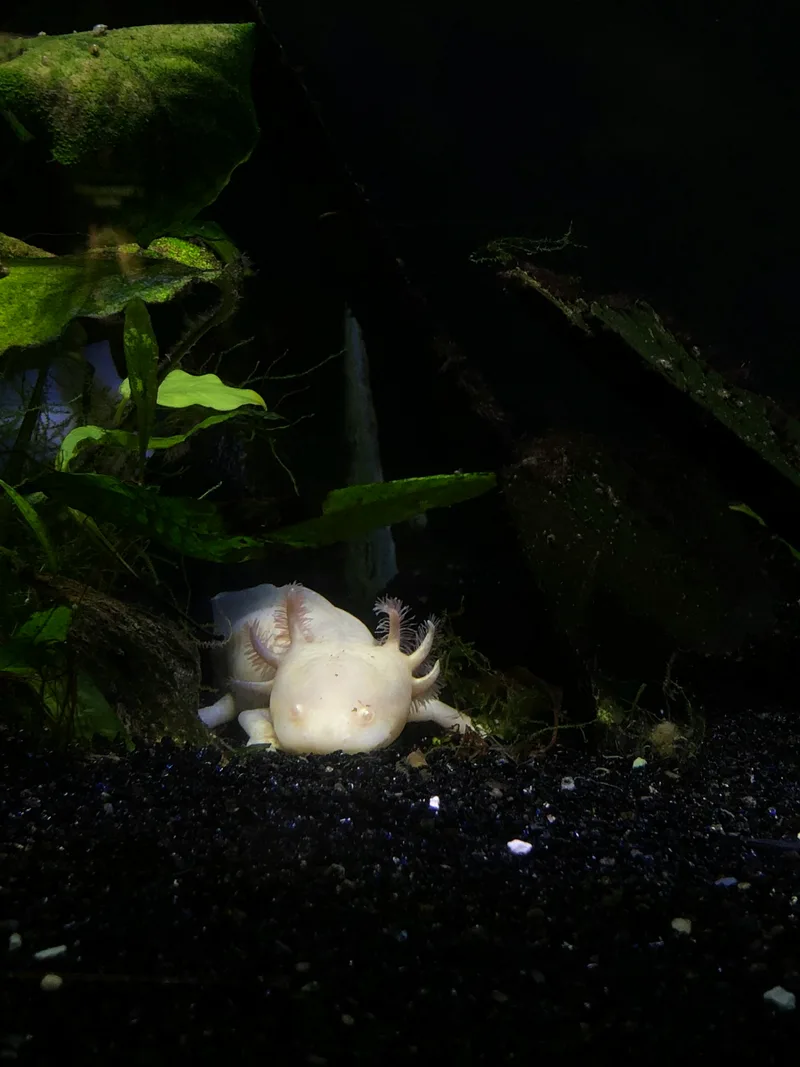
No, 50°F (10°C) is not too cold for an axolotl (Ambystoma mexicanum). It sits right at the bottom of the safe range, and a healthy axolotl in a tank that holds steady at 50°F will be fine. For this animal, cold is the safe direction. The temperature itself is almost never the problem, but a fast drop into the cold can be, and a tank that drifts too warm almost always is. So the question that decides whether your axolotl is in trouble isn't whether 50°F is too cold. It's how the water got there and how fast.
When does cold actually become a problem?
Steady cold and sudden cold are two different things, and only one of them is a problem.
A tank sitting at a stable 50°F is fine. Your axolotl will be slower and quieter, but it isn't being harmed. The trouble starts when the temperature moves fast. If your water drops several degrees in the space of a couple of hours, that swing stresses the animal more than the cold itself does, because its body can't adjust its metabolism that quickly. And if the water gets close to freezing and stays there, that's the one genuinely dangerous version of "too cold."
Here's how to tell which situation you're in:
- Steady 50°F. No action needed. The tank has simply settled at the cool end of the safe range.
- A fast drop of several degrees in a few hours. Slow it down. Bring the temperature back up gradually rather than all at once, and keep an eye on the animal for a day or two.
- Water approaching freezing (below the high 30s°F). Warm it, but slowly, over hours rather than minutes. A space heater in the room is gentler than anything you do to the water directly.
- Stress signs to watch for. Gills curled forward against the head, or refusing food for several days in a row. A cold, slow axolotl that still takes food when offered is a calm axolotl, not a struggling one.
Do I need to do anything about a 50-degree tank?
Usually nothing.
Axolotls don't need a heater, and a tank holding at 50°F doesn't need rescuing. If you want to nudge it up toward the 60 to 64°F (16 to 18°C) sweet spot, that's a comfort choice, not an emergency fix. Many keepers run their tanks at the cool end all winter without issue.
The job that actually matters runs the other direction: keeping the tank from getting too warm, especially in summer when room temperature climbs and the water follows it. That's the number worth watching.
To keep tabs on it, a cheap stick-on strip or a small digital thermometer is plenty. You don't need anything fancy. And if you do decide to change the temperature, change it slowly. That one rule covers almost everything that can go wrong with temperature in an axolotl tank. If you're weighing whether to add a heater to a cold tank, the short version is that warming is optional and rarely necessary, but doing it gradually is what keeps it safe.
Why does my axolotl barely move at 50 degrees?
A cold axolotl that's barely moving, eating less, and sitting on the bottom for long stretches is behaving exactly as it should. This is normal, and it reverses the moment the water warms back up.
The reason comes down to how a cold-blooded animal runs. An axolotl can't generate its own body heat, so its internal temperature tracks the water around it. When the water is cold, every chemical reaction in its body slows down, and metabolism is just the sum of those reactions. A slower metabolism means it burns less energy, needs less food, and has less reason to move. None of that is the animal struggling. It's the animal idling.
There's one practical thing that follows from this. A cold axolotl eats much less, so feed it less. Uneaten food left to rot is one of the fastest ways to foul the water, and cold water is exactly when an axolotl is least interested in cleaning its plate.
If cold is fine, what temperature is actually too much?
Heat is what kills axolotls in home tanks, not cold.
The full picture looks like this: the ideal band is 60 to 64°F (16 to 18°C), the tank is safe down to about 50°F (10°C), and the real danger begins above roughly 72°F (22°C). Sustained warmth is what causes stress, refusal to eat, and eventually serious harm. Cold, within reason, only slows the animal down.
| Temperature | Zone | What happens to the animal |
|---|---|---|
| Below ~38°F (3°C) | Too cold, near freezing | Genuine danger, especially if it stays there or arrives fast |
| ~50°F (10°C) | Cold but safe | Slower, eats less, sits still more; unharmed |
| 60 to 64°F (16 to 18°C) | Ideal | Active, feeding well, normal coloring |
| ~68 to 72°F (20 to 22°C) | Stressful | Restless, off its food, gills may curl forward |
| Above ~72°F (22°C) | Dangerous | Serious stress; sustained heat can be fatal |
The reason the safe range leans so far toward the cold end is the animal's origin. Axolotls come from the cool, high-altitude lake water around Mexico City, where the temperature rarely climbed. Their bodies are built for the cold end of the dial and have no real defense against sustained heat. So when your thermometer reads 50°F, you're looking at the direction an axolotl is made for. The number that should make you nervous isn't the one sitting low in winter. It's the one creeping up in summer.