When should you tub an axolotl?
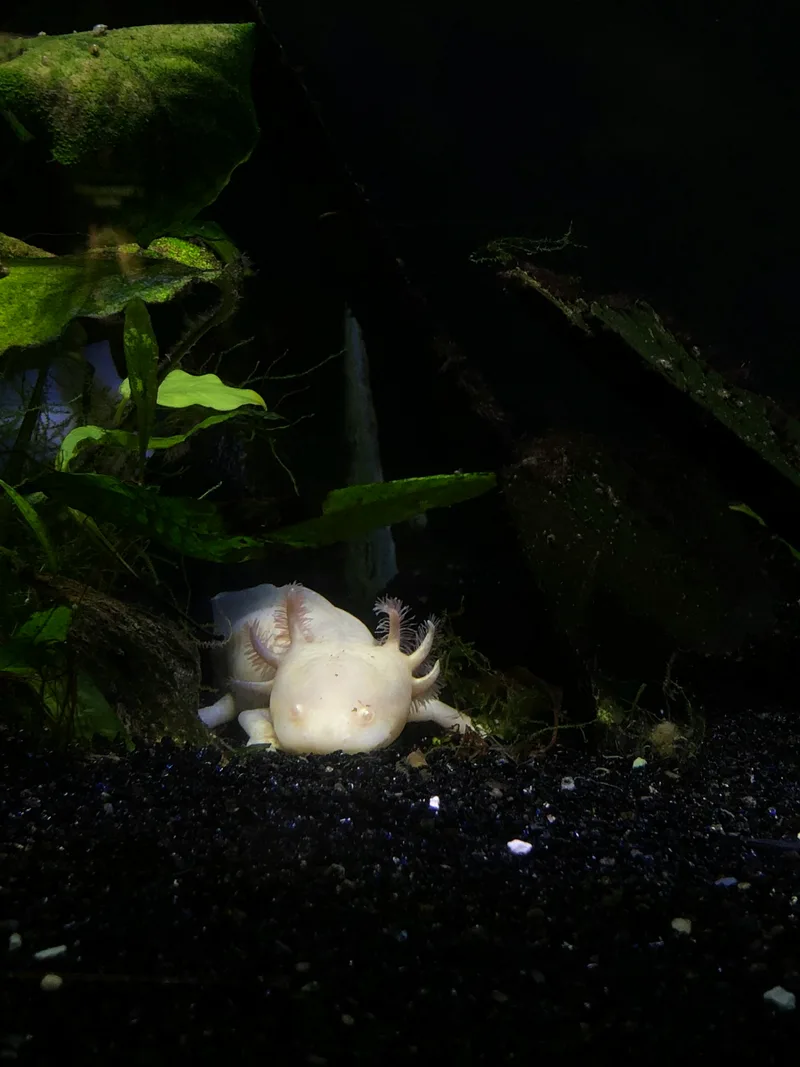
Tub your axolotl when the tank itself has become the problem: fluffy white fungus, an ammonia or nitrite reading the cycled tank can't bring down, a fresh wound, or a newly arrived axolotl that needs a few days of observation. Tubbing is first aid, not an emergency. An axolotl moved into a clean tub on day one of a fungus problem almost always recovers; the one that gets watched and waited on usually doesn't, and a few days of waiting is often the line between a five-day tub and a course of antibiotics from a vet who knows axolotls.
What Are the Specific Situations That Call for Tubbing?
The triggers fall into a short list. The decision is mostly about which one you're looking at.
Fungus. Fluffy white patches on the gills, body, or limbs. This is the most common reason owners reach for a tub, and the threshold is low: tub on the first day you can see real fluff (not the normal clear-to-greyish slime coat). Cool, daily-changed water will clear mild cases on its own within a few days.
An ammonia or nitrite spike. Any detectable reading on a liquid test kit. Axolotls are unusually sensitive to ammonia because their gills are in direct contact with the water. If your tank is reading even 0.25 ppm ammonia or any nitrite, and a water change plus filter check didn't bring it back to zero, the axolotl is safer in a tub while you fix the tank.
A new tank that hasn't cycled. Most new keepers buy the axolotl before they finish cycling the tank, or the tank crashes after a filter change or medication. A tub buys you weeks. You can keep an axolotl in a rotation of clean tubs for as long as it takes to cycle properly.
A new arrival. A freshly shipped axolotl needs a few days of observation in known-good water before it goes into a display tank. You're watching for travel stress, parasites brought in with the animal, and any wounds that didn't show in the seller's photos. Two to four days is usually enough.
A fresh wound. Torn skin, a missing toe, a damaged gill stalk. These heal cleanly in a tub because there's no biofilter, no decor, and no risk of secondary fungus from a tank with bioload. Tub until you see new tissue forming, usually four to seven days.
Suspected impaction. Axolotl can't pass food, hasn't pooped in days, looks bloated. Tub so you can see exactly what comes out (or doesn't) and rule out gravel ingestion. This one often escalates to fridging if the tub alone doesn't get things moving in 24 to 48 hours.
| Situation | Tub now? |
|---|---|
| Fluffy white fungus on gills, body, or limbs | Yes, on first sighting |
| Any ammonia or nitrite reading you can't fix in one water change | Yes |
| Uncycled or recently crashed tank | Yes, for as long as it takes to cycle |
| Newly arrived axolotl | Yes, for 2 to 4 days of observation |
| Fresh wound, torn skin, or damaged gill stalk | Yes, until new tissue forms |
| Suspected impaction (bloated, not pooping) | Yes, then escalate to fridging if no change in 24 to 48 hours |
| One bad day of behavior, no other signs | Usually no, fix the tank first |
| Heater failure pushing the tank above 22°C (72°F) | Only if you can't cool the tank quickly |
How Do I Tell If It's Bad Enough to Actually Tub?
Some of these triggers have look-alikes. Knowing the difference saves you a tub when the tank just needs a water change, and saves the axolotl when it doesn't.
The slime coat versus real fungus question comes up constantly. Healthy axolotls have a thin, clearish-grey slime coat that catches the light and sometimes drifts off in small wisps after handling. That's normal. Real fungus is opaque white, fluffy or cottony, and you can usually pick out individual strands sticking off the gill stalks or skin. If you can't tell, take a clear photo under tank lighting and compare to images of confirmed fungus. The fluff stays put; the slime drifts.
A stressed-but-fine axolotl looks different from one that needs intervention. Watch for these:
- Gills curled forward over the head instead of fanned out behind it. This is a classic ammonia or nitrite response.
- Tail tipped forward along the body, with the tip pointing toward the head rather than trailing back. Another ammonia tell.
- Floating, especially upright, for more than a few minutes at a time. Often a digestion or water-quality issue.
- Refusing food for more than two days, in an axolotl that normally eats well. One skipped meal is fine, three or four is not.
- Any visible wound or fluffy white patch that wasn't there yesterday.
- Any detectable ammonia or nitrite reading. "Almost zero" is not zero.
If you see two of these at once, you're past the "watch and wait" stage. Tub.
The reverse is also true. An axolotl that hides for a day, ignores one feeding, or paces the glass for an evening is not necessarily a tubbing case. Test the water first. If the numbers are clean, the temperature is in range, and the axolotl is otherwise normal, give it 24 hours before reaching for a tub.
Why Does Tubbing Work as First Aid?
A tub is a plastic container with cool, dechlorinated water and nothing else: no filter, no substrate, no decor. That sounds like less care, not more. It works because of what it strips away.
A cycled aquarium runs on a biofilter, a colony of bacteria that converts ammonia to nitrite to nitrate. That filter is what keeps the tank safe under normal conditions, but it's also what fails when something goes wrong. A medication kills the bacteria. A power outage starves them. A new fish brings in an unfamiliar load. When the biofilter is the problem, no amount of water changing inside the tank fixes it fast enough.
A tub has no biofilter to protect, and that's the point. You change 100% of the water every 24 hours. Whatever ammonia, nitrite, or harmful organic compound has built up leaves with the old water. The axolotl wakes up the next morning in chemically fresh water again, and again the morning after that.
The biology behind why this matters lives in the gills. Axolotl gills aren't just for breathing oxygen. The feathery stalks are some of the most exposed living tissue in the freshwater hobby, in continuous chemical contact with everything dissolved in the water. Ammonia, nitrite, fungal spores, dissolved medication: all of it reaches the gill tissue directly, faster than it would reach a fish's body through scales and a thick slime coat. That's the mechanism behind the gill curl. The tissue is reacting before the animal is doing anything.
The same exposure works in the axolotl's favor in a clean tub. Fresh, cool, parameter-stable water is in direct contact with the gills too, which is why a clean tub can start visible recovery within a day.
Did you know? Axolotl gills are some of the most exposed living tissue you can keep in a freshwater tank. The feathery stalks have no scales or thick mucus barrier, just thin tissue carrying blood directly under the skin. That's why a few hours of bad water shows on the gills first, and why a clean tub can start visible recovery within a day.
Should I Tub or Fridge?
Tubbing and fridging are the same procedure at different temperatures. A tub sits at room temperature, somewhere in the axolotl's normal range of 16 to 18°C (60 to 64°F). A fridge tub sits in a refrigerator at 4 to 8°C (39 to 46°F). The colder water slows everything down: metabolism, fungal growth, bacterial activity, the axolotl's own movement.
Room-temperature tubbing handles the everyday triggers. Cycling problems, mild fungus, post-arrival observation, minor wounds, an ammonia spike. If the situation calls for clean water and observation, a regular tub is enough.
Fridging is the next step up, and it's reserved for cases where slowing the axolotl down is itself part of the treatment:
- Severe fungus that hasn't responded to four or five days of room-temperature tubbing.
- Suspected impaction where the axolotl is bloated and not passing food.
- A genuinely warm room, above 22°C (72°F), with no way to cool the tank, where the axolotl is heat-stressed (gills receding, refusing food, lethargic).
- Tea-treatment courses (Indian almond leaf, black tea) that the vet or experienced keeper has recommended at fridge temperatures.
Fridging adds stress on top of whatever is already wrong. Don't reach for it as a default. If a normal tub will do the job, use a normal tub.
What Happens Next After You've Decided to Tub?
Once you've decided tubbing is the right call, the next things you'll need are simple. A clean food-grade plastic container holds the axolotl. Conditioned tap water, matched to the tank's temperature on the first transfer so the axolotl doesn't go through a cold shock, fills it. From there it's a daily rhythm of complete water changes, kept up until the trigger is resolved.
A 10 to 20 quart food-grade plastic tub is the right size for one adult axolotl, with a lid, conditioned water, and nothing else inside. Most keepers ask how long the tubbing should last once they've started, and the answer depends on which trigger you tubbed for. The operational core of the whole thing is the daily 100% water change rhythm, which is what makes a tub safer than a tank when something has gone wrong.
If you've worked through the table above and your axolotl is showing one of the triggers, you're already doing the right thing by reading this. Tubbing is normal first aid, not a sign you've failed your axolotl. Acting on a clear trigger today is the careful move, not the panicked one.