What is the best food to feed axolotls?
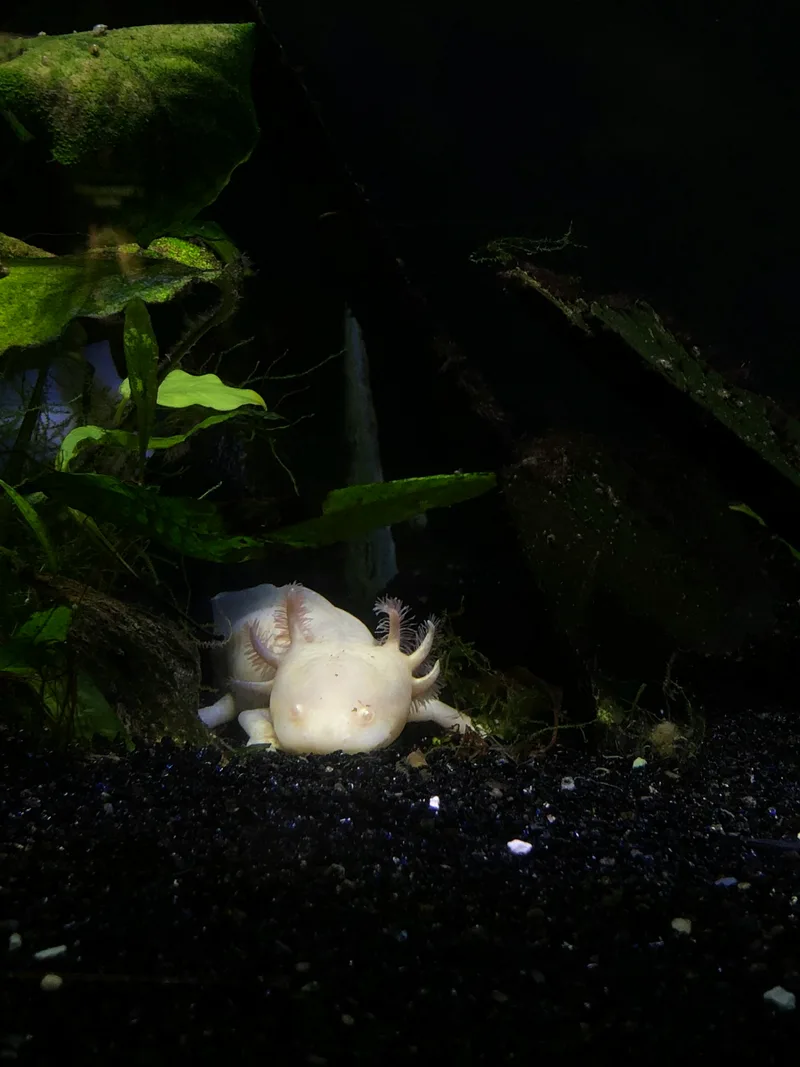
A European nightcrawler, live or thawed from frozen, is the everyday food for a healthy adult axolotl. The worm wins because it fits the way an axolotl is built to eat: soft enough to swallow whole, scented enough for an animal that hunts by smell rather than sight, and balanced enough on calcium to feed a salamander that rebuilds tissue all the time. The complication is that a few foods sold on the same pet-store shelves are behind most diet-related deaths in the hobby, and the right staple changes for axolotls under about four inches. Here is the ranked answer, with the reasoning underneath each tier.
European Nightcrawlers: The Staple
European nightcrawlers (Eisenia hortensis, also called dendrobaena or "Dendros") are the everyday food for any juvenile or adult axolotl past about four inches. They are a large, soft-bodied earthworm farmed for fishing bait, and almost every part of their profile lines up with how an axolotl eats.
Protein runs around 60 to 70 percent of dry weight, which is what a carnivore needs. The calcium-to-phosphorus ratio sits close to the 2:1 target for an animal that constantly rebuilds bone and cartilage, which a salamander capable of regrowing limbs and gill structures does, all the time. The body is soft enough to swallow whole, so a full-grown axolotl can take a whole worm and a smaller one can take a cut piece without choking or compaction. And the worm gives off a strong scent in the water, which matters for an animal that finds food by smell and water-pressure changes, not by sight.
You can source them from three places. Bait shops carry them under names like "European nightcrawlers," "Dendrobaenas," or "Dendros." Worm farms ship them by mail and will usually sell a starter portion you can keep alive in a tub of damp coco coir in the fridge for weeks. Some pet stores stock them with reptile feeders. The one rule on sourcing is not to dig worms out of the yard, because garden worms can carry pesticides, fertilizers, and parasites from soil you cannot see.
To feed: rinse the worm under cool tap water (this washes off coir and surface ammonia from the storage tub), then either drop it in front of the axolotl or hold it with a pair of feeding tongs and wiggle it near the animal's head. For a young axolotl under about five inches, cut the worm into pieces no longer than the gap between its eyes. A worm is the rare food that you can feed exclusively and the axolotl will stay in shape; everything below this is supplement, life-stage swap, or backup.
Did you know? Axolotls find food mostly by smell and by sensing water movement, not by sight. Their eyes can't focus on close objects, so a wiggling worm dropped right in front of them gets snapped up while the same worm sitting still a centimeter away may go untouched. A short twitch of the tongs is often the difference between a meal and a missed one.
Live Blackworms and Brine Shrimp: For Hatchlings and Juveniles
The right answer changes for very young axolotls, because a newly hatched axolotl will not eat anything that doesn't move.
For the first one to two weeks after hatching, the food is live baby brine shrimp (Artemia). Hatchlings are tiny (about half a centimeter), they cannot suck in a worm, and they only respond to live prey moving in the water column. You hatch brine shrimp from eggs in a small aerated bottle of saltwater, rinse them, and pipette them into the rearing tub two or three times a day. The shrimp are not a complete diet for long, but they get hatchlings through the stage where nothing else works.
Once the larvae develop their gill rakers (comb-like structures on the gills that strain larger prey) and start showing front legs (around three to four weeks, depending on temperature), the bridge food is live blackworms (Lumbriculus variegatus). Blackworms are thin, thread-like aquatic worms that clump on the bottom of the tank, where a juvenile axolotl can find them. They are higher in protein than brine shrimp and substantial enough to fuel growth without being so big the juvenile chokes. A small clump can be dropped into the tank and what doesn't get eaten the same day will live in the substrate until it does.
The transition off blackworms and onto cut earthworm pieces is gradual, usually starting once the front legs are fully formed and the axolotl is around three to four inches long. By the time both pairs of legs are out, you can move to cut nightcrawlers as the staple, with blackworms as an occasional treat.
Frozen Bloodworms and Daphnia: Useful Supplements
Frozen bloodworms (the larval stage of the non-biting midge Chironomus) and frozen daphnia (small freshwater crustaceans) are the supplement tier. They are not a staple, despite a common recommendation to feed them daily. They have a real job in rotation.
Variety is the first use. An axolotl raised on worms alone will usually accept worms forever, but it benefits from the wider amino-acid and trace-mineral profile of a few other prey types in rotation. A bloodworm cube once or twice a week alongside the worm staple is a fine pattern. Daphnia work the same way and have the side benefit of mild laxative effect for an axolotl that's been a bit sluggish in the gut.
Frozen is safer than live for bloodworms specifically. Wild-caught live bloodworms can carry parasites and some keepers develop allergic reactions to handling them repeatedly. The freezing process kills most pathogens and removes the handling risk. Thaw a cube in a small cup of tank water before feeding, never microwave or run under hot water, because both will turn the cube into mush that fouls the tank.
The hard limit on bloodworms is that they are too low in calcium and too high in fat to feed alone. An axolotl fed only bloodworms for months will develop soft tissue and the start of fatty liver disease. Treat them like candy on top of the real food, not like the real food.
Sinking Soft Pellets: When You Need Them
Pellets sit one tier below supplements. They are not what you reach for first, but they earn their place in three specific situations.
The first is travel and vacation. A pellet can sit in a feeder and release on a timer; a worm cannot. A week of pellets while you're away is a fine bridge, even if it isn't the everyday diet.
The second is training a picky axolotl to use a feeding dish. A shallow dish with a soft pellet in it teaches the axolotl to look in one specific spot for food, which makes feeding cleaner and lets you watch exactly what the animal takes and what it ignores. Once the dish habit is established, you can swap pellets for worm pieces in the same dish.
The third is supplementing a worm-only diet with stable, formulated nutrients. A pellet built for axolotls or aquatic salamanders includes specific vitamins and minerals you can't easily dose through worms alone, like vitamin D3 and certain B vitamins.
What to look for on a label: 40 percent or higher protein, under 10 percent fat, soft texture (a hard pellet sits in the gut and can cause impaction), and an explicit formulation note that the food is for axolotls, salamanders, or carnivorous aquatic amphibians. The mistake is reaching for whatever sinking pellet the pet store carries: most are trout pellets or generic carnivore pellets, both of which are too hard, too high in fat, and built for fish with very different digestion.
| Pellet type | Protein | Fat | Sink rate | Hardness | Suitable for axolotls? |
|---|---|---|---|---|---|
| Salamander or axolotl-formulated soft pellet | 45 to 55% | 5 to 9% | Slow, fully sinking | Soft, breaks easily | Yes, as a supplement or backup |
| Trout pellet | 38 to 45% | 14 to 22% | Fast sinking | Hard | No, too hard and too fatty |
| Generic carnivore pellet | 35 to 45% | 10 to 18% | Variable | Usually hard | No, wrong texture and fat profile |
Foods to Avoid: The Ones That Cause Most Diet Deaths
A short list of foods that show up again and again as the cause when an otherwise healthy axolotl dies. Each has a single reason behind it.
-
Feeder fish (goldfish, rosy reds, minnows). Most carry an enzyme called thiaminase that breaks down vitamin B1, which axolotls need for nerve and muscle function. Long-term feeder-fish diets cause neurological problems. They can also carry parasites and bacterial infections the axolotl has no exposure to in clean tank water.
-
Live tubifex worms. Sold cheap in pet stores, almost always farmed in heavily contaminated water, and one of the most common vectors for bacterial gill and skin infections in axolotls. Frozen tubifex is a smaller risk but still inferior to other options. Skip the genus entirely.
-
Wild-caught insects from the yard. Pesticide and herbicide residue is the primary concern. Even a yard that hasn't been sprayed in years can carry drift from neighboring properties. A single contaminated cricket can cause sudden death.
-
Raw beef, chicken, or other mammal meat. The fat profile is wrong for a cold-water carnivore and the calcium-to-phosphorus ratio is inverted. Mammal meat causes fatty liver disease over months and provides almost no usable calcium for an animal that needs to build cartilage continuously.
-
Anything larger than the gap between the axolotl's eyes. A worm or pellet that's too big to swallow easily can lodge in the gut and cause impaction, or get regurgitated repeatedly until the animal stops eating altogether. The eye-gap rule is a simple visual check that works for every food on this list.
-
Live mealworms or superworms. The hard exoskeleton (the outer shell of an insect) is not digestible in axolotl gut conditions and the head capsule contains a small biting mouthpart that can damage the axolotl's stomach lining. Even softer "white" molting mealworms are too high in fat.
How the Best Food Changes With Age and Size
A quick pass through the life stages: newly hatched larvae take live baby brine shrimp two or three times a day for one to two weeks. As gill rakers and front legs develop, live blackworms take over and stay the staple until the axolotl is three to four inches. Young adults transition onto cut pieces of nightcrawler, and from about five inches up the axolotl can take whole adult nightcrawlers. Frozen bloodworms, daphnia, and a salamander-formulated soft pellet can come in once or twice a week at any stage past the brine-shrimp window, for variety and stability.
If you want a single principle that outlasts any specific food, it is this: an axolotl is built to eat soft, scented, whole-prey-shaped food in cold water. The mouth points downward and works by suction. The eyes are nearly useless at close range. The metabolism runs slow because the water is cold and the animal regenerates tissue constantly, so the food has to carry the calcium to support that rebuild. Any food that meets those four conditions, soft enough to swallow whole, smelly enough to find, sized smaller than the eye gap, and close to a 2:1 calcium-to-phosphorus ratio, is a safe candidate. Any food that fails one of them is a problem waiting to happen.
A healthy adult axolotl eats two or three good-sized meals a week rather than something every day, because cold-water digestion runs slow and an overfed axolotl quickly puts on the body fat that leads to floating and liver problems. Beyond the foods listed above, a few less obvious items like freeze-dried tubifex cubes and certain reptile pellets sometimes slip into beginner care kits and cause slow-burn problems that don't show up for weeks.