What do you need to tub an axolotl?
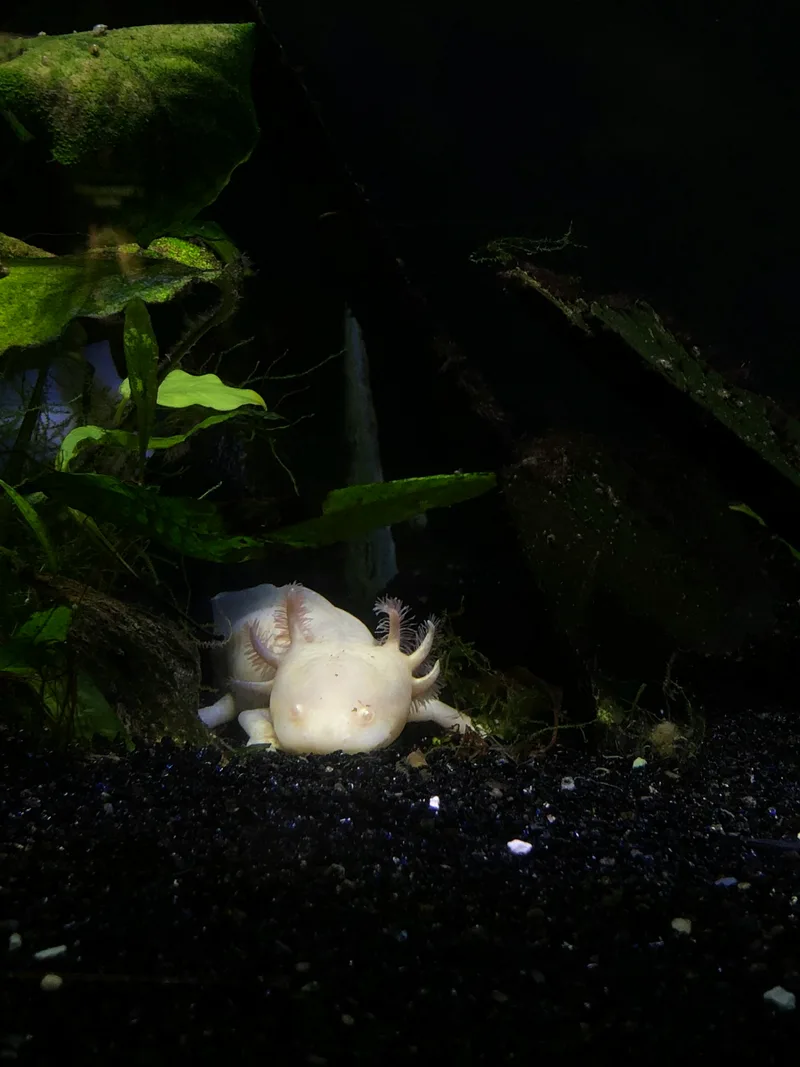
Two plastic shoebox tubs with lids, a bottle of water conditioner, cool dechlorinated tap water at 60 to 64°F (15 to 18°C), and a soft net. That's the whole kit, and most of what people add on top of it is what hurts the axolotl. A tub works because it has fewer variables than a tank, not more, which means the harder question isn't what to buy, it's what to leave on the shelf.
What's Actually on the Shopping List?
The full kit fits on a single shelf at the hardware store.
- Two food-grade plastic tubs, shoebox size or larger, with lids. Two so you can swap your axolotl into a clean one daily without chasing it around. Sterilite-style 6-quart tubs are the standard.
- Water conditioner. Seachem Prime, Fritz Complete, or any tap-water conditioner sold for aquarium use. The brand matters less than that you actually use it.
- Cool, dechlorinated water. 60 to 64°F (15 to 18°C). Tap water you've treated with conditioner is the right answer; bottled spring water works in a pinch; distilled water is harmful because it has no minerals at all.
- A soft, fine-mesh net. Big enough to scoop the axolotl in one motion without folding it.
- A clean turkey baster or pipette. For lifting waste off the bottom between full water changes, so the water stays usable a little longer.
That's the kit. Two tubs, one bottle, one net, one baster. Most owners already have a turkey baster in a kitchen drawer.
Does the Tub Need a Lid, and Does It Need Holes?
Yes on the lid. Axolotls (Ambystoma mexicanum) launch themselves out of open water when they're stressed, and a tub holds a stressed axolotl by definition. Drying out on the kitchen floor is one of the more common ways a tubbed axolotl dies, and it's preventable in two seconds.
Holes are optional. A few small ventilation holes in the lid are fine and many keepers add them. A fully sealed lid is also fine for short stretches because the water surface gives plenty of gas exchange on its own. The mistake to avoid is the in-between move: leaving the tub fully open "just for a few minutes" while you grab something. That's when they jump.
What Size Tub Do You Actually Need?
A workable rule: the tub should be at least twice as long as the axolotl's body, and the water depth should roughly equal the axolotl's body length. That gives the animal room to turn around and rest flat on the bottom while still reaching the surface to gulp air without effort.
Did you know? Axolotls breathe through three different routes: feathery external gills, primitive lungs at the surface, and their skin. The lung route is why depth matters. An axolotl that has to work to reach the surface stays stressed even when its gills are doing fine on their own.
The mechanism behind the rule is worth holding onto, because it explains both the upside and the downside of tubbing in one shape. A small water volume means waste and ammonia concentrate fast, which is exactly why a tub is changed daily. But small volume also means the temperature swings fast. That can be a feature: you can drop a tub in the fridge to cool a feverish axolotl in minutes, where a 20-gallon tank would take hours. It can also be a problem: a tub left on a sunny counter in July can climb past 22°C (72°F) before lunch, and 22°C is the wall you don't want to cross. The reader who understands the surface-area-to-volume trade-off will make better calls than the reader who memorizes a number.
What Should You NOT Put in a Tub?
The mirror of the shopping list is almost as useful, because most of the mistakes new tubbers make are additions, not omissions.
- No substrate. No gravel, no sand. The whole reason you can change the water daily is that the tub is bare.
- No filter. A small water volume plus a filter intake is a stress source, and daily water changes do the filtration job. The two cancel out.
- No air stone. Axolotls don't need supplemental aeration in cool water, and the bubble stream pushes them around the tub.
- No heater. Axolotls are cool-water animals. Cooling a sick one is half of why tubbing helps; a heater works against that.
- No decor with sharp edges. Their skin tears easily, and a stressed animal bumping into things bumps into them harder.
- No glass aquarium swap. A spare aquarium feels like a luxury upgrade, but it's heavy, slow to clean, and locked to whatever temperature your room is. The plastic tub is the format that gives you the temperature flexibility a sick axolotl needs.
Once the kit is on the counter, the daily routine takes about ten minutes: a full swap into the clean spare tub each day is what replaces the filter you didn't buy. Most tubbing stints run from a few days to a few weeks depending on what you're treating, which is short enough that the bare-bones setup feels less austere by the second day. Owners who haven't yet decided often find that a slime-coat slough or a few days of refusing food is exactly the moment a tub earns its keep.
A tub looks like a downgrade from a tank: blank walls, supermarket plastic, nothing to look at. It isn't. It's a clean container of cool water with no other variables in it, which is the most useful thing you can give an axolotl that's already telling you something has gone wrong.