Do axolotls carry diseases to humans?
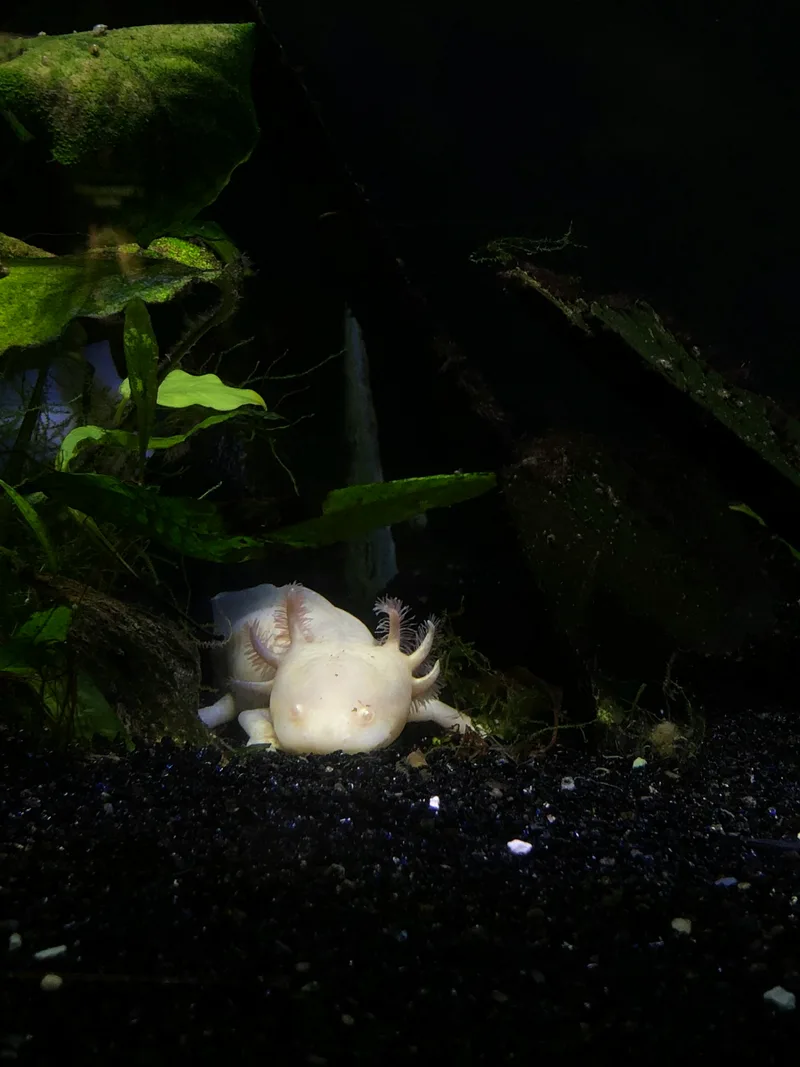
No, not in any way that should keep you up at night. A healthy axolotl in a clean tank is not a meaningful disease threat to you, your kids, or anyone else in the house, and a bar of soap is most of the answer. The small risk that does exist doesn't come from the animal at all. It comes from the water. The axolotl was never the thing to worry about, which means the real question isn't "what can I catch from my axolotl," it's "do I put bare hands in the tank and then touch my face," and that one has an easy fix.
How Do I Keep Myself and My Family Safe Around the Tank?
One habit does almost all the work: wash your hands with soap after your hands have been in the tank or touched the axolotl, and before you eat or touch your face. That single rule covers the vast majority of the already-small risk. Everything else is common sense built on top of it.
- Wash your hands with soap and warm water after you handle the axolotl or put your hands in the tank, and always before you eat or touch your face.
- Keep open cuts and sores out of the water. If you have a fresh cut on your hand, wear waterproof gloves or wait until it heals before reaching in.
- Don't clean the tank or pour old tank water into the kitchen sink where food gets prepared. Use a separate bucket and a bathroom or utility sink.
- Supervise young kids around the tank, and wash their hands for them afterward rather than trusting them to do it well.
- Don't hold the axolotl up to your face or kiss it. The animal doesn't enjoy being handled anyway, and there's no reason to bring it that close.
None of this means the tank is dangerous. It means you treat it the way you'd treat raw chicken on a cutting board: a quick wash afterward, and you're done thinking about it.
What Could an Axolotl Actually Pass to a Person?
There are really only two organisms worth naming, and neither one reaches you by the axolotl touching you. Both live in the water. A bite, the slimy coating on the skin, the gills, none of those are the route. It's the water you put your hands in, which is why handwashing solves the whole thing.
The first is Salmonella, the same bacterium behind a lot of food poisoning. Amphibians and reptiles can carry it in their gut and shed it into their water with no sign of being sick themselves, which is exactly why every pet turtle and lizard comes with a handwashing warning. The axolotl can look perfectly healthy and still have it in the tank. You'd only get sick if water got onto your hands and then into your mouth, by way of food or touching your face.
The second is a slow-growing bacterium called Mycobacterium, which lives in aquarium water generally, not just axolotl tanks. If it gets into a cut on your hand it can cause a stubborn skin infection that aquarists call "fish tank granuloma," a small raised bump or sore that's slow to heal. It's uncommon, and it needs a break in the skin to get in, which is the whole reason for the "no open cuts in the water" rule.
That's the entire list. There's no rabies, no parasite you need to fear, nothing that spreads through the air, and nothing that passes just from being in the same room as the tank.
| What it is | How it would reach you | How likely | What it looks like in a person |
|---|---|---|---|
| Salmonella | Tank water on your hands, then to your mouth via food or touching your face | Uncommon in a clean, well-kept tank; the standard reptile and amphibian risk | Stomach upset, diarrhea, cramps, sometimes fever, usually within a day or two |
| Mycobacterium ("fish tank granuloma") | Tank water entering through a cut or scrape on the skin | Rare; needs a break in the skin to get in | A slow-healing raised bump or sore on the hand or arm, often weeks after exposure |
Is It Riskier for Kids or People With Weak Immune Systems?
For most healthy adults, both of these are unlikely and mild. The picture changes for young children, pregnant people, the elderly, and anyone whose immune system is weakened by illness or medication. In those cases Salmonella and Mycobacterium are more likely to take hold and harder to shake off, so the same precautions matter more, not less.
The adjustment is small and doesn't involve giving up the animal. In a household with someone vulnerable, an adult should handle tank maintenance, and young children shouldn't be the ones cleaning the tank or doing water changes. Handwashing becomes non-negotiable rather than a good habit. That's the whole list of changes. A clean tank and clean hands keep the risk low for everyone, and there's no version of this where the sensible answer is to rehome a well-kept axolotl.
Can My Axolotl Get Sick From Me, or Me From a Sick Axolotl?
This runs both directions, and both are reassuring. Your colds and flu don't transmit to an axolotl. The viruses that make you miserable are built for warm-blooded mammals and simply don't work in an amphibian's body. If anything, the bigger danger you pose to the animal is warmth itself, since axolotls need cold water and even room temperature stresses them.
Going the other way, a visibly sick axolotl isn't more dangerous to you than a healthy-looking one. The everyday hygiene is identical whether the animal looks fine or not, because the organisms that could reach you live in the water regardless of how the axolotl appears. If you're worried because something seems off with the animal, what matters is figuring out what's wrong with it, and the things to watch for in an unwell axolotl tell you whether it needs help. Either way, the axolotl was never the thing to be nervous about. Keeping hands out of the tank as much as possible is also the reason axolotls are better left untouched, which protects the animal and happens to limit your contact at the same time. The tank is just water, and water plus soap-and-water on your hands is the entire safety story. That one habit looks after both of you: it keeps anything in the water off you, and it keeps whatever's on your hands out of the tank.