Why is my baby axolotl floating?
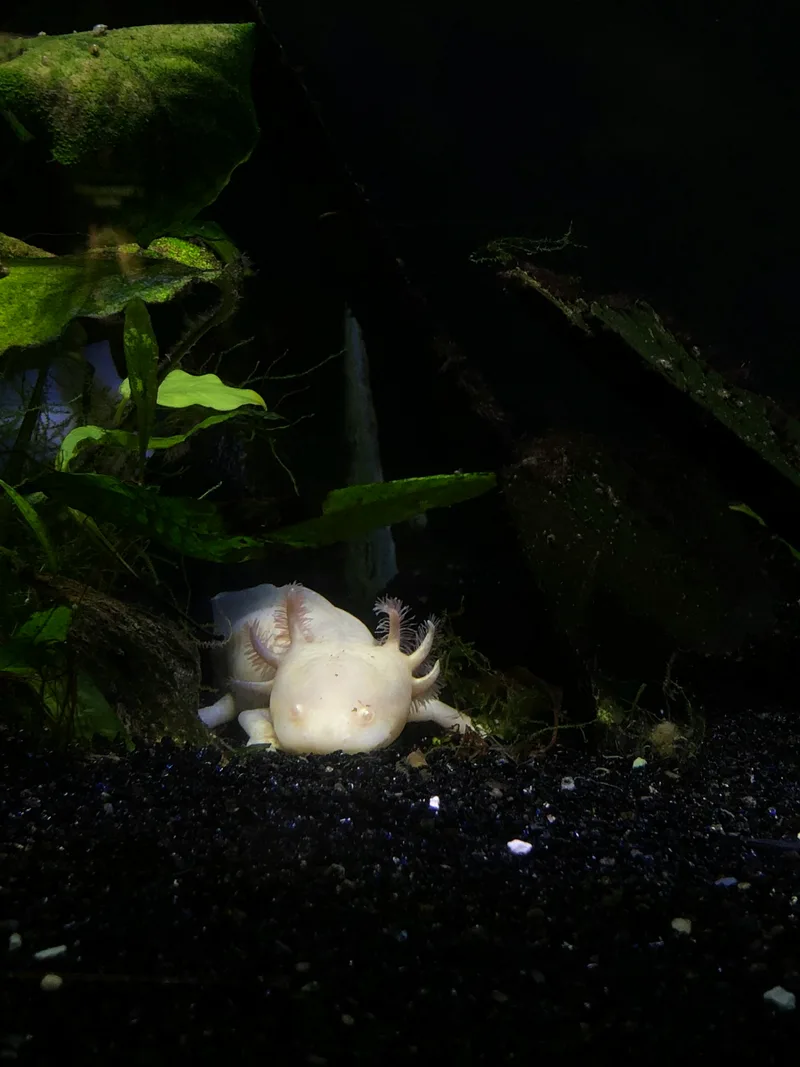
A baby axolotl bobbing up off the bottom is usually harmless. Young axolotls (Ambystoma mexicanum) swallow a little air while they feed, and a tiny body floats up on that trapped bubble before the animal has learned to manage it, then settles back down on its own within a day. The reason you're still reading is the same reason you searched: you want to know it's not the other thing. And there is an other thing. Floating tips into a real warning in a few specific, recognizable situations, and they point to a gut or water problem you can check in the next ten minutes.
Is the floating normal, or a sign something's wrong?
The quickest test is to disturb the water near your axolotl and watch what it does. Gently wave a hand or pour a little tank water past it and see whether it can swim back down to the bottom. A baby that can get itself down, then carries on eating and acting normally, is fine. The air will work its way out and the floating stops.
The concerning case looks different. If your axolotl is stuck at the surface and can't get down no matter what, or it floats tail-up, or it rolls upside down or sideways, that is no longer ordinary air-gulping. Of those, floating upside down or on its side is the clearest red flag and the one to act on fastest.
Use this to read what you're seeing:
| What you see | What it usually means and what to do |
|---|---|
| Floats sometimes but can swim back down, still eating | Normal air-gulping. Watch it, no action needed |
| Stuck at the surface tail-up, can't get down | Likely gut gas or constipation. Fast for a day or two, then fridge if it persists |
| Floating upside down or sideways | Serious. Check your water right away and consider fridging or an exotics vet |
| Floating plus refusing food | Treat as a problem. Test the water first, then fast and fridge |
What should I do for a floating baby axolotl right now?
Start with the water, because bad water is the most common hidden cause and it's invisible until you test for it. Get an ammonia and nitrite reading. Both should be zero. If either is up, a water change is the first and most important thing you can do. From there, give the gut a chance to clear and keep the animal cool and calm.
Work through these in order:
- Test the water for ammonia and nitrite. Both should read zero. Any reading above that needs a water change now.
- Stop feeding for a day or two. An empty gut clears trapped gas and a missed meal or two won't harm a baby axolotl.
- Keep the water cool, around 60 to 64°F (16 to 18°C). Warm water holds less oxygen and makes digestion and floating worse.
- If it stays stuck at the surface and can't get down, move it to a tub of clean, cool water in the fridge (this is called fridging) for a few days, changing the water daily.
- See a vet who treats exotics if nothing improves after several days or the axolotl is getting weaker.
Most cases clear up with nothing more than a fast and clean, cool water. You're rarely looking at something a fridge and patience can't fix, and the vet is the step for the few that don't turn around.
Why do baby axolotls float more than adults?
It comes down to size. When an axolotl gulps a small bubble of air at the surface while feeding, that bubble lifts whatever body it's trapped inside. A tiny juvenile weighs almost nothing, so the same little pocket of gas that an adult would barely notice is more than enough to float a baby right off the bottom. The bubble didn't get bigger. The body it has to lift got smaller.
Young axolotls are also still getting the hang of staying weighted down. An adult that swallows air tends to ride it out near the bottom and pass it without much fuss, while a baby hasn't settled into that yet and ends up at the surface more often. It's less a health problem than a stage your axolotl grows out of.
Did you know? Axolotls keep their larval form for their whole lives and never develop the lungs a land salamander would. The air a baby swallows at the surface isn't for breathing at all. It's just a side effect of snapping at food, which is exactly why it ends up trapped in the gut and floating the animal instead of doing anything useful.
When floating points to the water, not the gut
If the floating won't quit, especially alongside gills that curl forward over the head or a tail tip that curls up, the cause is often the water rather than the gut. Those are stress signs, and the usual culprits are water that's run too warm or that's carrying ammonia or nitrite. A baby in a small, lightly stocked tank can hit bad water surprisingly fast, because there isn't much volume to dilute waste and a young animal's tank often isn't fully cycled yet.
Once you've spotted persistent floating, the next thing worth sorting out is how worried the situation actually warrants, since not every case that lingers is an emergency. And if your axolotl keeps drifting up even after the first fixes, getting it to settle back on the bottom usually comes back to the same handful of water and feeding adjustments.
The reassuring part holds: a floating baby axolotl is usually just its small size and feeding habits showing, not a crisis. But clean, cool water is the one thing most worth getting right, because that's the cause that quietly turns harmless floating into a real problem.