How old is a 3 inch axolotl?
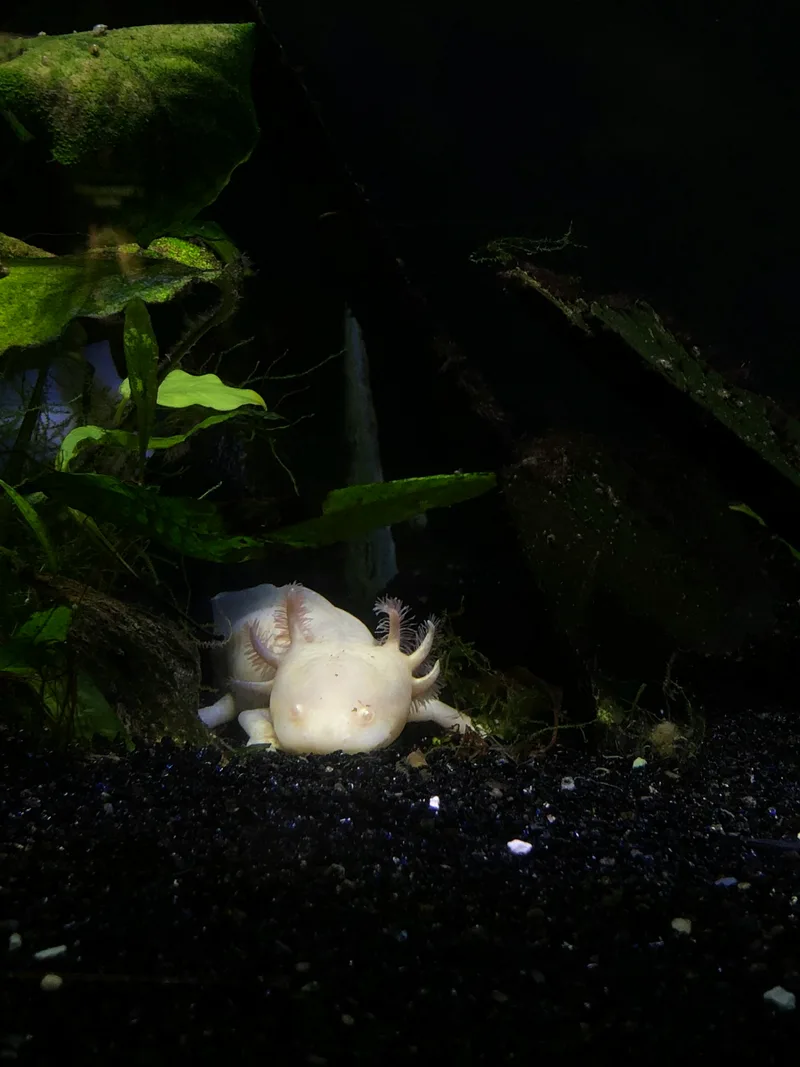
A 3-inch axolotl is usually a young juvenile, somewhere around 2 to 4 months old, assuming it was fed well on the way there. But two axolotls hatched on the same day can sit a full inch apart by the time they're a few months old, because length tracks how much an animal has eaten as much as how long it's been alive. Size hands you a band, not a birthday, and a small axolotl is almost never a sick one. Here's the honest range, and why a tape measure was never going to give you a real number.
So How Old Is a 3-Inch Axolotl?
A well-fed axolotl puts on roughly an inch a month in its first few months, so at about 3 inches it's most likely 2 to 4 months old. That puts it in the young juvenile stage: it has finished growing its legs, it's past the early larval weeks when siblings nip each other in a tank, and it's eating and putting on length steadily.
The reason it's a range and not a single number is that growth speed depends almost entirely on how much the animal has been eating. A baby raised on heavy feedings of live blackworm hits 3 inches faster than one fed lightly, so the same length can land a few weeks apart in age. Treat the 2-to-4-month window as a confident estimate for a properly fed animal, not a guarantee.
Here's a rough size-to-age guide for an axolotl that's been fed well. Lean on it for a ballpark, not a precise readout:
- Around 2 inches: roughly 1 month old
- Around 3 inches: roughly 2 to 4 months old
- Around 5 to 6 inches: roughly 5 to 7 months old
- Full adult size (9 to 12 inches): 18 months and up
How to Get a Better Estimate
The single most reliable thing you can do is ask the breeder or seller for a hatch date. Size alone will never give you a real birthday, but the person who raised the animal can. If you bought from a hobbyist breeder, they almost certainly know the clutch date to the week, and they'll usually tell you if you ask.
Short of a date, the body itself gives you a stage rather than an age. Fully formed front and hind legs mean the animal is well past its early larval weeks and solidly into the juvenile stage, which fits the 3-inch size. Plump gill stalks and full tail filaments tell you it's been eating well, which in turn means its size is a fair reflection of its age rather than a stunted one.
A pet-store axolotl often comes with no reliable date at all, since it may have passed through a wholesaler before it reached the tank you bought it from. If that's your situation, the size band really is the best estimate you're going to get, and that's fine. You don't need a birthday to care for it well.
Why Size Can't Really Pin Down Age
Axolotls have what biologists call indeterminate growth: they never truly stop getting bigger. Most animals grow fast, hit an adult size, and level off. An axolotl just keeps going at an ever-slowing pace for its whole life, which means its length tracks how well it's been fed at least as much as how long it's been alive. Two axolotls hatched on the same day can sit an inch apart at six months purely because one ate more.
On top of that, many breeders feed their babies lightly on purpose. A slower-growing axolotl eats less and takes up less space, which keeps rearing costs down until the animals are ready to sell. The result is that a small 3-inch axolotl can genuinely be several months older than its size suggests, held back not by anything wrong with it but by a thinner diet early on.
So size hands you a range and nothing tighter. A small animal that's alert, eating, and holding full gills is a slower-grown one, not a sick one. Feed it well from here and it will keep filling out for years.
Did you know? An axolotl spends its whole 10-to-15-year life in what is essentially a larval body, gills and finned tail and all, and never stops growing. That same not-quite-finished-developing biology is what lets it regrow a lost limb. The flip side is that the tape measure telling you nothing reliable about its age is the same trait that makes it one of the most remarkable animals you can keep.
What a 3-Inch Axolotl Needs Right Now
A 3-inch axolotl is still small enough to need a few specific things, and getting them right matters more at this size than it will later. Keep it on its own. Juveniles this size will nip each other's gills and toes, and an axolotl can lose a limb to a tankmate before you notice anything's wrong. House it solo until it's well grown.
Match the food to the mouth. A small axolotl can't take a fat earthworm yet, so what a small axolotl can actually eat comes down to small live foods and finely cut pieces it can swallow whole. Keep the water cool, in the low 60s Fahrenheit, since warmth stresses them faster than almost anything else. And skip gravel small enough to fit in its mouth, because axolotls feed by suction and will swallow loose substrate by accident.
From here, your axolotl will keep adding length for a long time, and watching it grow is half the reason people keep them. When it reaches the next size milestone you'll likely wonder again how old it is, and the same logic applies to judging the age of a 7-inch axolotl: the number is a band, not a birthday. Feed it well and keep it cool, and what its size really tells you is that the slow, lifelong growing has only just begun.