Can I buy a baby axolotl?
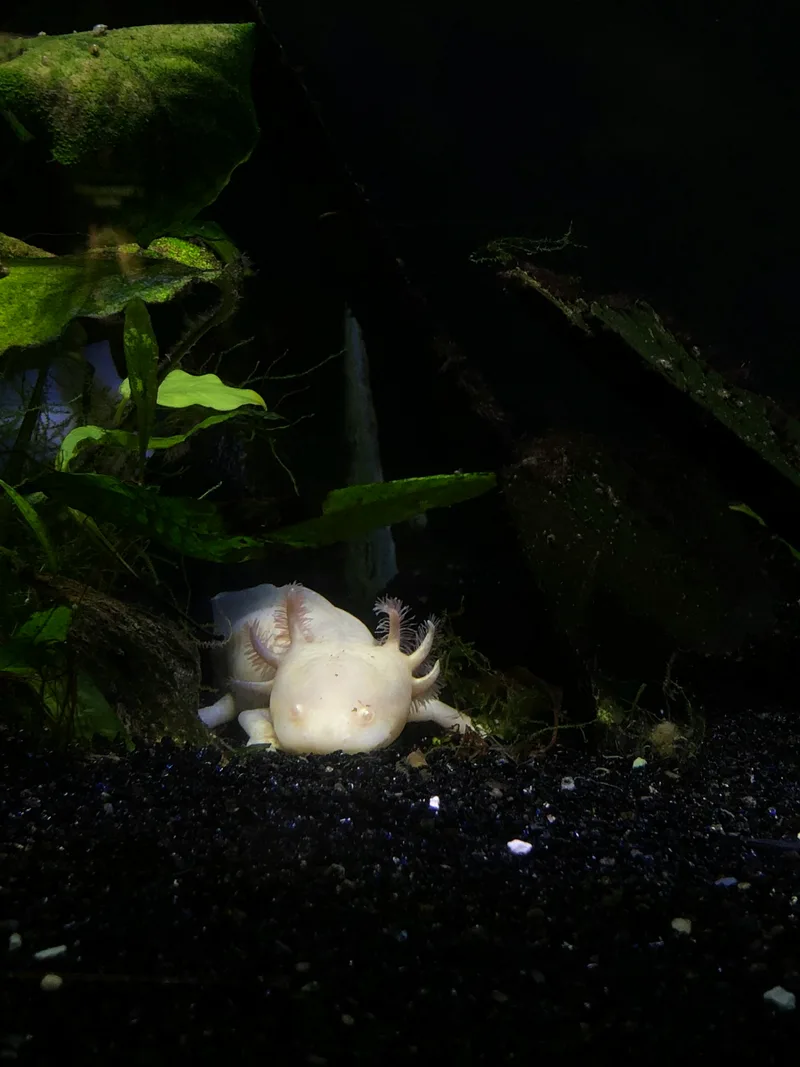
Yes, and it's almost too easy: baby axolotls (Ambystoma mexicanum) ship overnight from captive breeders for $30 to $50, in a box at your door by morning. The catch is that the smallest, cheapest one on the seller's page is the single hardest size to keep alive, and in a handful of US states owning one at all is illegal. Getting a baby axolotl home safely turns out to have very little to do with finding a seller, and nearly everything to do with what you've sorted out before it arrives.
Where Can You Actually Buy One?
The reliable sources are nearly all breeders, not retail shelves. A dedicated captive breeder is the most common route: many run their own websites, and most sell young axolotls in the $30 to $50 range. Breeder marketplaces like MorphMarket list dozens of sellers in one place, so you can compare animals, morphs, and shipping terms side by side. Reptile and amphibian expos let you see the animal in person before you commit. And a handful of specialist online stores ship overnight with a live-arrival guarantee, which is how most axolotls travel.
Most of the big pet store chains don't stock them. Axolotls need cool water, they don't tolerate the warm, brightly lit display tanks that work for tropical fish, and they're a slow-moving, specialized animal that doesn't fit the high-turnover model of a chain store. The trade runs through breeders for the same reason it runs through breeders for any niche amphibian.
Buying from a known captive-bred source matters more than it might seem. A breeder who raised the animal can tell you its parents, its age, and what it's been eating, which tells you a lot about whether it's healthy. Just as important, every captive-bred axolotl you buy is one that wasn't taken from the wild. The species is critically endangered in its native lakes near Mexico City, down to a few wild individuals, and the entire pet trade today rests on captive breeding. Sourcing from a real breeder keeps it that way.
If you're specifically wondering whether a chain is an option, the major pet store chains rarely stock axolotls, which is why breeders are the standard route.
Is It Even Legal Where You Live?
Check this before anything else. Axolotls are banned or restricted as pets in several US states, most commonly California, Maine, New Jersey, New Mexico, and Washington D.C., as well as parts of Canada. The reason isn't that the animal is dangerous. It's that an escaped or released axolotl could breed with or spread disease to native salamanders, and states with vulnerable amphibian populations write rules to prevent that.
So confirm your own state or country's rules before you order. The good news is that a reputable seller won't ship to a banned area anyway, both because it's illegal for them and because they don't want the animal seized in transit. But the responsibility to know your local law is yours, and finding out after you've paid is a bad way to learn it.
Should You Buy a Baby, or Wait for a Juvenile?
You can buy a true baby, but a slightly older juvenile is usually the kinder choice for both of you. A true baby, under roughly three inches, is the most fragile size an axolotl comes in, and it's the riskiest place for a first-time keeper to start.
A few things make a baby harder. It still needs live or live-like food rather than pellets, so you'll be keeping a culture of baby brine shrimp, blackworms, or moina going to feed it. It's far less forgiving of warm water and unstable parameters, with little room to spare if the tank swings. And at that size you can't yet tell its morph (its color form) or its sex with any reliability, so you don't really know what you're getting.
A juvenile, around four to six inches, has grown past most of that. It eats prepared food, so you can offer earthworms or sinking axolotl pellets instead of running a live culture. It ships better and shrugs off minor mistakes that would set a baby back. It's the more forgiving first axolotl by a wide margin, which is why many serious breeders default to selling juveniles rather than babies in the first place.
If you do settle on a baby, the thing to nail down first is feeding, since a baby axolotl needs live or live-like food rather than the pellets an adult will take.
What Should Be Ready Before It Arrives?
The single biggest gap on every seller page is what happens before the animal ships, not after. A baby has no margin for a tank that isn't ready, so the setup has to be done and stable while the axolotl is still at the breeder's.
Here's what should already be in place:
- A fully cycled tank. The filter needs to have grown the bacteria that turn ammonia into less harmful nitrate. This takes weeks, so start it well before you order.
- Water at 60 to 64°F (16 to 18°C). Never above 72°F (22°C). Axolotls are cool-water animals, and warm water is one of the fastest ways to lose one.
- No swallowable substrate. A bare-bottom tank or fine sand only. Gravel small enough to fit in the mouth gets eaten and causes fatal blockages, and a baby's mouth is small.
- Gentle filtration. A sponge filter or a baffled outflow. Axolotls come from still water and a strong current wears them down.
- A holding container ready. A simple tub for acclimation or quarantine, so you're not improvising on arrival day.
A tank that checks those boxes before the animal is in the mail is the whole game. Size it for the adult, not the baby you're ordering, since an axolotl needs a tank to match its full grown length of eight inches or more.
That reframes the decision worth making. The real question isn't where to get a baby axolotl, because that part is cheap and easy and an overnight box away. It's whether you're the right home for the next ten to fifteen years, because that's how long a healthy one lives. A baby axolotl is a decade-plus commitment to cool water and a tank of its own, and the readiness you put in before it arrives is what decides whether that decade goes well.