How do I stop my axolotl from floating?
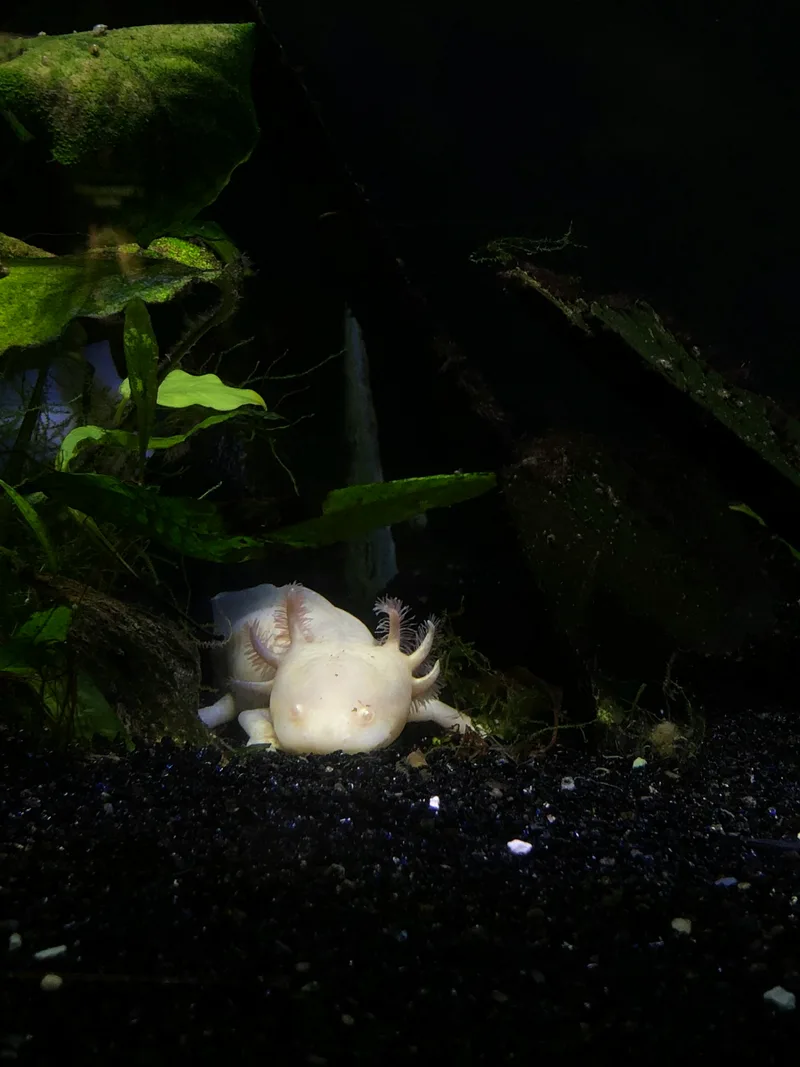
Most of the time you stop a floating axolotl by holding off on food for a few days and moving it into a cool, shallow tub of dechlorinated water, or the fridge, until the gas trapped in its gut works its way out. Unlike a fish, an axolotl has no air-filled organ for managing depth, so when it floats, something light is stuck inside it where it shouldn't be, and the fix is letting that pass rather than fighting the animal back down. The catch is that two floats can look almost identical and mean very different things: a gentle bob you treat at home, and a tipped or upside-down float that you don't. Telling them apart is the first thing to do, because it decides everything that follows.
Is the Floating Actually a Problem, or Normal?
Before you do anything, look at how your axolotl is floating, because not all of it is a problem. An axolotl that bobs up for a minute after eating and then paddles itself back down is doing something normal. The float becomes a real concern when it can't get back to the bottom, when the back end lifts first and the head hangs down, or when the animal rolls onto its side or flips over and stays that way.
Run through these quick checks to place your own axolotl on that spectrum:
- Can it swim back down when startled? Tap the glass gently. If it can drive itself to the bottom and stay there, the float is mild.
- Is it floating constantly, or only sometimes? An occasional bob is far less worrying than a fish that can't leave the surface no matter what.
- Is it level, or tipped? A level float is the mild kind. Tilted, sideways, or upside down points to a more serious problem.
- Which end is lifting? The back end rising first, with the head down, is a classic sign of gut gas worth acting on.
- Has it eaten recently? A float that shows up right after a big meal often settles on its own once digestion catches up.
If your axolotl passes most of these, you have time and the situation is recoverable. If it's stuck upside down and can't flip back, treat that as urgent: get it into the cool, shallow setup below and line up a vet.
What's Making My Axolotl Float?
Floating almost always traces back to one of three causes, and matching yours to the right one saves you from treating the wrong problem.
The most common is trapped gut gas from constipation or impaction. This happens when an axolotl swallows a piece of gravel it can't pass, or eats more than its slow gut can move along. Gas builds up behind the blockage and lifts the back half of the body.
Next is a swallowed air bubble. Axolotls gulp air at the surface as part of how they breathe, and now and then a bubble ends up in the gut instead of being released, making the animal bob.
The third is poor water quality. Ammonia and nitrite from an uncycled or dirty tank stress the whole animal, including the gut, and a stressed gut is a sluggish one. When floating comes with a poor appetite and water you haven't tested, the water is the first thing to rule out.
You'll notice "swim bladder infection" comes up a lot for floating fish. That frame is borrowed from fishkeeping and doesn't fit here, because an axolotl doesn't run its depth off a swim bladder the way a fish does. The mechanism behind that is worth understanding on its own, and it explains why the standard fixes work.
| What you're seeing | Likely cause | What to do first |
|---|---|---|
| Floats after eating, then settles | Mild gas from a full gut | Skip the next feeding and give it a few days |
| Constant float, no other signs | Constipation or impaction | Move to a cool, shallow tub or the fridge |
| Float plus poor appetite, cloudy or untested water | Water quality | Test the water and fix it before anything else |
| Tipped or upside down, can't right itself | Urgent | Fridge the axolotl and consider a vet |
How Do I Actually Get It Back Down?
Two moves do most of the work: stop feeding, and lower the temperature.
Stop offering food for several days. An axolotl's gut moves slowly, and an empty stomach gives whatever is stuck the time and room to clear. You are not starving the animal. A healthy adult handles a week without food without trouble.
Then move it somewhere cool and shallow. Set up a tub of dechlorinated water, or place the axolotl in a covered container in the fridge, holding the temperature around 41 to 46°F (5 to 8°C). The cold slows the axolotl's metabolism right down, which calms gut fermentation and helps trapped gas and any blockage pass. Keep the water shallow, deep enough to cover the axolotl but low enough that it can rest its feet on the bottom and reach the surface without having to fight to stay down. Change that water every day so waste doesn't build up in the small volume. Knowing when an axolotl actually needs to move into a tub keeps you from fridging at the first harmless bob, and a tubbing setup takes only a handful of supplies: a clean container, dechlorinator, and a cool spot.
If your water test came back with ammonia or nitrite, tubbing alone won't fix it, because the cause is still sitting in the main tank. The real fix is the water itself: daily changes and getting the tank properly cycled so it can hold those readings at zero.
Give gut gas a few days to clear before you expect change. If you're several days into fridging with no improvement, if the axolotl is still refusing food, or if it stays tipped over and can't right itself, that's the line where home treatment hands off to a vet who can check for an impaction that needs help passing.
Why Does a Floating Axolotl Float at All?
An axolotl is built to live on the bottom. Its body is dense, and it has none of the fine, air-filled depth control a typical fish carries. A fish holds its position in the water with a swim bladder, an internal gas pocket it inflates and deflates to hover at a chosen depth. An axolotl doesn't run on that system, so it has no smooth way to manage buoyant gas inside its body.
That's the whole reason floating is almost always a sign of gas where it shouldn't be. When an axolotl rises, something light is trapped inside it, most often in the gut from a blockage or from food fermenting behind one, and sometimes a stray bubble it swallowed at the surface. There's no air-filled organ to blame and no way for the animal to simply let the gas back out the way a fish adjusts its swim bladder.
This is also why fasting and cooling are the fix rather than a guess. Both slow digestion down, which gives the gut time to move the blockage along and lets the gas escape on its own. And it's why reaching for "swim bladder disorder" from fishkeeping sends owners chasing a part the axolotl doesn't really use.
Did you know? Axolotls breathe three ways at once: by gulping air at the surface, through their feathery external gills, and straight through their skin. That surface-gulping habit is the same one that occasionally sends a stray bubble down into the gut and sets the whole bobbing problem off.
Does This Change for a Baby Axolotl or When Should I Worry?
Baby and juvenile axolotls float more readily than adults, and for slightly different reasons. They gulp at the surface more, and they're more sensitive to small swings in water quality, so a young axolotl that's floating points you toward the water and the surface-gulping side of things sooner than an adult would. The fix is softer too, since a tiny animal needs an especially shallow setup. With a floating baby axolotl, check the water quality and the surface-gulping habit before anything else.
For any age, a few signs mean it's time to stop home-treating and get help: several days of fridging with no change, refusing food alongside the floating, or any visible injury or patchiness on the body. Knowing what a genuinely sick axolotl looks like helps you draw that line with confidence. Most floating, though, is the gut quietly sorting itself out. Your job isn't to force the axolotl down. It's to take away the cause, set up the cool, shallow space it needs, and let the animal's own biology settle it back to the bottom where it belongs.