How long do axolotls live as a pet?
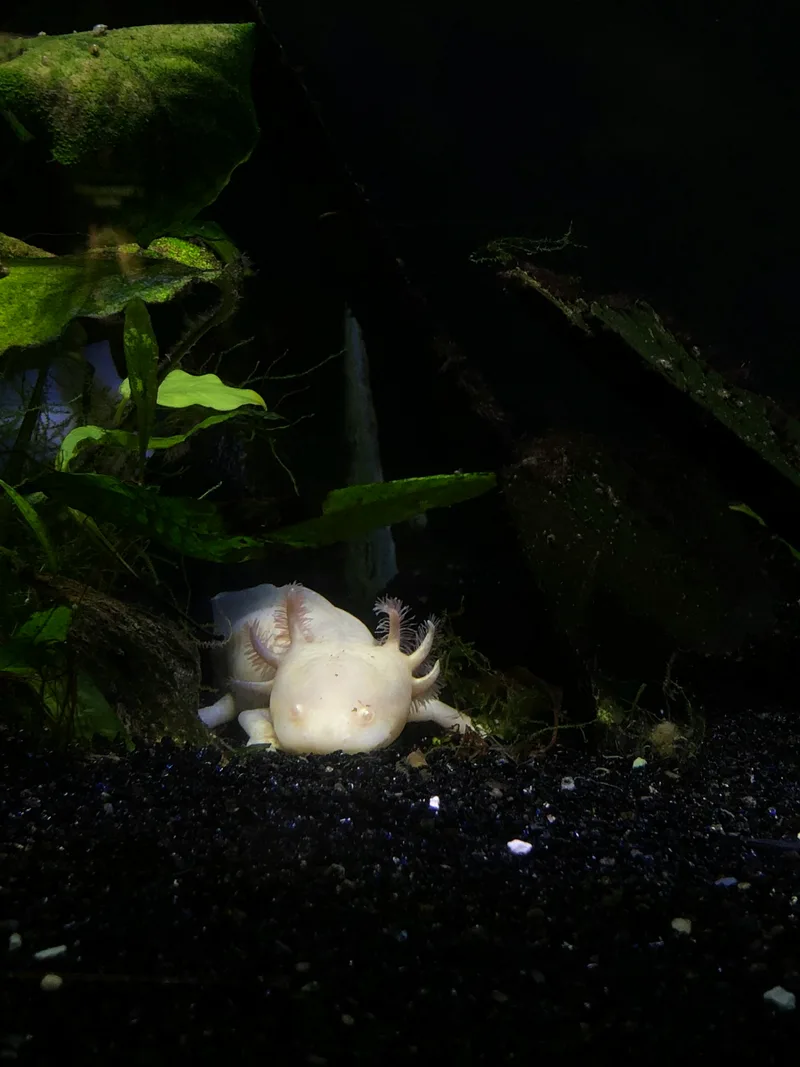
A pet axolotl (Ambystoma mexicanum) lives 10 to 15 years in a home tank, with some passing 20. That's the textbook number, and it's a real one. What it isn't is the number most pet axolotls actually hit: a huge share die at 2, 3, or 4 years old, almost always from the same three causes. The animal isn't fragile. The conditions that shorten its life are just the ones a normal aquarium setup happens to produce by default, and they're worth knowing before you commit to a decade-plus animal.
What Actually Gets an Axolotl to 10+ Years?
The axolotl that lives a full decade isn't on a special diet or a fancy filter. It lives in a tank that respects three rules, and that's most of the secret.
- Water below 22°C (72°F), all year. Axolotls are cool-water animals. At 23°C and up, their metabolism runs faster than their immune system can keep up with, and bacterial infections become a matter of when, not if. A summer week in a warm room is enough to start one.
- Fine sand or a bare bottom. Axolotls hoover up anything that fits in their mouths. Gravel is the wrong size: small enough to swallow, big enough to lodge in the gut. Sand passes through; bare glass gives them nothing to swallow at all.
- One axolotl per tank, no fish. Fish nip gills, carry parasites the axolotl has no defense against, and need warmer water than the axolotl can survive in. Even peaceful community fish are a slow leak.
Get those three right and the rest of the care is forgiving. Get one of them wrong and the lifespan starts shrinking fast.
A 10 to 15 year animal is a real commitment. It's longer than most dogs in the small-to-medium range, longer than most rabbits, and several times longer than any fish a beginner is likely to start with. The keeper who graduates high school with one might still have it through college.
Why Do So Many Axolotls Die Before They Turn 5?
The three rules above are exactly the rules most pet axolotls don't get. A tank set up the way you'd set up a tropical community tank, with a heater and gravel and a few tetras for company, will kill an axolotl. Slowly, usually, which is what makes it so easy to miss.
Three causes account for almost all of it.
Heat stress is the first and biggest. Most living rooms sit at 20 to 23°C without anyone thinking about it, and most aquariums creep a degree or two above ambient from the filter pump and the lights. By summer, the tank is at 25°C, the axolotl's gills curl forward (a clear sign of the tissue trying to maximize contact with the water), it stops eating, and it starts floating at the surface. Without a chiller or at least a fan blowing across the water, an axolotl in a warm climate is on a clock.
Impaction is second. The axolotl swallows a piece of gravel, can't pass it, stops pooping, bloats, refuses food. A 24 to 48 hour fast sometimes clears it. Often it doesn't, and the animal dies of a blockage that would have been prevented by the wrong substrate not being in the tank in the first place.
Bacterial and parasitic crashes are third, and they usually trace back to either fish tankmates or water quality that drifted. Clamped gills, frantic swimming, sudden refusal to eat: these are the signs the water itself has become the problem. Ammonia and nitrite spikes hit axolotls hard because their permeable skin absorbs whatever the water is carrying.
| Cause | What you see | What to do |
|---|---|---|
| Heat stress | Curled-forward gills, floating at the surface, refusing food | Drop the tank temperature: chiller, fans across the water, ice bottles in a pinch. Move the tank away from sun and heaters. |
| Impaction | Bloating, no waste for several days, refusing food | Fast for 24 to 48 hours. If no improvement, an exotics vet. Replace gravel with fine sand or bare bottom going forward. |
| Bacterial / poor water | Clamped gills, frantic swimming, slime film on body | Test ammonia and nitrite. Large water change with dechlorinated cool water. Salt baths or vet visit if symptoms persist. |
| Fish tankmate damage | Nipped gills, missing gill filaments, ulcers | Remove all fish. Most gill damage regrows in weeks if the cause is gone. |
Most of these are reversible if caught in the first day or two. The killer is the slow drift, where the tank gets a degree warmer each week and the keeper doesn't notice until the axolotl is already off its food.
Why Do Captive Axolotls Outlive Wild Ones?
A wild axolotl in Lake Xochimilco averages about 5 years, and adulthood is the exception rather than the rule. Pollution, introduced tilapia and carp that eat the young, and the slow collapse of the lake itself have made the wild population a few hundred animals at most. A pet axolotl in a 20-gallon tank with a chiller is, by most measures, living in better conditions than its wild cousins ever see.
This inverts the pattern fish-keepers know from most aquarium species, where wild specimens are healthier and live longer than captive ones. Axolotls don't follow that rule for two reasons.
The first is neoteny. Axolotls keep their larval form their whole lives: feathery external gills, finned tail, fully aquatic body. Most salamanders go through metamorphosis at a year or two, switch to lungs, move onto land, and live another two or three years. Axolotls skip the change. The biological equipment that normally only lasts a juvenile phase has to last a full decade and more, and somehow does.
The second is cool-water metabolism. Axolotls evolved in a high-altitude lake that stayed cold year-round. At 16 to 18°C, every chemical process in the animal runs slower: heart rate, oxygen demand, cell turnover, aging itself. A warmer animal burns through itself faster. The same trait that makes a heated tank lethal is what makes 15 years possible in the first place.
Remove the wild dangers (predators, pollution, food competition) and keep the cool-water metabolism intact, and an axolotl gets to spend its whole life on the gentler clock its biology was built for.
Did you know? The oldest reliably documented captive axolotl reached about 20 years. Hobbyist reports of 25 exist but are hard to verify. Pet axolotls now outnumber wild ones by several orders of magnitude. The species survives mostly in living rooms, lab tanks, and breeder facilities, with only a few hundred animals left in Lake Xochimilco itself.
What About 20-Year Axolotls and Ones That Morph?
A pet axolotl can pass 20, but it's rare and usually traces back to two things: very stable cool water for the animal's entire life, and a healthy genetic line. Inbred dwarf-axolotl lineages (smaller-than-normal animals bred from a narrow gene pool) often crash at 3 to 6 years no matter how well they're kept. If you bought from a hobbyist breeder rather than a chain store, the lineage question is worth asking.
The other lifespan outlier goes the other way. An axolotl that metamorphoses (sheds its gills, develops lungs, and crawls out of the water as a terrestrial salamander) usually loses years off its life. Morphing is rare in pet axolotls and almost always triggered by accidental iodine or thyroid hormone exposure rather than aging or environment. A morphed axolotl typically lives only 5 to 6 years once the change happens, far less than its larval form would have managed. Most keepers will never see this happen, and that's by design: a healthy unmorphed axolotl in a cool, stable tank is built to stay larval, and built to last.
For the axolotl that stays in the water and stays cool, the picture is steady. Hit the three rules, accept that you're signing up for a decade or more of a strange, expressive animal that runs on its own slow clock, and the published number is what your tank will deliver.