How many times a year do axolotls breed?
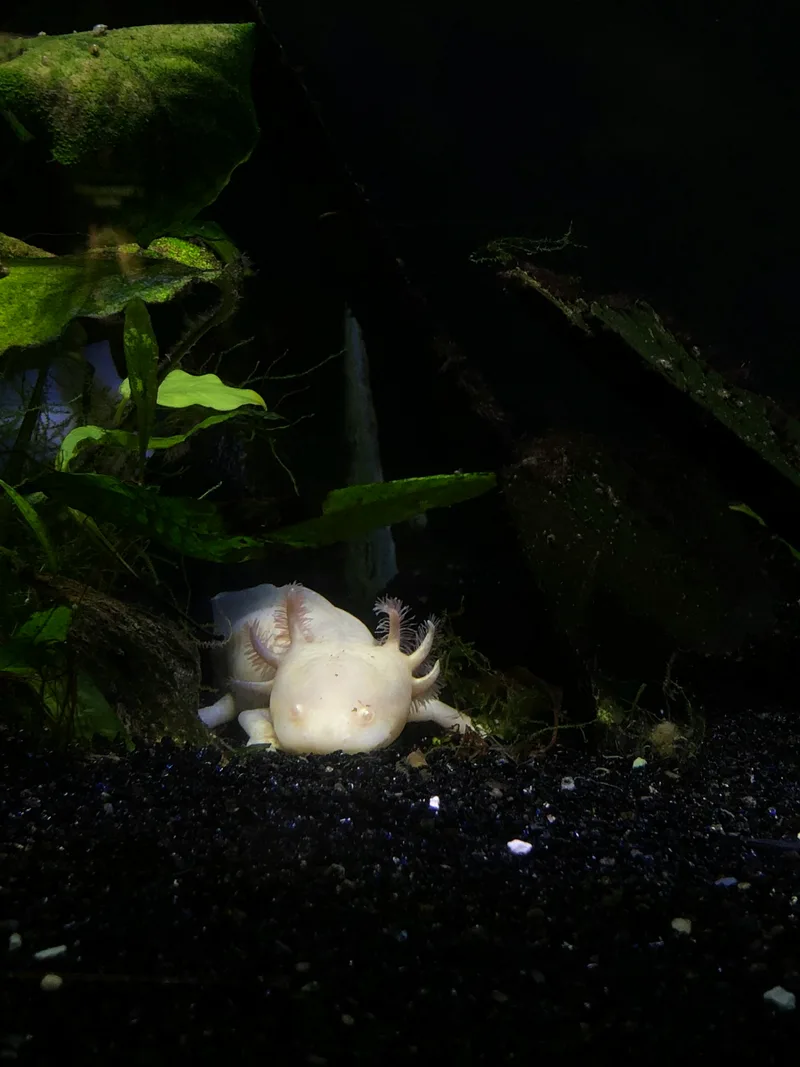
A healthy female axolotl (Ambystoma mexicanum) can lay eggs every three to six months, so several spawns in a single year is well within what her body will do. The number experienced breeders work to is one per year at most, and around three across her whole life. The two answers sit that far apart because of one quiet detail of her biology: the moment she finishes laying a clutch, her ovaries are already building the next one, with no recovery window between.
How Often Should You Actually Let Them Breed?
The working rule among experienced axolotl breeders is plain: at most one spawn per female per year, with a clean two to three months of separation between any pair-up and the next, and a soft lifetime ceiling of around three spawns total. That is the cap, not the goal. A female who never breeds is not a female who is missing out on something.
If you have a male and female sharing a tank right now, you are already inside this question. Cohabiting axolotls do not need any encouragement from you to spawn. They will spawn when the temperature drops, they will spawn after a cold water change, and sometimes they will spawn for no reason you can name. The decision in front of you is whether to keep them together at all.
Quick rules of thumb you can act on:
- One spawn per female per year is the ceiling, not the target.
- After a spawn, separate the pair for at least two to three months before any chance of another.
- Never breed a female under about twelve months old. She is not done growing.
- Aim for no more than around three spawns across her whole life.
- If you are not set up to raise 200 to 1,500 larvae on live food, separate the pair before they breed again.
Why Is the Female's Body the Limiting Factor?
The reason the cap is so much lower than the biology allows comes down to how an axolotl female makes eggs. As soon as she lays a clutch, her ovaries start building the next one. There is no recovery window built into the cycle. The eggs that will become her next spawn are already forming while she is still sticking the current ones onto your filter intake.
A single clutch can run anywhere from 200 to 1,500 eggs. Replacing that much tissue is expensive in protein and energy, and the cost lands on a body that has just spent itself. A female who spawns again two months later is doing all of that on a system that never got back to baseline. The result shows up as slow recovery from a minor injury, weight loss, and fungal infections that a healthy axolotl would shrug off.
This is also why a male's presence alone, not the actual spawning, is what gets females into trouble. A male in the tank is a near-constant trigger for ovulation, even when no spawn ends up happening. The female's body keeps gearing up for a clutch. The gentler setup is to keep her in a tank where her body is not constantly being asked to make eggs.
Did you know? A single axolotl spawn can hold up to 1,500 eggs, each one laid individually and pressed onto plants and decor by the female over a day or two of careful, deliberate placement. Her body starts replacing the first eggs before the last ones leave her.
What Triggers a Spawn in a Home Tank?
In the wild, axolotls spawn on seasonal cues: cooling water and shorter days through late fall, and again on the warming side of early spring. Their bodies are reading the calendar through the water around them. In a home tank, those cues mostly arrive by accident. A colder room in winter pulls the tank temperature down a few degrees. A water change topped up from a cold tap delivers a sharp drop in a single afternoon. The axolotls read it as fall, and a few days later you have eggs.
This is why captive spawning is famously unpredictable. One keeper's pair spawns twice in a year because their fish room runs cold in winter and the tap water drops to the low fifties in March. Another keeper's pair never spawns at all because the room stays a steady seventy and water changes are always temperature-matched. Both are normal. Neither is a sign that anything is wrong with the animals. If your winter water has been creeping into the low sixties or below, you are already in spawn-trigger territory.
The flip side of this is that you can intentionally suppress spawning by holding the tank steady. A tight temperature band year round, lights on a fixed schedule, and temperature-matched water changes are enough to keep most pairs from ever cycling into breeding condition. That is a perfectly reasonable thing to do.
Should the Average Keeper Breed Axolotls at All?
The math is not on your side. A single spawn drops 200 to 1,500 larvae into your care. Within about two weeks they need live food, and within a few more weeks they will start eating each other unless you separate them, which means a lot of tubs of water you are now responsible for. Most pet stores will not take baby axolotls. The ones that will often want them at a size that means months of feeding before they leave your hands.
For a keeper who ended up with a male and a female by accident, the right answer is almost always to separate them. Not because breeding axolotls is wrong, but because a planned spawn is a real project and an unplanned one is a crisis. Axolotls are not actually easy to breed once you count the rearing work, even though the spawning itself takes nothing from you. If you are rethinking the pair entirely, a single axolotl is a complete tank in its own right, and a same-sex pair is the next safest option.
The framing most readers arrive with, how many times a year, is the wrong question for most of them. The better one is whether they should let their pair breed at all this year. The biology that makes axolotls capable of breeding several times a year, that immediate restart of egg production with no built-in pause, is the same biology that makes restraint on your end the kind thing. The female's body has no off-switch. You are the off-switch.