Do axolotls need a heater in their tank?
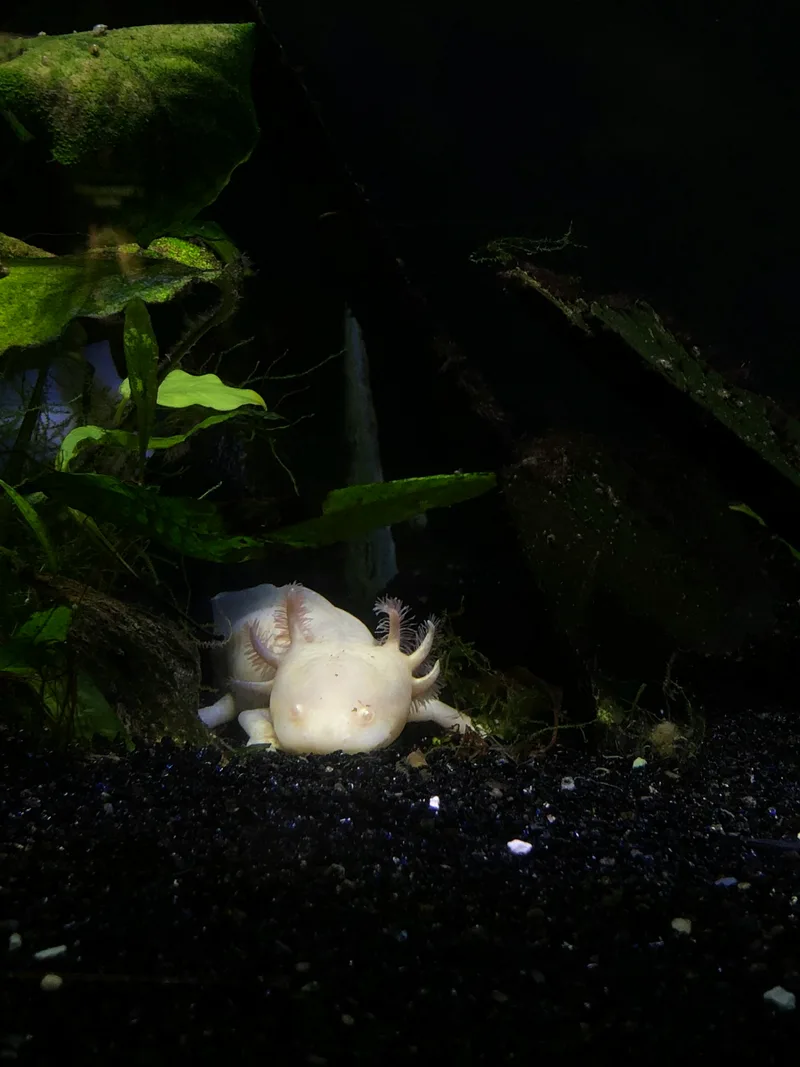
No, almost never. An axolotl (Ambystoma mexicanum) is a cold-water animal that does best at room temperature or a little below, around 60 to 64°F (16 to 18°C), and in most homes the water already sits in or near that range without any help. Here is the part that catches people out: for an axolotl, a heater is one of the few pieces of standard tank gear that can genuinely do harm. The temperature you have to worry about is the high end in summer, not the low end in winter, which is the reverse of almost everything fishkeeping habits tell you to do.
So What Temperature Should the Tank Actually Be?
Aim for water between 60 and 64°F (16 to 18°C). That is the comfortable middle where an axolotl eats well, moves normally, and holds steady. It can drift down into the 50s°F without trouble, so a cool room is not something to fix. In most heated homes, an uninsulated glass tank of water settles a degree or two below the air temperature, which lands a lot of living rooms right inside the target window without any equipment at all.
No heater does not mean no thermometer. The whole job here is knowing the number, not assuming it. A cheap stick-on or digital aquarium thermometer costs a couple of dollars and tells you in a second whether you are fine or drifting toward trouble. Check it through the day for the first week, especially in the afternoon when a room is warmest, and you will quickly learn how your specific tank behaves.
Here is the temperature ladder, from too cold to dangerous:
- Below ~50°F (10°C): too cold. The animal slows right down, eats little, and sits sluggish. Not an emergency, but not where you want to stay.
- 60 to 64°F (16 to 18°C): the comfortable range. Active, feeding, steady. This is the target.
- 65 to 68°F (18 to 20°C): still acceptable, but the top of what is fine. Keep an eye on it.
- Above ~68°F (20°C): the caution zone. Tolerable for short stretches, but stress starts to build the longer it lasts.
- Above ~72 to 74°F (22 to 23°C): the danger line. Sustained water this warm stresses an axolotl badly and, given time, kills it.
Isn't the Real Risk That the Water Gets Too Warm?
For most keepers, yes. Cold rooms rarely push an indoor tank into harm. Warm rooms do, and a summer heat wave is where most temperature trouble starts. So the equipment question flips: instead of asking how to add heat, you are usually asking how to shed it.
A stressed axolotl tells you the water is too warm before the thermometer scares you. The external gills, the feathery fronds on either side of the head, curl forward toward the face instead of fanning out relaxed. The animal goes off its food, gets restless, paces the glass, or hangs near the surface gulping. Pale gills and a generally agitated, can't-settle look all point the same way. Any of these in warm weather means cool the water down, and soon.
Bringing the temperature down is usually cheaper and simpler than people expect. Start with the free moves: get the tank out of direct sunlight and away from radiators or heat vents, and take the lid off or prop it open so heat can escape instead of building up under glass. From there:
- A clip-on fan aimed across the water surface is the single most effective cheap fix. As water evaporates it carries heat away, and a small fan can pull the temperature down several degrees. Top off the tank as the water level drops.
- Frozen water bottles floated in the tank buy you a few hours in a pinch. Use sealed bottles of frozen water, never ice straight into the tank, and swap them on a rotation.
- An aquarium chiller is the real answer if you live somewhere with hot summers and the cheaper tricks can't keep up. It is the priciest option, but for a hot climate it is the one that lets you stop worrying.
If your room stays reliably cool year-round, you are already done and none of this applies to you. If your summers spike, pick the cooling method that matches how hot it actually gets and have it ready before the first heat wave, not during it. For where exactly the upper limit sits, it is worth knowing whether 70°F water crosses into the danger zone for an axolotl, because that is right at the edge of tolerable.
Why Are Axolotls Built for Cold Water in the First Place?
Axolotls come from the cool, high-altitude lake system around Mexico City, mainly Lake Xochimilco, sitting over 7,000 feet up where the water stays cold year-round. Their whole body is tuned to that. "Cold-water animal" is not a preference an axolotl has, it is how the machine is built. The metabolism runs slow and steady at low temperatures, the way it is supposed to.
Warm water throws that off. Heat speeds an axolotl's metabolism up, and a faster metabolism burns more oxygen and produces more waste than the animal is built to keep up with. The body starts demanding more than it can supply. That gap, oxygen and waste-clearing falling behind a metabolism that has been revved past its design, is the mechanism behind heat stress. The gills curling forward and the loss of appetite are what that overload looks like from the outside.
There is a second turn of the screw, too. Warm water physically holds less dissolved oxygen than cool water does. So just as a warmed-up axolotl needs more oxygen, the water around it is carrying less. The two effects push in the same direction, which is why warm water hits an axolotl harder and faster than the temperature alone might suggest.
Did you know? An axolotl breathes partly through those feathery external gills, pulling oxygen straight out of the water across them. So warm water lands a double blow: a sped-up metabolism that needs more oxygen, drawing it from water that now holds less.
Is There Ever a Time a Heater Makes Sense?
Once in a while, yes. The exception is a genuinely cold space: a tank kept in an unheated garage, a basement, or a room that drops near or below freezing in deep winter. Water that cold, sustained, is its own kind of stress, and there a heater earns its place.
Even then, the job is the reverse of what a heater normally does. You are not warming the water to tropical-fish levels. You are setting a low-wattage heater to a cool target, around 60°F (16°C), so it only ever kicks on to keep the water from sliding into dangerously cold territory. Think of it as a floor under the temperature, not a thermostat aimed at warmth. If you are in a cold home and trying to work out whether you are anywhere near that floor, the place to start is how cold the water can safely get before it becomes a problem.
That single exception aside, axolotl keeping asks you to unlearn almost everything fishkeeping teaches. Nearly every instinct you bring to a new tank is about adding warmth, picking the right heater, hitting the right tropical number. The axolotl is the animal that quietly asks you to set all of that down. The job is not to heat the water. It is to leave it cool and keep your eye on the high end.