Do axolotls normally float?
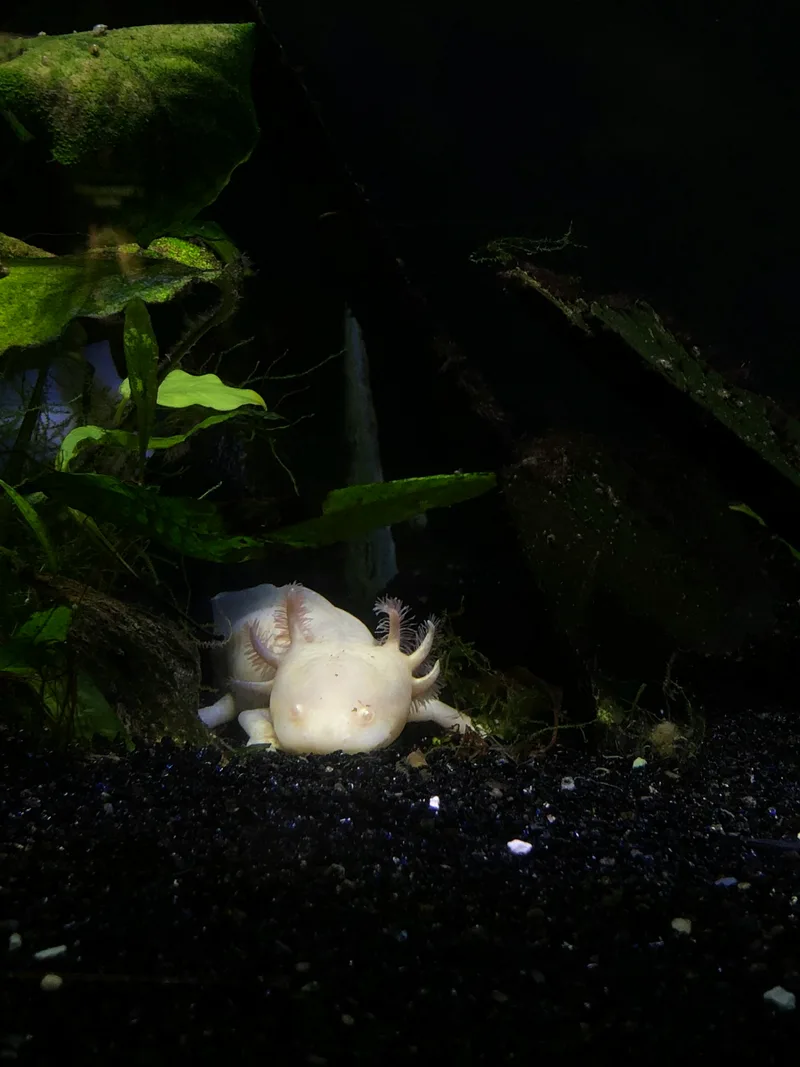
Yes, axolotls float, and most of the time it's completely normal. An axolotl (Ambystoma mexicanum) gulps a little air at the surface or just hangs in the water for a while, then goes back to walking the bottom. The catch is that a perfectly harmless float and the kind that means trouble can look exactly the same from across the room. What tells them apart isn't the floating. It's whether your axolotl can still get back down when it wants to.
Is My Axolotl's Floating Normal, or a Sign of Trouble?
The single most useful test is this: can it get back down on its own? An axolotl that bobs up, then walks or swims back to the bottom whenever it likes is behaving normally. One that's stuck at the surface and can't sink no matter how it tries is telling you something is off.
Plenty of floating is harmless. The most common reason is simple: your axolotl swallowed a gulp of air at the surface, and now its back end rides up until that air works its way out. A short float right after eating is normal too. So is resting up against a plant or a piece of decor near the top of the tank. In all of these, your axolotl is still in control. Startle it and it sinks.
The floating worth acting on looks different. The axolotl can't get back down at all. It tilts to one side or rolls upside-down. It stops eating. The gills look pale or curl forward against the head. When floating comes with any of those, the two usual culprits are bad water quality (ammonia building up in an uncycled or dirty tank) and gas trapped in the gut from constipation or impaction.
Use this to place your own axolotl:
| Probably normal | Worth acting on |
|---|---|
| Gets back down when it wants to | Can't sink at all, no matter what |
| Floats only briefly | Floating for many hours, or for days |
| Body stays level | Floating tilted, rolled, or upside-down |
| Eating normally | Refusing food |
| Calm, gills look full and feathery | Gills pale or curled forward |
If your axolotl lands on the right-hand side of that table, the next thing you'll want to know is how urgent the situation actually is. The reasons floating tips from harmless into a real problem, and how serious each one gets, are worth understanding before you reach into the tank: how serious a floating axolotl can get.
Why Do Axolotls Float at All?
An axolotl is built to walk the bottom. It's fully aquatic and spends its life on the floor of the tank, so when it ends up at the ceiling, something is making it more buoyant than it's meant to be.
Almost always that something is air or gas. A bubble swallowed at the surface lifts the back end until it passes. Gas produced in the gut during digestion does the same thing, and when digestion stalls from constipation or a swallowed piece of gravel, that gas has nowhere to go and the float lasts longer. This is why a float that won't quit so often traces back to the gut.
Water quality sits underneath all of it. Ammonia from an uncycled or overdue-for-a-change tank stresses an axolotl, throws off its feeding, and makes the digestive problems that cause gut gas more likely. So even when the float looks like a simple buoyancy issue, the water is often the first thing to check.
Did you know? Unlike every fish on this site, an axolotl has no swim bladder, the gas-filled organ a fish inflates and deflates to hold its depth. An axolotl manages its position the hard way: by walking, by sinking under its own weight, and by whatever air happens to be in its gut. That's exactly why a single swallowed bubble or a pocket of trapped digestive gas floats it so easily. There's no internal float to compensate.
Is Floating Different for a Baby Axolotl?
Young, small axolotls float more readily than adults, and they're worth watching a little more closely. The same rule still applies: a baby that makes its way back to the bottom on its own is fine. A baby that can't sink, no matter how it paddles, is not.
The difference is mostly margin. A juvenile is smaller and less sturdy, so a problem that an adult would shrug off can knock a baby off its feet faster. If you've got a persistently floating juvenile, the specifics of what to check and how to help a small, young axolotl are worth getting right: why a small axolotl floats and what to do about it.
Whatever the age, the thing to keep your eye on is never the floating by itself. It's whether your axolotl is still in charge of its own depth. One that bobs up and walks back down whenever it pleases is just being an axolotl. One that's stuck at the surface, tilted, or off its food is pointing you straight at the water and the gut. Once you stop watching the symptom and start watching the control behind it, a worried glance turns into a useful read of your tank.