What should I do when I first get a goldfish?
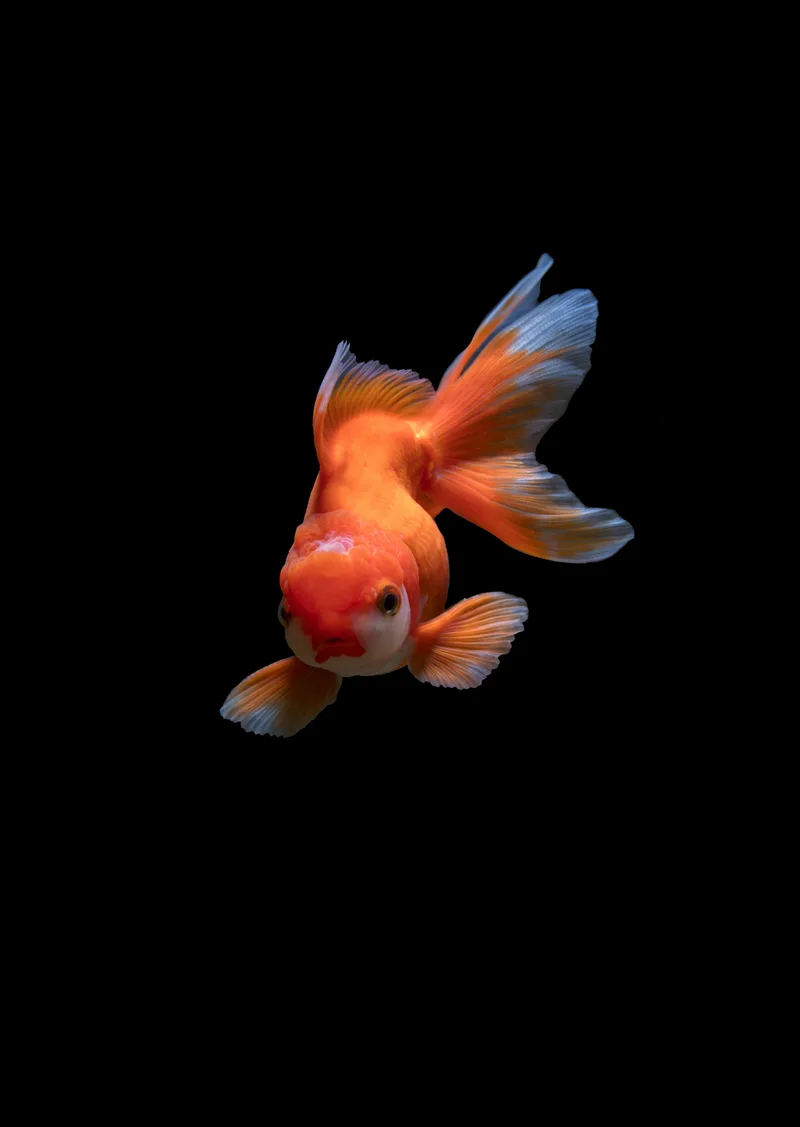
You're standing in the kitchen with a goldfish in a knotted plastic bag, and the answer is: float the bag in the tank for 15 to 20 minutes with the lights off, net the fish in, and don't feed it tonight. The complication is that the tank you brought home today is almost certainly not "cycled" yet, which is the thing that quietly kills most first-week goldfish, and it's also probably too small for a fish that lives 10 to 15 years. Both of those are fixable from where you are now, and almost everyone who keeps a goldfish (Carassius auratus) starts roughly here.
What Do I Do in the First Hour I Get Home?
The whole arrival sequence takes about twenty minutes and is mostly waiting. Do these in order:
- Turn the tank lights off and dim the room. Bright light on a stressed fish makes the stress worse, and goldfish don't need light to find their way around.
- Float the sealed bag in the tank for 15 to 20 minutes. This matches the bag water's temperature to the tank water's. A sudden temperature shift is one of the few things that can drop a goldfish in its first hour.
- Don't open the bag and pour the pet store water into the tank. That water is full of waste and possibly disease, and the tank doesn't need any of it.
- Net the goldfish out of the bag and into the tank. Use a soft net, get the fish across in one motion, and let the bag water go down the drain.
- Leave the lights off for the rest of the day. The fish will pick a corner, sit, and start to take in its surroundings. That is what it should be doing.
- Don't feed it tonight. A goldfish that just moved house has no appetite, and uneaten food in a tank that hasn't been running long fouls the water faster than you would believe.
What If My Tank Isn't Cycled Yet?
It probably isn't, and that is the single biggest risk in the first weeks. "Cycling" is the process of growing two kinds of bacteria inside the filter that handle the fish's waste. Without them, the ammonia the goldfish produces builds up in the water and starts to burn its gills and skin. Goldfish are unusually heavy waste producers for their size, which makes them poor candidates for what's called a fish-in cycle. It is survivable, but it takes diligence.
The rescue protocol is straightforward. Change 25 to 30 percent of the water every other day, using a dechlorinator on the new water (chlorine kills the same bacteria you are trying to grow). If you can pick up an aquarium test kit that reads ammonia and nitrite, do, and aim to keep both as close to zero as you can manage between changes. Watch the fish: clamped fins held tight to the body, gasping at the surface, or sudden dullness in color all point to ammonia in the water before any test kit can tell you. A water change is the answer in almost every case.
If the tap water itself is the worry, conditioned tap water is safe for almost every goldfish tank: a dechlorinator and a roughly matched temperature is what the new water needs.
How Do I Know If My Goldfish Is Settling In Okay?
The first few days look quiet, sometimes worryingly so, and most of what you will see is normal. A goldfish that has just moved into a new tank often does very little for a day or two, and that is closer to the species' actual range of behavior than the cartoon-active fish in your head.
Normal first-week behavior:
- Hiding in a corner or behind décor for the first day or two
- Sitting still on the bottom in short stretches between slow exploring
- Color looking duller or paler than it did at the shop
- Skipping food for the first day, sometimes the second
- Slow, steady gill movement, with fins mostly held open
Actually concerning:
- Gasping at the surface, or hanging at the surface with the mouth at the waterline
- Lying flat on its side on the bottom for more than a few minutes
- Fins clamped tight against the body for more than a day
- Visible white patches, fuzzy growths, or red streaks in the fins
By day three or four a settling goldfish usually starts to swim more, hold its fins open, and show interest in food. If that is what you see, things are going well.
Is the Tank I Bought Big Enough?
Almost certainly no, and this is the part most new goldfish owners need to know early. The starter setup that came with the fish, the small bowl, the 5 or 10 gallon kit, the plastic cube on the kid's dresser, was built for the moment you bought it, not the next decade. Goldfish keep growing for years, produce a remarkable amount of waste for their size, and a single fancy variety hits 6 to 8 inches at adult size. Commons and comets get much bigger.
Honest minimums for a single goldfish, in a tank that is filtered and cycled:
- One fancy goldfish: 20 gallons, with another 10 gallons for each additional fancy
- One common or comet goldfish: 75 gallons, and realistically a pond at adult size
This is not the conversation for tonight, which is about getting the fish through the next few hours. But it is the next thing to solve, and most people work toward it over the first month or two rather than panic-buying a tank the same evening they bought the fish. The math on how big a tank a single goldfish actually needs starts at 20 gallons for a fancy and runs up from there for the long-bodied varieties. If you arrived home with a bowl, the biology behind why a bowl is a poor home for a goldfish comes down to oxygen exchange at the water surface and the fish's own waste accumulating in too small a volume.
The reframe that helps here: goldfish were domesticated in China over a thousand years ago as ornamental pond fish. The bowl is a 19th-century invention. The species is built for volume and movement, and the work of keeping one well is mostly the work of giving it room.
What's My Routine for the First Few Weeks?
The order of operations, in descending importance: feeding restraint, water changes, leave it alone.
Feeding. Once a day, only what the goldfish eats in about a minute. If it ignores the food, scoop it out and skip the next day. Overfeeding is the most common way new goldfish owners kill their fish, because uneaten food rots into ammonia and the fish itself does fine on much less than the back of the can suggests.
Water changes. While the tank is cycling, swap 25 percent of the water every two or three days, using dechlorinator on the new water and trying to match the temperature roughly. Use a siphon to pull water out from near the substrate, where the waste settles. Don't rinse the filter media in tap water at any point in the first month. The bacteria you need are growing on it, and chlorine kills them.
Leave it alone. Don't add a tank mate yet. Don't rearrange the décor. Don't add new gravel. Each of these stirs up the substrate and slows the cycle.
No heater. Goldfish are coldwater fish and are comfortable at normal room temperatures. A heater set to tropical numbers raises their metabolism and their waste output, which makes the cycling problem worse rather than easier. Leave the heater out of the setup.
Did you know? Goldfish are one of the very few aquarium fish that don't need a heater. They descend from the Prussian carp, a tough northern coldwater fish, and they sit comfortably between 65 and 72°F (18 and 22°C). Heating a goldfish tank to tropical temperatures is closer to a mild stressor than a kindness.
The fish in your tank right now is descended from carp that humans have kept for over a thousand years, and the situation most new owners arrive in (a small tank, a cycle that hasn't happened, and the sense that nobody at the shop quite explained the whole thing) is recoverable. Getting through the first few weeks with the fish alive, eating, and starting to swim more is more than half the work.