What keeps goldfish happy?
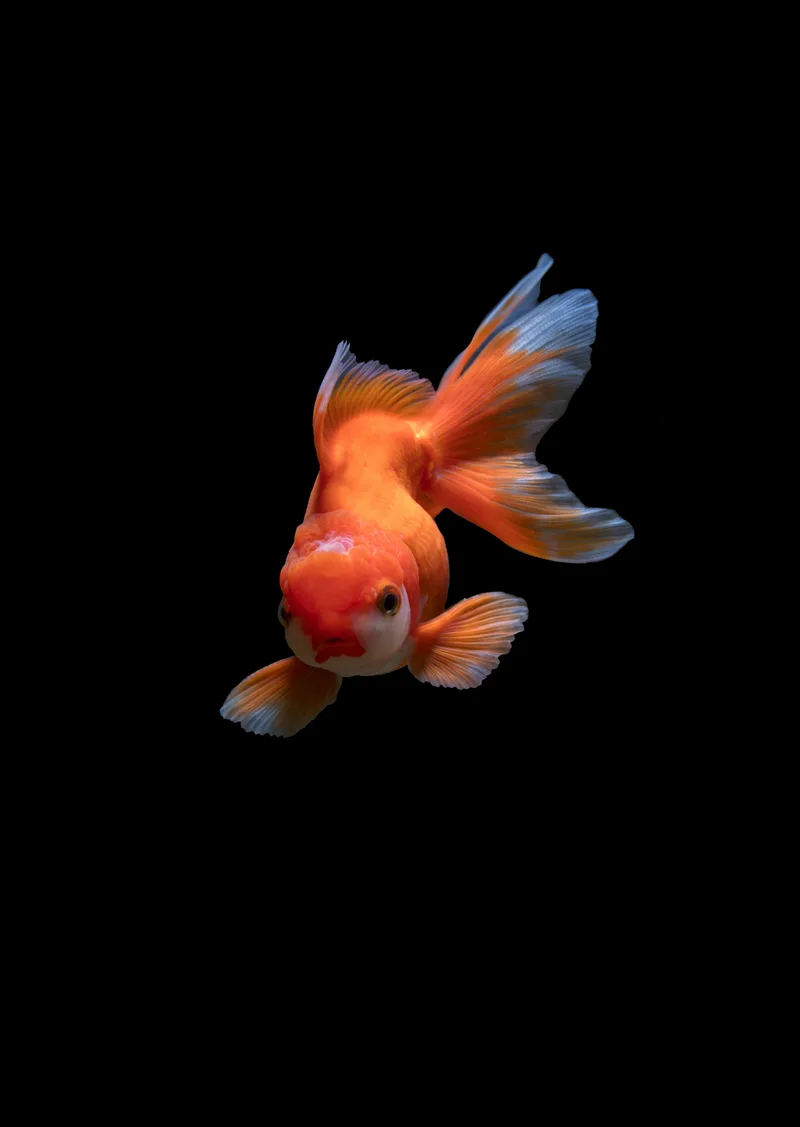
A goldfish stays happy when it has more space than seems reasonable, cool water in the 65 to 72°F range, strong filtration, at least one other goldfish for company, and a varied diet it can actually digest. The catch is that for this species, "alive" and "happy" aren't the same thing. A goldfish in a 1-gallon bowl can keep breathing for years while the same conditions stunt its growth, damage its kidneys, and flatten its behavior down to surface-gulping. Bowl-kept goldfish often die in a year or two from problems the owner never saw coming. A well-kept goldfish does something very different, and the rest of this article is how to get there.
What does a happy goldfish actually look like?
You can read a goldfish (Carassius auratus) by what its body is doing, and once you know what to watch for, the difference between a thriving fish and a struggling one becomes obvious within seconds of glancing at the tank.
A thriving goldfish shows a handful of signs together, not in isolation:
- Active swimming through all levels of the tank, not just hanging at the surface or sitting on the bottom
- Bright, even color across the body, with no fading patches or dull spots
- A strong appetite and quick response when food hits the water
- Alert orientation toward movement outside the glass, including following you across the room
- Fins held open and flowing rather than clamped tight against the body
- Social interaction with tank mates, especially feeding and swimming together
- Smooth scales with no scraping against rocks (called flashing) or rapid gill movement
The warning signs are the inverse. A goldfish that's gasping at the surface, sitting motionless on the bottom, refusing food for more than a day or two, holding its fins clamped, or losing color is telling you something about the water or the tank. None of these are mysterious. They're the fish responding to conditions its body wasn't built for, in the only language it has.
What conditions actually keep a goldfish happy?
Five things do almost all of the work. Get these right and most of the other questions about goldfish care take care of themselves.
| Condition | Why it matters |
|---|---|
| Tank size: 20+ gallons for one fancy goldfish, 75+ for one common or comet, plus 10 to 20 gallons per additional fish | Goldfish are heavy waste producers and grow throughout their lives. A cramped tank means concentrated ammonia and stunted growth, where the body stops growing but the internal organs don't. |
| Water temperature: 65 to 72°F (18 to 22°C), no heater | Goldfish are coldwater fish with a metabolism tuned for cool water. Warm water speeds their metabolism past what their organs can sustain and lowers the oxygen the water can hold. |
| Filtration: rated for 2 to 4 times your tank volume per hour, with mechanical and biological media | Goldfish produce far more waste than tropical fish of the same size. Undersized filters let ammonia and nitrite spike between water changes, which damages gills and kidneys. |
| Group housing: at least two goldfish of the same body type | Goldfish are shoaling fish that recognize tank mates and feed more confidently in a group. A solo goldfish typically shows duller, less varied behavior. |
| Varied diet: sinking pellets, blanched vegetables, occasional protein, and gel food | Goldfish have a long, looping intestine with no true stomach. A flake-only diet bloats them; variety keeps the gut moving and prevents the swim-bladder problems that plague fancy varieties especially. |
The numbers in this table are not "optimal setup" numbers. They're the conditions a goldfish's body expects. Anything smaller, warmer, or less filtered is asking the fish to compensate for something its physiology has no way to compensate for.
A note on the tank size split: fancy varieties (orandas, ryukins, fantails, ranchu) are slower, rounder fish bred from selective inbreeding. They top out smaller than commons and comets but still need 20 gallons minimum for one. Commons and comets are essentially the original carp form, fast and torpedo-shaped, and they can hit 12 inches or more. The 75-gallon floor for those isn't generous; it's the minimum that lets a full-grown common turn around comfortably.
Did you know? Goldfish in well-maintained aquariums regularly live 10 to 15 years. The oldest documented pet goldfish, a fish named Tish, lived 43 years with a family in the UK. Lifespan and welfare track conditions, not species.
Why isn't "alive" the same as "happy" for a goldfish?
The reason this matters so much is biology, not sentiment. Goldfish are coldwater cyprinids descended from the Prussian carp (Carassius gibelio), a hardy river and pond fish from East Asia. Their bodies are built for high-volume, well-oxygenated, cool water with stable parameters. A thousand years of selective breeding gave us fancy varieties and brilliant colors, but the underlying physiology didn't change.
That biology has practical consequences. Warm water holds less dissolved oxygen, and a warm goldfish has a faster metabolism demanding more of it, so the gap between supply and demand widens fast in a heated tank. The gills work harder, which is what gasping at the surface looks like. Over time, the constant work damages the gill filaments and the kidneys, which are also working overtime to filter ammonia out of the bloodstream.
Small water volumes make this worse on every axis. Ammonia from goldfish waste builds up faster in less water. Temperature swings happen faster. There's no margin for a missed water change. A goldfish in a bowl is constantly compensating with its body for what the tank isn't doing chemically. It can keep doing that for years, which is what makes the situation deceptive. The fish is alive, so the owner concludes the setup is fine. The fish is alive despite the setup, and the costs are happening at the cellular level where you can't see them.
Happiness in a goldfish is what the body does when it isn't compensating. The bright color, the active swimming, the appetite, the social behavior, all of it is the visible output of a fish whose internal systems aren't fighting the tank.
Do goldfish actually need company to be happy?
Yes. Goldfish are shoaling fish, which means in the wild and in captivity they live in loose groups and read their surroundings through other fish. They recognize individual tank mates, follow each other while foraging, and feed more confidently when others are eating. A solo goldfish can survive without company, but its behavior typically narrows: less exploration, more time near the surface or hiding, slower response to food.
The practical version of "company" is at least two goldfish of the same body type. Don't mix a comet with a ranchu. The fast-swimming, torpedo-shaped commons and comets out-compete fancies at feeding time and can stress them by sheer speed. Two fancies together, or two commons together, works far better than one of each.
Sizing matters too. Two goldfish need more than a 20-gallon tank, not the same 20 gallons split between them. Use the per-fish add-on: 10 to 20 more gallons for each additional goldfish, depending on type. A pair of fancies is comfortable in 40 gallons; a pair of commons needs closer to 100.
Goldfish don't make good community fish with most tropical species. The temperature mismatch is the main reason. Tropical fish need 75 to 80°F, goldfish need 65 to 72°F, and there's no overlap that suits both. Goldfish also eat fast and indiscriminately, which means smaller tank mates lose at every feeding. If you want company for a goldfish, the right answer is another goldfish.
How do you make a goldfish tank more interesting for the fish?
Once the basics are right, the day-to-day quality of the goldfish's life comes down to how much there is to do inside the tank. Goldfish are intelligent, exploratory, and constantly grazing. A bare tank with one plastic plant is a fish equivalent of a bare room.
Sturdy live plants do a lot of work at once. They give the goldfish something to graze on, they shelter the fish without crowding the swim space, and they help with water quality between water changes. Goldfish will eat softer plants down to the stems, so the species that hold up in a goldfish tank are anubias, java fern, hornwort, and amazon sword. Anchoring anubias and java fern to driftwood or rocks keeps the goldfish from uprooting them while digging.
Hardscape matters too. Smooth river rocks, ceramic caves, and pieces of driftwood give the goldfish something to swim around, under, and through. Avoid anything with sharp edges, because fancy varieties especially tear their fins on rough decor. Keep gravel either large enough that a goldfish can't fit it in its mouth, or fine enough that it passes through without lodging. Pebbles in the half-inch range are the wrong size for both.
Food itself is a form of enrichment when you vary it. Sinking pellets that the fish has to chase to the bottom, blanched zucchini or peas clipped to the glass, frozen bloodworms thawed once a week, and occasional gel food all give the goldfish different things to do at feeding time. The whole layout of the tank changes the way you feed it, since the proper setup for a goldfish tank accounts for substrate type, plant placement, and current direction in ways that affect how food disperses.
Hand-feeding is the simplest interaction enrichment you can offer. Goldfish learn quickly. Within a week or two of consistent feeding from the same spot, most goldfish will come to that spot when you approach. Some will eat directly from your fingers. This isn't sentimental, it's recognition. The fish has learned you're the source of food, and it responds. Picking up on those responses is part of reading whether a goldfish is happy, which comes down to watching color, fin posture, swimming pattern, and feeding response together rather than any single sign in isolation.
Skip the gimmicks. Mirrors stress goldfish by triggering territorial responses to their own reflection. Fish-school products marketed as toys are mostly novelty for the owner, not the fish. The goal is variety and exploration, not entertainment in the human sense.
Get the tank sized, cooled, filtered, and stocked the way the fish's body expects, and "happy" stops being a project. It becomes the natural state of a goldfish whose conditions match its biology. A well-kept goldfish routinely lives 10 to 15 years, sometimes much longer, and spends those years doing the things goldfish do. Do the boring things right and the fish gives you the rest for free.