How big should my tank be for a goldfish?
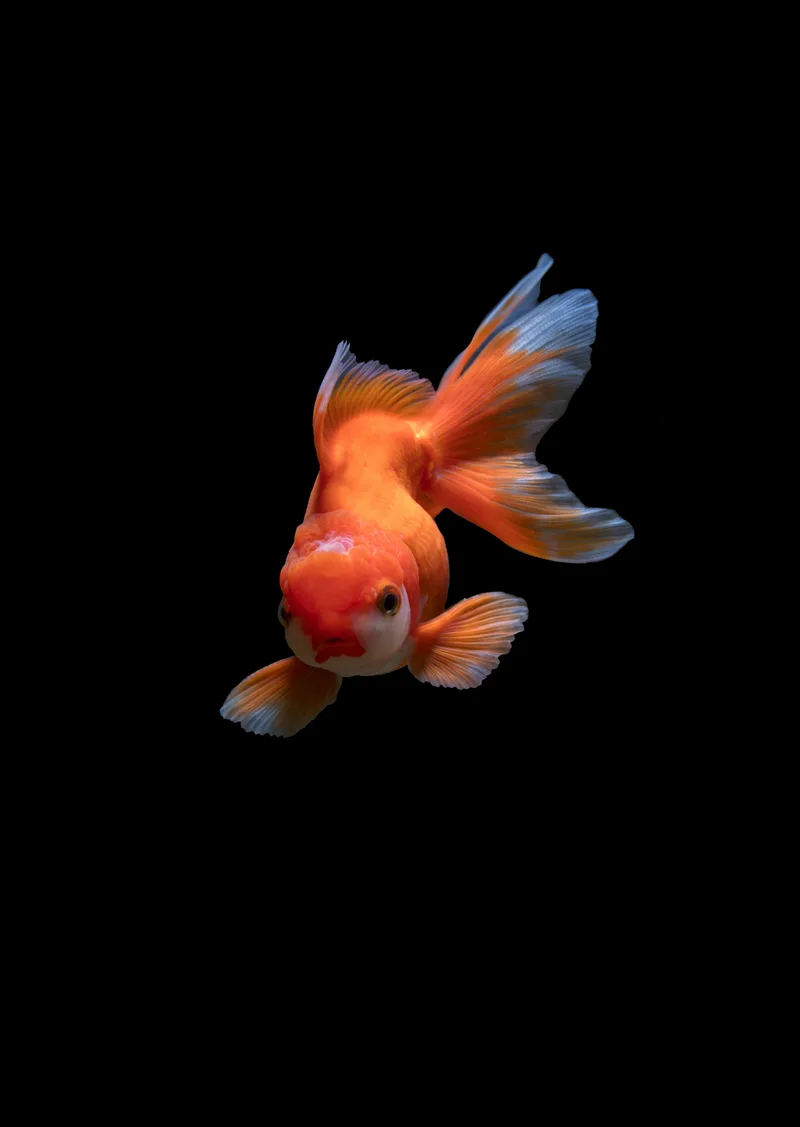
Two fish sold under the same word "goldfish" need very different tanks: a fancy (oranda, ryukin, fantail, black moor) needs 20 gallons (75 L) at the floor, and a common or comet needs 75 gallons (285 L), with a pond being the honest answer for most adult commons. The pet store sign almost never tells you which one is in the bag, and the gap between those two numbers is why the advice online looks like everyone is contradicting everyone else. Which number applies to the fish you actually have comes down to a body-shape difference you can spot in about ten seconds.
What size tank does one goldfish actually need?
A single fancy goldfish needs 20 gallons (75 L) at the floor and is happier in 30 or more. A single common or comet needs 75 gallons (285 L) at the floor, and an adult common is a pond fish whether the pet store said so or not. A shubunkin sits with the commons, not the fancies.
| Variety | Minimum tank size for one | Add per additional fish |
|---|---|---|
| Fancy (Oranda, Ryukin, Fantail, Black Moor, etc.) | 20 gal / 75 L | +10 gal each |
| Common or Comet | 75 gal / 285 L | +20 gal each (a pond is usually the right home for adults) |
| Shubunkin | 75 gal / 285 L | +20 gal each |
Tank shape matters almost as much as volume. A long, wide tank beats a tall one of the same gallons every time. Goldfish swim horizontally and breathe at the surface, so length gives them somewhere to go and width gives the water more surface area to exchange oxygen with the air.
One important note: these numbers are for an adult goldfish, not the small one you brought home. A two-inch goldfish from the pet store will become a six-inch fancy or a foot-plus common, and it will get there faster than most owners expect. Buy the tank for the fish it will be, not the fish it is.
Does the answer change for a fancy vs. a common goldfish?
Yes, and the difference is huge. The pet store sign almost never tells you which one is in the bag, so the first job is figuring out what you actually have.
Fancy goldfish (orandas, ryukins, fantails, black moors, telescopes, ranchus, and so on) have short, round, egg-shaped bodies, double tails that fan out behind them, and they swim in slow, wobbly arcs. They top out around 6 to 8 inches and are physically incapable of the speed and stamina of their slim cousins. A 20-gallon (75 L) tank is enough room for one to live a full life, because a fancy doesn't sprint, it cruises.
Commons, comets, and shubunkins have streamlined torpedo-shaped bodies, single forked tails, and they swim like they have somewhere to be. An adult common reaches 12 inches without much effort and 18 inches in good conditions. Putting one in a tank under 75 gallons (285 L) is like keeping a border collie in a studio apartment: the animal is built to move, and the space won't let it. Their bioload is also significantly higher than a fancy of the same age, which means the same gallon of water gets dirty faster.
If you can't yet tell which kind you brought home, the body shape and tail of a fancy versus a common goldfish is the cleanest way to tell them apart in under a minute.
Why do goldfish need so much more space than they look like they need?
A four-inch goldfish doesn't look like it needs 20 gallons of water. A four-inch tetra doesn't. The difference comes down to three things, and once you see them, the numbers stop feeling arbitrary.
The first is bioload. Goldfish are unusually heavy waste producers compared to similarly sized tropical fish. They eat a lot, they digest fast, and the ammonia comes out the other end at a rate a small tank simply can't keep up with. The same gallon of water that stays clear for a week with a few neon tetras goes cloudy in days with a single goldfish. More water dilutes the waste and gives the filter and the beneficial bacteria a fighting chance.
The second is oxygen. Goldfish are coldwater fish, kept unheated at room temperature or cooler. Cold water already holds less dissolved oxygen than warm water, and a tall narrow tank holds even less because the surface area where oxygen actually enters the water is small. A long, wide tank gives the water room to breathe. This is why a 20-gallon long is a much better goldfish tank than a 20-gallon tall, even though the gallons match on the receipt.
The third is adult size. Goldfish do not "grow to the size of their tank." That is a persistent goldfish myth that does real harm, and the short version is this: a goldfish in a too-small tank doesn't stay small because it's content, it stays small because its growth has been stunted by poor water quality, and the same poor water quality is also damaging its organs. The fish is not "fine," it is dying slowly.
Did you know? A healthy common goldfish in a pond can outlive the family dog. Verified records put 15 to 20 years on the table when conditions are right, and the oldest documented goldfish, a comet named Tish, lived to 43.
The takeaway is that "tank size" is really shorthand for "water volume per fish, kept clean and oxygenated." Gallons are the lever you have for keeping water quality and oxygen where the fish needs them. Filtration and water changes can shift the floor a little, but they cannot turn a 10-gallon tank into appropriate housing for a goldfish. Nothing can.
What if you want to keep more than one?
Most people don't stop at one goldfish, and that's fine, because goldfish are social and notice each other. The math is additive: each additional fancy adds 10 gallons (38 L) to the minimum, and each additional common or comet adds 20 gallons (75 L).
So two fancies fit comfortably in a 30-gallon tank. Three fancies want 40, four want 50, and so on. Two commons in a home tank, on the other hand, push you into 95 gallons and up, which is where most indoor setups stop being practical. Two adult commons in anything home-tank-sized is not enough water, no matter what the filter says.
The realistic stocking number for a given tank depends on the variety, the filter, and how often you change water, but the per-fish floors above are the place to start.
A common goldfish that has outgrown your living room is a candidate for a backyard pond rather than a tank upgrade, where 75 gallons stops being the question and 300 plus is the comfortable answer. The cheapest insurance against most of the goldfish problems you'll otherwise spend years trying to fix is simply giving them more water than the rule says they need. The upgrade you put off now is the one that will pay for itself ten years from today, because a goldfish kept in real space rewards the keeper with a fish that's still around when the kids leave for college.