What happens if KH is too high in a goldfish tank?
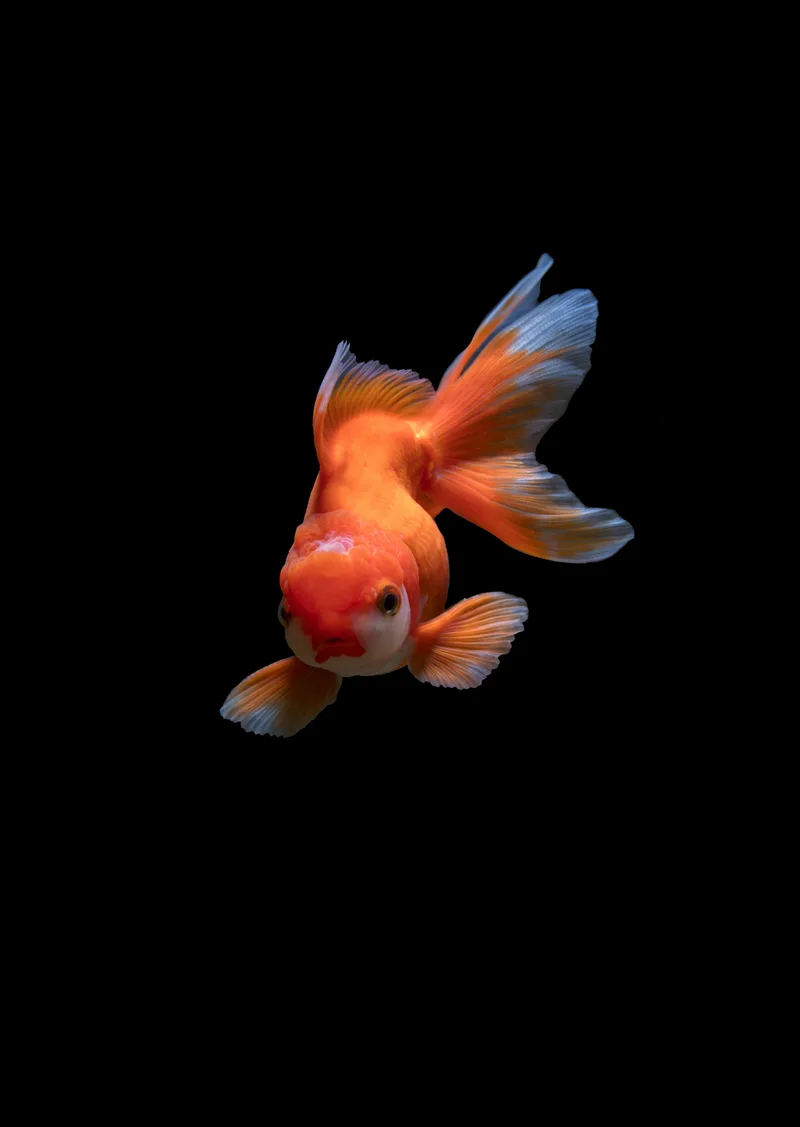
High KH almost never hurts a goldfish. The damage usually comes from the bottle of "pH down" you reach for to fix it: the carbonate buffer eats the acid, KH climbs back within a day, and the tank ends up bouncing between two pH values instead of sitting at one. Goldfish came from hard-water carp, and a steady pH of 8.2 is easier on them than a pH that swings from 7.4 to 8.0 every few days. The KH number itself only starts to matter at one specific threshold, and even then it's the pH you watch, not the KH.
What KH range do goldfish actually need?
Goldfish do well in a surprisingly wide KH range. Most tap water falls somewhere between 4 and 12 dKH, and goldfish are comfortable across that entire span. If anything, they lean toward the higher end.
| KH range (dKH) | What it means for goldfish | Action needed |
|---|---|---|
| Below 4 | Low buffering. pH can swing between water changes, which is harder on goldfish than a slightly "wrong" number. | Add a small amount of crushed coral to the filter, or look into a KH buffer product. Test weekly until stable. |
| 4 to 8 | Solid middle ground. pH stays steady, and goldfish have no trouble here. | None. Keep up regular water changes. |
| 8 to 12 | On the higher side, but goldfish handle it without issue. pH will sit in the mid-to-upper 7s or low 8s. | None. This is fine for goldfish. |
| Above 12 | Very high. The KH itself won't hurt your fish, but pH may be pushed above 8.5, which is worth watching. | Test pH. If it's consistently above 8.5, see the section on gradual dilution below. |
The short version: if your test kit reads anywhere from 4 to 12 dKH, your goldfish are fine. Even readings above 12 aren't automatically dangerous. The number to watch at that point is pH, not KH.
Goldfish are tolerant of a wide range of water parameters, and KH is one of the parameters where they have the most room.
Should I try to lower my KH?
In most cases, no. Goldfish are hard-water fish. They come from a lineage of carp that thrived in rivers and lakes with significant mineral content, and a high KH reading in a home aquarium is closer to their natural comfort zone than a low one.
The products sold as "pH down" or "KH reducers" work by adding acid to the water. The carbonate buffer you're trying to lower just eats that acid, so the effect is temporary. Within hours or days the KH climbs back, and you're left with a tank that bounced between two different chemistries. That bounce is what damages fish. Goldfish can handle a steady pH of 8.2 far better than a pH that swings from 7.4 to 8.0 every few days.
A few rules of thumb:
- KH under 12 dKH with healthy goldfish? Leave it alone. Your water is doing its job.
- pH consistently above 8.5? Consider gradual dilution with RO (reverse osmosis) or distilled water at water-change time. This lowers KH gently over several changes.
- Never use pH-down chemicals in a goldfish tank. They fight the carbonate buffer and create exactly the instability goldfish handle worst.
- If your tap water KH is very high, mix it with RO water before adding it to the tank. Treating tap water in a bucket is safer than dosing the tank directly, because the fish never experience the transition.
Stable water with a high KH is better than "perfect" water that keeps shifting.
Why does high KH push pH up?
KH measures the dissolved carbonates and bicarbonates in your water. These compounds act like a chemical sponge for acids: whenever something tries to push the pH down (fish waste breaking down, CO2 from respiration, tannins from driftwood), the carbonates absorb that acid and neutralize it. The more carbonates in the water, the harder it is for anything to move the pH.
So high-KH water tends to sit at a higher pH. The buffer keeps soaking up every acid the tank produces, so the pH stays elevated and steady. In a low-KH tank, those same acids would gradually pull the pH down between water changes, sometimes enough to stress fish overnight.
For goldfish, this buffering is actually a good thing. Goldfish prefer water on the alkaline side, generally somewhere between 7.0 and 8.4. A strong KH buffer keeps the pH parked right in that zone and prevents the crashes that happen in soft, poorly buffered water.
The only scenario where this relationship becomes a problem is when KH is so high that it pushes pH past what even goldfish are comfortable with, roughly above 8.5. At that point the buffering is still doing its job (keeping pH stable), but it's keeping it stable at a number that's too high.
What if my pH is stuck above 8.5?
If your KH is driving pH consistently above 8.5, here's the approach that works without creating new problems.
Start by testing your tap water. Fill a glass, let it sit for 24 hours (so dissolved gases equalize), then test the KH and pH. If your tap water itself has very high KH, that's your baseline, and the tank will always drift back toward it after water changes.
Next, check your substrate and decorations. Crushed coral, aragonite sand, limestone, and some ocean rock dissolve slowly into the water and raise KH over time. If your tap water tests moderate but your tank reads much higher, one of these is likely the source. Removing or replacing the substrate fixes the problem at the root.
If the tap water is the culprit, the fix is dilution. Mix your tap water with RO or distilled water in your water-change bucket before adding it to the tank. Start with a 75/25 tap-to-RO ratio and test the result. Adjust the ratio over several water changes until your tank pH settles below 8.5. There is no rush. Goldfish tolerate a range of KH levels, and gradual shifts over weeks are far safer than a sudden correction.
The goal is not a specific KH number. It's a stable pH that sits in the range goldfish do well in. A KH of 10 dKH with a pH of 8.0 is a better tank than a KH of 6 dKH with a pH that moves around. The buffering that high KH provides is the same kind of stable, alkaline environment goldfish evolved to thrive in, and the instinct to fix a high number often does more harm than the number itself.