Is 40 kH bad for goldfish?
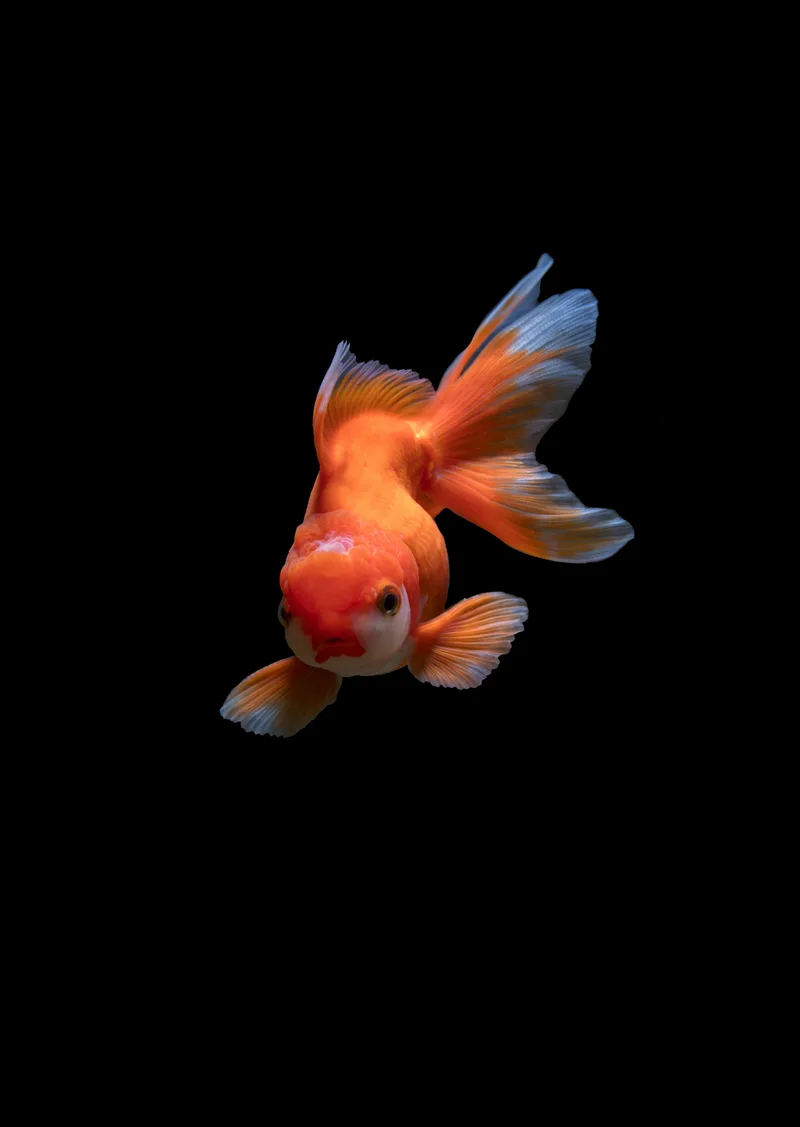
No, 40 KH won't hurt your goldfish today, but it isn't where you want to leave it either. On almost every home test kit, "40" means 40 ppm, which is about 2 dKH. That number happens to sit right at the threshold where the buffer runs thin enough for pH to start lurching instead of drifting, and goldfish (Carassius auratus) are one of the fish most likely to make you pay for a thin buffer. (If you actually meant 40 dKH, that's roughly 715 ppm and almost certainly a misread, because tap water doesn't get that hard.) The comfortable target is 80 to 160 ppm, the climb is straightforward, and the reason goldfish push the buffer harder than most fish is worth understanding before you start dosing.
Is Your Goldfish in Trouble Right Now?
A KH of 40 ppm by itself does not hurt your fish today. What it tells you is that your tank is under-buffered, which means the pH can drop fast when the buffer finally runs out. Goldfish produce a lot of waste, and waste-processing is quietly acidic. So the question for tonight isn't "is 40 KH toxic," it's "is the crash already happening?"
Run these checks before you do anything else:
- Current pH. Anything below about 6.8 in a goldfish tank is a warning sign. Below 6.0 and the cycle is already faltering.
- Yesterday's pH versus today's. A drop of more than 0.4 to 0.5 points in a day is what a pH crash looks like.
- Ammonia and nitrite. Both should read zero. A pH that's crashing often comes with a stalled filter and climbing ammonia.
- Days since the last water change. If it's been more than a week or two, the buffer has had time to wear thin.
- Gill rate and posture. Fast, heavy gill movement, clamped fins, or sitting on the bottom when the fish is normally out swimming are the signs that matter.
- Surface gasping. A goldfish hanging at the top and gulping is telling you the water is uncomfortable right now.
If pH is stable and the fish looks and acts normal, you are in "fix this week" territory, not "act tonight." Do a 25 to 30% water change with conditioned, temperature-matched water and plan to raise the KH gradually over the next few days. If pH has already dropped sharply, or if the fish is gasping or sitting on the bottom, do the water change now and start buffering tonight.
How Do You Actually Raise KH in a Goldfish Tank?
You have three practical tools, and they do different jobs. Crushed coral is the set-and-forget option. Baking soda is the fast bump when pH is already slipping. Harder tap water through water changes is the passive route if your source water is already well-buffered. Most goldfish keepers end up using crushed coral as the baseline and reaching for baking soda once, during the initial climb.
| Method | How fast it acts | Amount | When to reach for it |
|---|---|---|---|
| Crushed coral or aragonite | Slow, over days to weeks | About 1 cup per 10 gallons, in a filter media bag or mixed into the substrate | Long-term stability; you want to set the KH and forget it |
| Baking soda (sodium bicarbonate) | Fast, within hours | 1 teaspoon per 20 gallons raises KH by roughly 2 dKH (35 ppm) | pH is already dropping and you need a buffer in the water tonight |
| Water change with harder tap water | Moderate, per change | Standard 25 to 30% water change | Your tap water tests at 80 ppm KH or higher and you just need to refresh the tank |
Whichever route you pick, raise KH gradually. Aim for no more than about 2 dKH (35 ppm) of change per day. A goldfish can handle a lot, but a sudden swing in water chemistry stresses them more than the low number ever did. If you're using baking soda, dissolve the dose in a cup of tank water first, then pour it in slowly near the filter output so it mixes fast. Retest after a few hours and again the next morning.
Once your KH is sitting comfortably in the 80 to 160 ppm band, crushed coral will keep it there with almost no effort on your part. As the nitrogen cycle eats into the buffer, the coral dissolves a little more, and the tank self-corrects. It's one of the few pieces of aquarium equipment that genuinely runs itself.
Why Are Goldfish Especially Sensitive to Low KH?
Goldfish are eating machines. They graze almost constantly, they produce a surprising amount of waste for their size, and their tanks run a nitrogen cycle that works overtime compared to most community setups. The bacteria in your filter convert ammonia to nitrite to nitrate, and every step of that chain releases hydrogen ions. Hydrogen ions are what acidity is. So a busy goldfish tank is, quietly and continuously, producing acid.
KH is the water's defense against that acid. Each unit of carbonate hardness neutralizes a small amount of what the cycle puts out. When KH is healthy, the pH barely notices. When KH is thin, the buffer gets consumed faster than water changes replace it, and at some point the tank simply runs out. That's the moment the pH stops drifting and starts lurching.
This is why 40 ppm KH bites goldfish harder than it bites, say, a planted tank of neon tetras. The tetra tank produces less waste, runs a slower cycle, and sits at a lower pH on purpose. A goldfish tank is the opposite of all three.
The biology lines up with the history. Goldfish were domesticated more than a thousand years ago from Prussian carp in mineral-rich Chinese waters, and their entire physiology expects alkaline, well-buffered conditions. The same gill chemistry that handles hard water efficiently is the chemistry that gets stressed by a sudden pH drop. There's a quietly elegant fit between where the fish came from and what it needs from you, which is why the old hobbyist advice to keep goldfish in hard water has held up for so long.
So What KH Should a Goldfish Tank Actually Sit At?
Aim for 80 to 160 ppm, which is about 4 to 9 dKH. That's the band where pH holds steady and the nitrogen cycle has room to do its work without eating through the buffer. A sensible middle is somewhere around 100 to 120 ppm. Almost every goldfish tank that runs well sits in that range without the keeper thinking about it much.
Once you're inside the band, stop watching the number and start watching for stability. A steady 90 ppm beats a 150 that swings between readings, because the fish adapts to a consistent environment and not to an average one. A healthy goldfish tank has boring water test results, week after week, and that boredom is the whole goal.
A 40 ppm reading isn't a verdict, it's a signal. It tells you the tank is under-buffered, which for a goldfish is worth fixing. Get the KH into the 80 to 160 ppm band, let the crushed coral hold it there, and the pH crashes that low KH can cause will stop being a risk you carry. KH is only one slice of what goldfish need, and the full set of target water parameters for goldfish sits alongside stable temperature, a pH in the 7.2 to 7.6 range, and moderately hard GH. Keepers with very hard tap water sometimes face the opposite problem: a KH that climbs past 300 ppm can push pH high enough to turn ammonia more toxic, which is why "more buffer is better" stops being true at the top end.