Can you over-oxygenate a goldfish tank?
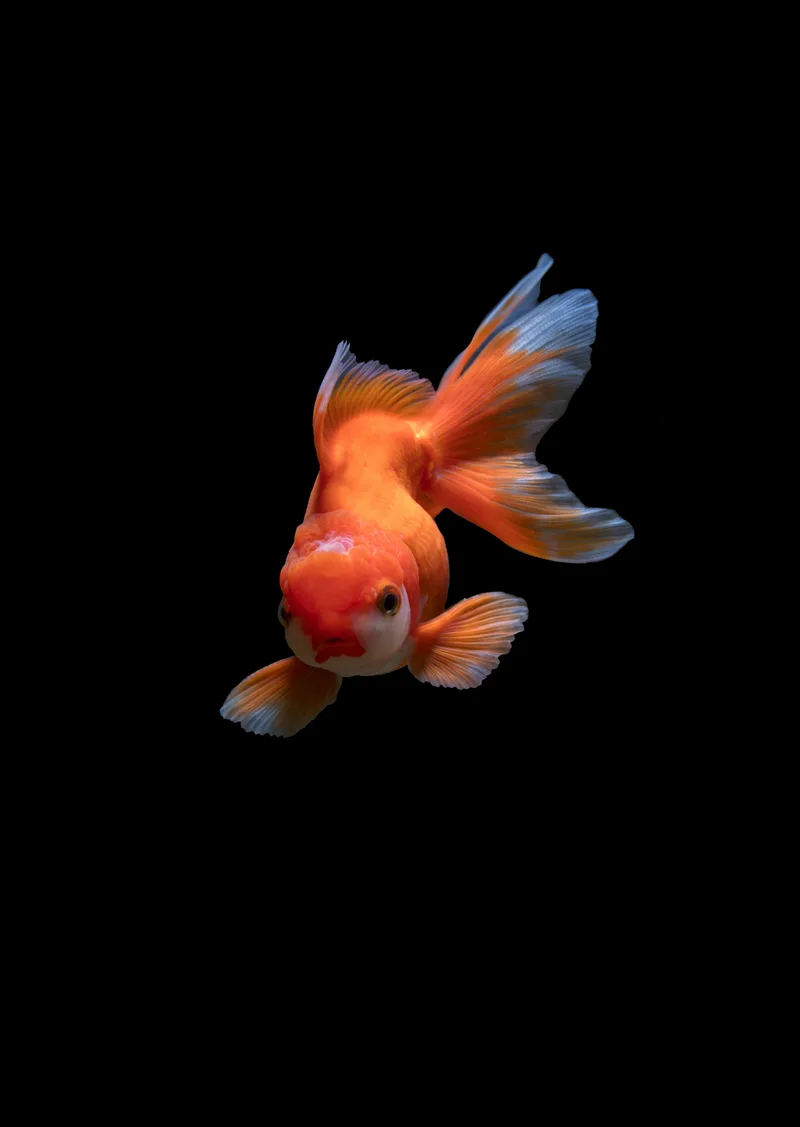
No. Run three airstones, two sponge filters, and a hang-on-back at full blast, and your tank still won't climb past the ceiling water sets for itself: roughly 8 to 9 mg/L of dissolved oxygen at goldfish temperatures. Once the water hits that point, every extra bubble just hands its oxygen back to the air at the surface. The one form of fish oxygen toxicity (gas bubble disease) needs pressurized pure oxygen, which no home setup produces. The real risk in a goldfish tank runs in the opposite direction from the one that brought you here.
Can an Air Pump or Bubbler Hurt Your Goldfish?
Not through oxygen. An air pump pushes room air (about 21% oxygen) through tubing into your tank. The bubbles themselves don't add much oxygen directly. What they do is churn the surface, and that surface movement is where the real gas exchange happens. No matter how many airstones you run, the water will hit its saturation point and stop absorbing more.
The thing to actually watch for is current, not oxygen. Fancy goldfish (orandas, ranchus, telescopes, and other round-bodied varieties) are not strong swimmers. A powerful air pump or a large airstone placed in a small tank can create enough flow that a fancy goldfish spends all its energy fighting the current instead of resting and feeding. If you notice your fish constantly being pushed around, struggling to hold position, or avoiding one side of the tank, dial back the air flow or switch to a smaller airstone. Single-tail goldfish (commons, comets, shubunkins) handle strong current just fine.
Goldfish that already have a bubbler or filter providing surface agitation are getting all the oxygenation they need. Adding a second airstone won't hurt them. It just won't do much beyond what the first one already handles.
Why Can't You Over-Oxygenate with Normal Equipment?
Water has a ceiling for how much dissolved oxygen it can hold, and that ceiling is set by temperature and atmospheric pressure. At room temperature and normal atmospheric pressure, freshwater maxes out around 8 to 9 mg/L of dissolved oxygen. Once the water reaches that saturation point, extra bubbling just sends unused gas back into the air at the surface. You can agitate the surface all day long and the dissolved oxygen level won't climb past what the physics allow.
Cool water holds more oxygen than warm water. Goldfish tanks typically sit between 65 and 72°F (18 to 22°C), well below the 78 to 82°F range of most tropical setups. That lower temperature means goldfish water naturally carries a higher dissolved oxygen ceiling than a betta or discus tank would. Your goldfish are already starting from a better position.
Gas bubble disease is the one genuine form of oxygen toxicity in fish. It happens when dissolved gas levels exceed 100% saturation and tiny bubbles form inside the fish's blood and tissues, similar to decompression sickness in divers. But reaching that supersaturation requires pumping pressurized pure oxygen into the water. That happens in commercial hatcheries and aquaculture facilities, not in a home aquarium. No air pump, no airstone, no filter on the market can push dissolved oxygen past the atmospheric saturation limit.
Did you know? Goldfish gills extract roughly 80% of the oxygen that passes through them. Human lungs capture only about 25% of each breath. Gram for gram, a goldfish is a far more efficient breather than you are.
The practical risk in a goldfish tank runs in the other direction entirely. Low oxygen is common. Over-oxygenation with home equipment is not physically possible.
Do Goldfish Need More Oxygen Than Other Fish?
Goldfish are bigger, more active, and messier than most tropical community fish, and all three of those traits drive up oxygen demand.
A single adult goldfish can reach 6 to 8 inches in a home tank (larger in a pond), and body mass scales with oxygen consumption. A tank holding two or three adult goldfish is supporting significantly more biomass than the same tank holding a school of tetras. That mass needs oxygen around the clock.
Then there's the waste. Goldfish produce a heavy bioload relative to their tank size. That waste feeds nitrifying bacteria in the filter, and those bacteria are themselves heavy oxygen consumers. A well-stocked goldfish tank has two populations competing for the same dissolved oxygen: the fish and the bacteria keeping the nitrogen cycle running. When oxygen drops, the bacteria slow down, ammonia and nitrite can climb, and the fish feel it from both sides.
This is why right-sizing your filtration matters more in a goldfish tank than in most freshwater setups. Strong filtration means strong water movement, which means better gas exchange at the surface. Extra surface agitation from an airstone or a spray bar pointed upward is almost always a net positive.
If you've noticed your goldfish hanging at the surface, gasping, or showing other behavioral changes, low oxygen is one of the first things to rule out, especially in warmer months when water temperatures rise and dissolved oxygen drops.
The question most goldfish keepers should be asking isn't whether they can over-oxygenate their tank. It's whether their tank has enough oxygen to begin with. Running an extra airstone is one of the simplest things you can do right for a goldfish setup.