Can I put bottled water in my goldfish tank?
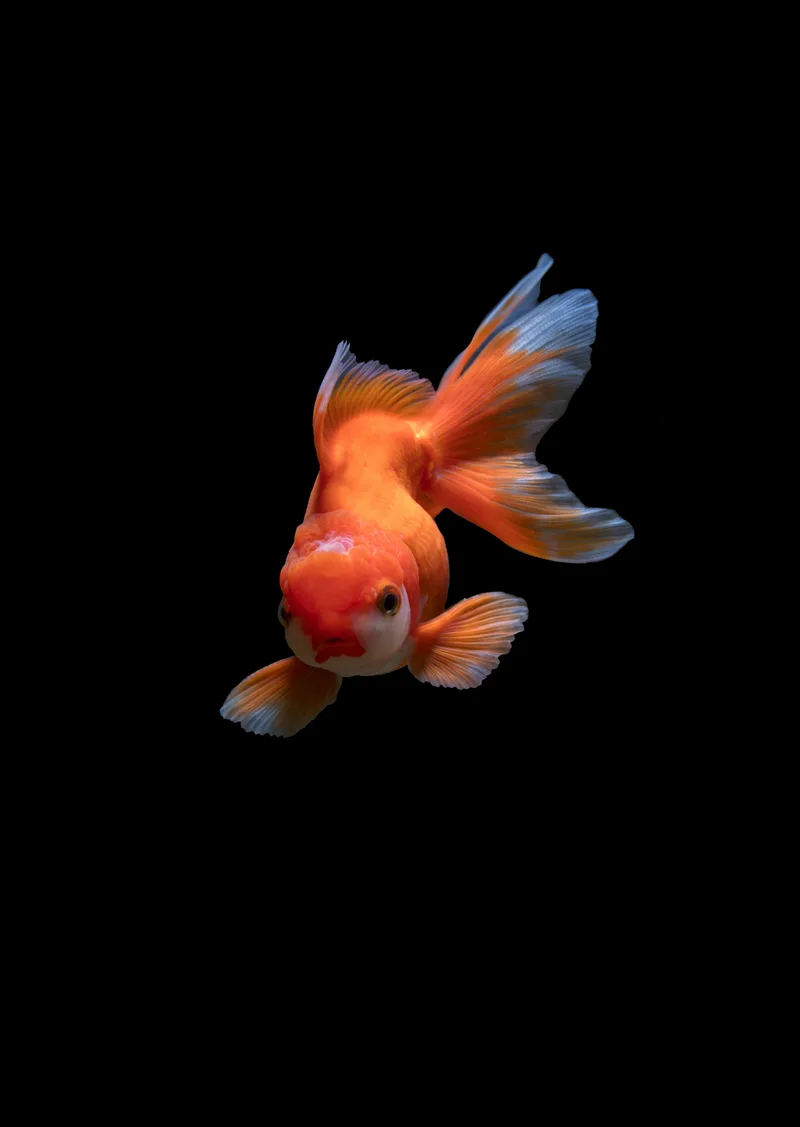
For goldfish, plain dechlorinated tap water beats most of what you'll find in the bottled-water aisle, and a gallon of distilled is one of the worst things you can pour in. Two jugs sitting next to each other on the shelf can be chemically opposite: spring water carries the minerals goldfish need, and distilled, purified, and most drinking water have had those same minerals stripped out. The same jug that runs a planted nano tank fine can crash a goldfish tank's pH by more than a full point in a day. Goldfish are the variable, not the water.
Which Bottled Waters Are Safe and Which Will Hurt Your Goldfish?
"Bottled water" is not one thing. The jug next to it on the shelf can be chemically almost the opposite, and the label does not always make that obvious. Here is what each of the common labels really means.
| Label on the bottle | What it really is | Safe for goldfish? | Notes |
|---|---|---|---|
| Spring water | Groundwater from a natural source, minimally treated, some dissolved minerals | Yes, as an emergency top-up | Mineral content varies a lot by brand. Check the label for calcium and magnesium if you can. Still needs to be temperature-matched. |
| Mineral water | Spring water with a legally defined mineral content (at least 250 mg/L total dissolved solids) | Usually okay in small amounts | Fine for a top-up. Avoid carbonated versions. The sodium content on some European brands is higher than you want long-term. |
| Drinking water (bottled) | Tap water that has been filtered and sometimes remineralized to taste | No | Inconsistent between brands. Some are basically tap water minus chlorine, others are closer to purified. You cannot tell from the bottle. |
| Purified water | Water run through reverse osmosis, distillation, deionization, or a combination | No | Almost no minerals. No KH. A goldfish tank on purified water will swing in pH between water changes. |
| Distilled water | Water boiled to steam and recondensed, removing essentially all dissolved solids | No | Zero KH, zero GH. The worst option for goldfish. Safe only if you remineralize it first, which defeats the point of buying it. |
| Reverse osmosis (RO) | Water forced through a semipermeable membrane, stripping 90 to 99 percent of dissolved solids | No, unless remineralized | Useful for fishkeepers with bad tap water, but only when mixed with tap or dosed with a remineralizing salt. Straight RO will crash a goldfish tank. |
One rule that applies to every row: whatever you pour in has to match the tank's temperature first. Cold bottled water straight from the fridge into a room-temperature goldfish tank is a thermal shock even if the chemistry is right. Let the jug sit out for an hour, or mix it with warmer water until it is within a couple of degrees of the tank. Spring water in particular varies a lot between brands, so a jug that worked fine last month might read quite differently next month.
Why Is Most Bottled Water Actually Bad for Goldfish?
Goldfish (Carassius auratus) evolved in the slow, mineral-rich rivers and floodplains of East Asia. They are coldwater fish, they grow larger than most people plan for, and they eat and excrete more per gram of body weight than almost any tropical you could put in a home tank. A single fancy goldfish in a 20 gallon tank produces more waste than a school of twelve neon tetras in the same volume. That waste is the important part of this answer.
When the filter processes goldfish waste, the nitrogen cycle generates acids. Those acids are absorbed by the water's carbonate hardness, usually shortened to KH on test kits. KH is the buffer. It is the thing that stops the pH from dropping every time the fish eats. A goldfish tank with healthy KH sits at a stable pH between water changes. A goldfish tank with low KH does not sit anywhere, it drifts downward as the bioload piles on, and the drift can accelerate fast.
Distilled water, purified water, and straight RO all have essentially zero KH. So does most "drinking water" once it has been through whatever filtration the bottler uses. Pouring that into a goldfish tank is like removing the shock absorber from a car and then driving it over the same potholes. The parameters do not fail immediately. They fail over the days and weeks after the water change, when the buffer is not there to catch what the biology is throwing at it.
This is the part that gets missed in the generic "purified water in a fish tank" articles. For a dwarf cichlid from a blackwater stream, low KH is the target. For a goldfish, low KH is the problem. The same jug of distilled water is a tool in one tank and a trap in the other, and the difference is almost entirely about how much waste the fish produces and how much buffering the tank therefore needs.
Did you know? A freshly opened gallon of distilled water reads 0 on a KH test kit. Drop in waste from a medium goldfish, let nitrification do its work for a day, and the pH can fall by more than a full point, from around 7.0 into the low 6s. That same waste poured into a planted nano tank on RO with a light load might barely move the needle. The water is identical. The fish is the variable.
Isn't Dechlorinated Tap Water Better Anyway?
For most homes on municipal water, yes, and by a wide margin. A few drops of a standard dechlorinator added to a bucket of tap water neutralizes the chlorine and chloramine almost instantly, leaves the calcium and magnesium and carbonate buffering intact, and costs a few cents per water change. It gives your goldfish a consistent water profile week after week, which is what their biology wants in the first place.
The fear that pushed you to search for bottled water in the first place is almost always misplaced. Tap water is tested and treated to be safe for humans, and in the vast majority of municipal systems that treatment makes it well within what a goldfish can handle once the chlorine is gone. You are not being lazy or cheap by using it. You are using the thing goldfish do best on.
Here is what dechlorinated tap water gives you that bottled water usually does not:
- Stable KH that holds pH steady between water changes, so the tank does not swing after every top-up
- A native mineral profile (calcium, magnesium, trace elements) that goldfish use for bone, scale, and mucus
- Consistency, because the same tap runs the same water every week, while bottled water varies by brand, batch, and bottling plant
- Cost, because a 40 gallon goldfish tank doing a 25 percent weekly water change would otherwise need ten gallons of bottled water every week
- Availability in the volume a goldfish tank demands, which is not trivial for fish this size
There are a handful of real cases where tap genuinely is a problem. If your municipal water is very soft (a GH and KH both near zero out of the faucet), if your utility uses high levels of chloramine and your conditioner only handles chlorine, or if you are on well water with heavy metals or agricultural runoff, tap needs more than a standard dechlorinator. The answer in those cases is still not grocery-aisle drinking water. It is an RO unit with a remineralizing additive, or a tap-safe conditioner that handles chloramine and metals, or a call to your water utility to ask for a recent report. Bottled water is a stopgap on a single bad day, not a plan.
What Water Should a Goldfish Tank Actually Be On?
Once "not bottled" is settled, the next question is what the target looks like on a test kit. Goldfish do best in moderately hard, well-buffered water with a pH between roughly 7.0 and 7.8, a GH around 150 to 300 ppm, and a KH of at least 80 ppm. That is the shape of the water that stays stable under a heavy bioload, which is the whole reason this article exists.
Those water parameters goldfish are built for sit comfortably in the range most municipal tap water already lands in, which is part of why tap is usually the right answer. Standard conditioned tap water is safe for goldfish in the vast majority of homes, with the caveats about chloramine and soft source water from the previous section.
The thing to carry away is that the hobby's reputation for fussy, complicated water is mostly about matching the fish you have to the water you have. Some species need soft, acidic blackwater and will suffer in tap. Some need hard, alkaline rift lake water and will suffer in tap. Goldfish sit on the short list of freshwater species for which plain conditioned tap water is, almost everywhere, exactly what they want. You walked in afraid you were doing something wrong by using it. You were not. You were doing the one thing your fish needs you to.