Do goldfish prefer high or low pH?
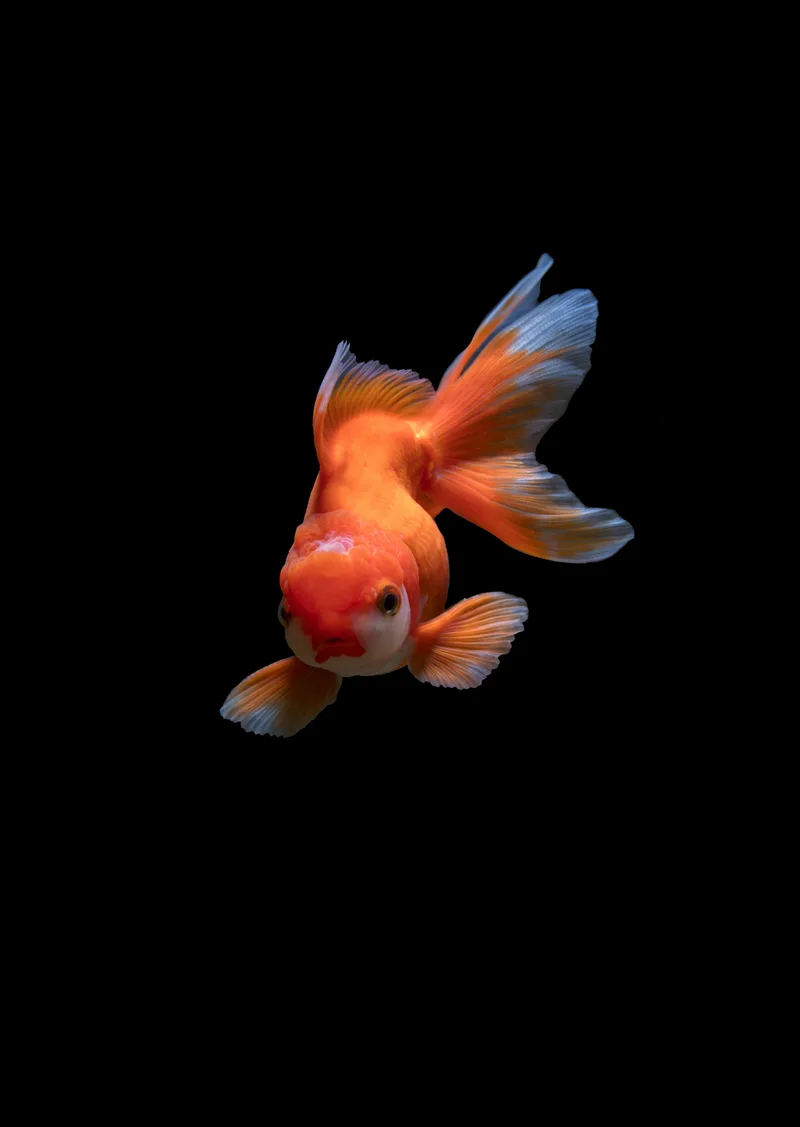
Goldfish prefer slightly alkaline water, somewhere between pH 7.0 and 7.8. The catch is that most readers asking this question are about to do the wrong thing with the answer, because reaching for pH Down or a bottle of pH buffer to hit that range is the single fastest way to hurt a goldfish. The number on the test kit is downstream of something else, and that part is worth understanding before you touch anything.
What pH should a goldfish tank actually sit at?
Aim for a pH between 7.0 and 7.8. Anywhere in that band is comfortable for goldfish and matches the water their bodies are tuned to run on. A reading of 8.0 is still completely fine, and so is 6.8. The fish themselves do not notice the difference across most of their tolerance range.
To measure it, use a liquid drop test kit, not the paper strips. Strips drift out of calibration fast, especially once the tube has been open for a few months, and they are the single most common reason a new goldfish keeper thinks something is wrong when nothing is. A basic freshwater master kit costs about the same as a week of premium fish food and reads accurately for years.
A quick note on body type, since it comes up: fancy goldfish and common goldfish want the same water. The round-bodied orandas, ryukins, and telescopes have all been bred for shape, not for physiology. Their gills and kidneys handle water chemistry the same way a comet or a shubunkin does, so the pH target does not shift between them.
- Ideal range: 7.0 to 7.8
- Fully tolerated range: 6.5 to 8.4
- Worth worrying about: below 6.0 or above 8.6
- What matters most: a steady reading, not a specific number
That last point is the one to hold onto. A goldfish tank that sits quietly at 8.0 every week is a healthier tank than one that bounces between 6.8 and 7.6.
What if my pH reading is off, should I try to change it?
Almost certainly not. The reflex to reach for pH Down, driftwood, peat, or a bottle of pH buffer is the single biggest way new goldfish keepers accidentally hurt their fish. A stable pH at 8.0 or 6.8 is better for your goldfish than a corrected pH that reads 7.4 on average but swings around the tank week to week. Goldfish tolerate the number. They do not tolerate the swing.
Here is the part almost nobody explains: pH is downstream of KH. KH stands for carbonate hardness, and it is the pool of carbonates and bicarbonates dissolved in your water. KH is what holds pH steady against the acids that fish waste and biological filtration constantly produce. A tank with healthy KH can absorb those acids for weeks without the pH budging. A tank with depleted KH will crash suddenly, sometimes overnight, even if the pH looked perfect last Tuesday.
So if your pH reading is drifting, test your KH before anything else. The fix is almost never to dose pH chemicals. The fix is to top up the buffer the tank has run out of, either through water changes with your normal tap water or by adding a source of carbonates. A KH reading in the right zone for a goldfish tank is what quietly keeps pH in range for you, which means you usually do not have to think about pH at all.
The only time intervention is reasonable is when the reading is genuinely outside the tolerated range (below 6.5 or above 8.4) and stays there. Even then, the right move is to change the water the tank is fed, not to chase the reading with chemistry in a bottle. A gallon of a different source water, or remineralized RO, is a stable lever. A capful of pH Down is not.
Why do goldfish prefer alkaline water in the first place?
Because of where they come from. Goldfish (Carassius auratus) were domesticated in China more than a thousand years ago from wild Prussian carp (Carassius gibelio), which live in the cool, mineral-rich rivers and lakes of temperate Asia. That water runs over limestone and calcium-bearing rock, picks up dissolved minerals as it goes, and sits naturally in the slightly alkaline zone you now see on a goldfish care sheet. It is the chemistry the whole genus evolved inside.
That matters because fish physiology is not a universal kit. A fish's gills, kidneys, and skin are all tuned to handle the specific salt and mineral balance of its ancestral water. Goldfish gills are built to offload waste into mineral-rich water and to pull calcium out of it for their bones and scales. Their body is, in a real sense, a machine calibrated for hard, slightly alkaline water. Put a goldfish in soft, acidic water and nothing dramatic happens right away, but the machine is running with the wrong fuel pressure, and over months you see it in slower growth and dulled color.
Compare that to a neon tetra from the Amazon, whose ancestral water is soft, dark with tannins from fallen leaves, and naturally acidic. Both fish are doing the same job (moving salts across gill membranes, handling waste, building bone), but they evolved under opposite chemistry, and their gill biology reflects it. When you match a goldfish tank to alkaline, mineralized water, you are not following an arbitrary rule. You are feeding the biology the water it was built around.
Did you know? Goldfish have been selectively bred in captivity for more than a thousand years, shaped into shapes their wild ancestors would not recognize. But the underlying water chemistry they prefer has not drifted at all. A modern oranda and a wild Prussian carp in a Siberian lake still want the same mineral-rich, slightly alkaline water their shared ancestors evolved in.
How does pH fit with the other water parameters goldfish care about?
pH gets more attention than it deserves, mostly because it is the loudest number on a test strip. It is the one readers see first, the one that looks easy to "fix," and the one marketing copy on fish store shelves leans hardest on. In the actual life of a goldfish tank, pH almost never causes problems on its own. The things that do cause problems are temperature swings, a cycle that did not finish, ammonia or nitrite spikes from overfeeding, and nitrate that has been allowed to climb because water changes slipped. pH tends to follow from the health of the rest of the tank, not lead it.
Think of it this way: temperature decides how fast the fish's metabolism runs, KH and GH decide whether the water has the minerals the fish are built for, and the nitrogen cycle (ammonia into nitrite into nitrate) decides whether the tank is safe to live in at all. pH sits on top of those, reporting the state of the water below it. If the full set of goldfish water parameters is in order, pH will land somewhere sensible on its own and stay there.
That is the good news. pH is the number that panics new goldfish keepers because it is the most visible one on a test kit, but it is also the number the rest of the water chemistry decides for you. A stable, mineral-rich tank at pH 8.0 is a better goldfish tank than a chemically corrected one that hits 7.4 on Tuesday and 6.6 on Friday. If your tap water is in range and your KH is holding, the honest answer to "do I need to adjust anything?" is almost always no.