How quickly does a goldfish grow?
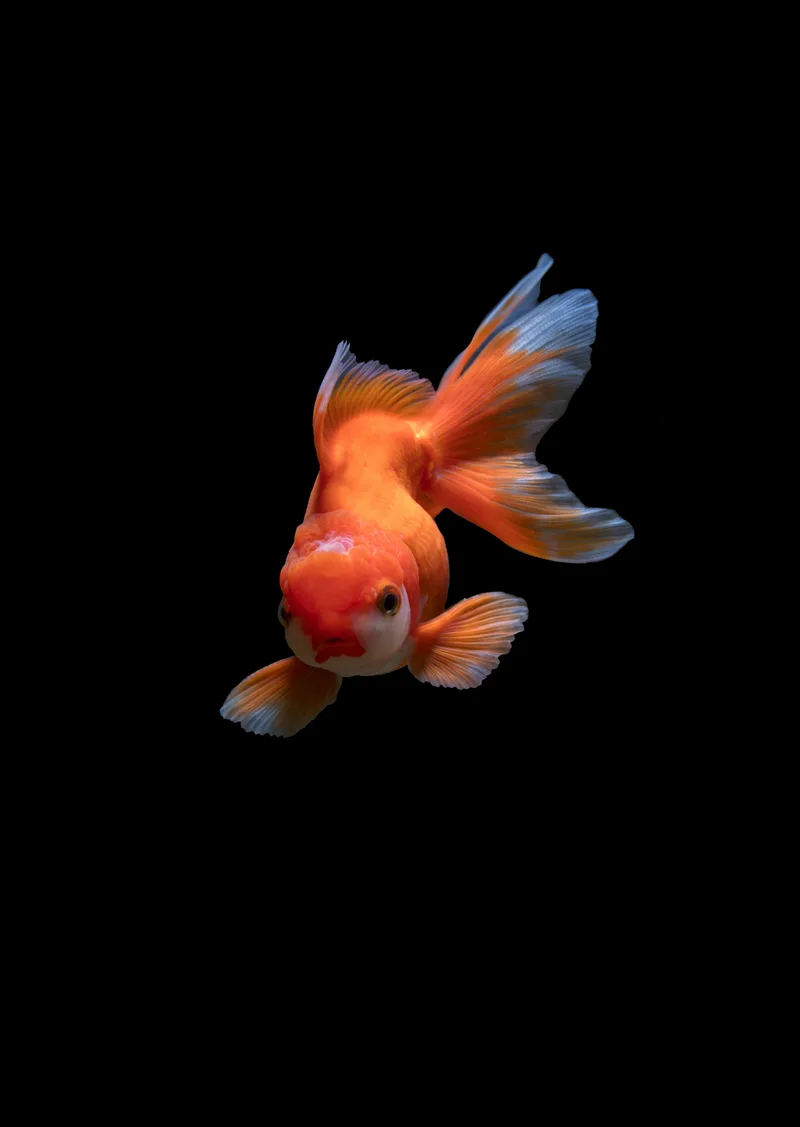
A goldfish grows fastest in its first year, often putting on a few inches, then slows to roughly an inch a year and reaches full size somewhere between one and three years old, depending on the type. You've probably heard that a goldfish only grows to the size of its tank, and there's a real effect buried in that line, but it isn't the polite, self-limiting one most people picture. A fish kept in a small, dirty tank doesn't choose to stay small. It stalls out, stunted, while its insides keep growing past a body that can't. The rate is set by your setup far more than by your fish.
How fast does a goldfish grow in its first year?
The growth is front-loaded. A fair-prize or pet-store fish that's an inch or two long can put on several inches over its first twelve months, then settle into a slower pace of roughly an inch a year until it tops out. Most goldfish reach their full adult size somewhere in the one-to-three-year window, with single-tailed types taking the long end of that and continuing to fill out for years after.
You can measure your own fish against rough checkpoints. These assume a roomy, well-filtered tank, which is the part that does the heavy lifting:
| Age | Approximate length |
|---|---|
| Hatch | About 1/4 inch (a few millimeters) |
| 3 months | 1 to 2 inches |
| 6 months | 2 to 3.5 inches |
| 1 year | 3 to 5 inches |
| 2 to 3 years | Adult size: 6 to 8 inches for fancies, 10 inches and up for commons |
Four things actually move the rate, and none of them involve pushing more food into the fish. Clean water comes first: a goldfish is a heavy waste producer, and frequent water changes keep the tank from accumulating the very thing that slows growth. Space comes next, then a stable, moderate water temperature, then good-quality food in normal amounts. Get the water and the space right and the fish grows at the pace it's built for. You don't speed a goldfish up by overfeeding it. You just foul the water, which does the opposite.
Do goldfish really grow to the size of their tank?
No. A goldfish does not sense the walls of its bowl and politely stop. What actually happens in a small, infrequently changed tank is that the fish's own waste builds up substances in the water that suppress growth, and the outside of the fish stops getting longer while the inside keeps developing. The result is a fish that looks small but is internally crowded, stunted, and shorter-lived than it should be. The brakes aren't the glass. The brakes are the water.
The telltale sign is a fish that's small for its age but somehow looks old: a stubby, slightly off body on an animal that's clearly been around a while. A young, healthy goldfish that's small is just young. A two-year-old that's still two inches in a cramped tank is usually stunted.
This is also why the size of the tank you choose matters so early. A fish that may double in length needs room to do it, and sizing the tank for the adult goldfish from the start keeps it out of the stunting trap before it begins.
Did you know? A goldfish kept small in a cramped tank for years can have a sudden growth spurt and approach near-normal size once it's moved to a large tank or a pond. The growth that looked permanently lost was just on hold, held back by the water rather than written into the fish.
Do common and fancy goldfish grow at different speeds?
They do, and most owners don't know to ask which kind they have. The split runs along body shape. Single-tailed goldfish, the common goldfish, the comet, and the shubunkin, are fast-growing, torpedo-shaped strong swimmers that reach 10 to 14 inches and keep adding length for years. They're the ones that outgrow a starter tank fastest and end up needing a pond-sized volume to finish growing.
Egg-shaped fancies, the oranda (Carassius auratus), ryukin, fantail, and black moor among them, grow more slowly and stop smaller, usually around 6 to 8 inches. Once a fancy takes its rounded adult shape, much of its later growth goes into body width rather than length, so it looks like it's filling out rather than stretching. If your fish has a single, straight tail and a slim body, you have a common, and the long end of every size and timeline above applies. If it has a stubby, rounded body and a double tail, you have a fancy, and you can expect a smaller, slower-finishing fish. Knowing the full-grown size a fancy goldfish reaches is what lets you pick a tank it won't outgrow.
Can you tell a goldfish's age from how big it is?
Only loosely. Size is a weak proxy for age because the same fish grows fast or slow depending entirely on its tank, its water, and its food. Two goldfish hatched the same week can sit inches apart at a year old, one in a big, clean tank and one in a neglected bowl. So a length tells you more about the conditions a fish has been kept in than about how many birthdays it's had. You can still estimate the age of a two-inch goldfish within a rough range, as long as you treat the number as a guess rather than a reading.
The more useful question hiding underneath "how fast" is usually about space. The rate mostly takes care of itself once your fish has room and clean water, so the real decision in front of you isn't how quickly it'll grow. It's whether you can give a fish that may double in size the tank it's eventually going to need.