Do goldfish grow to the size of their tank?
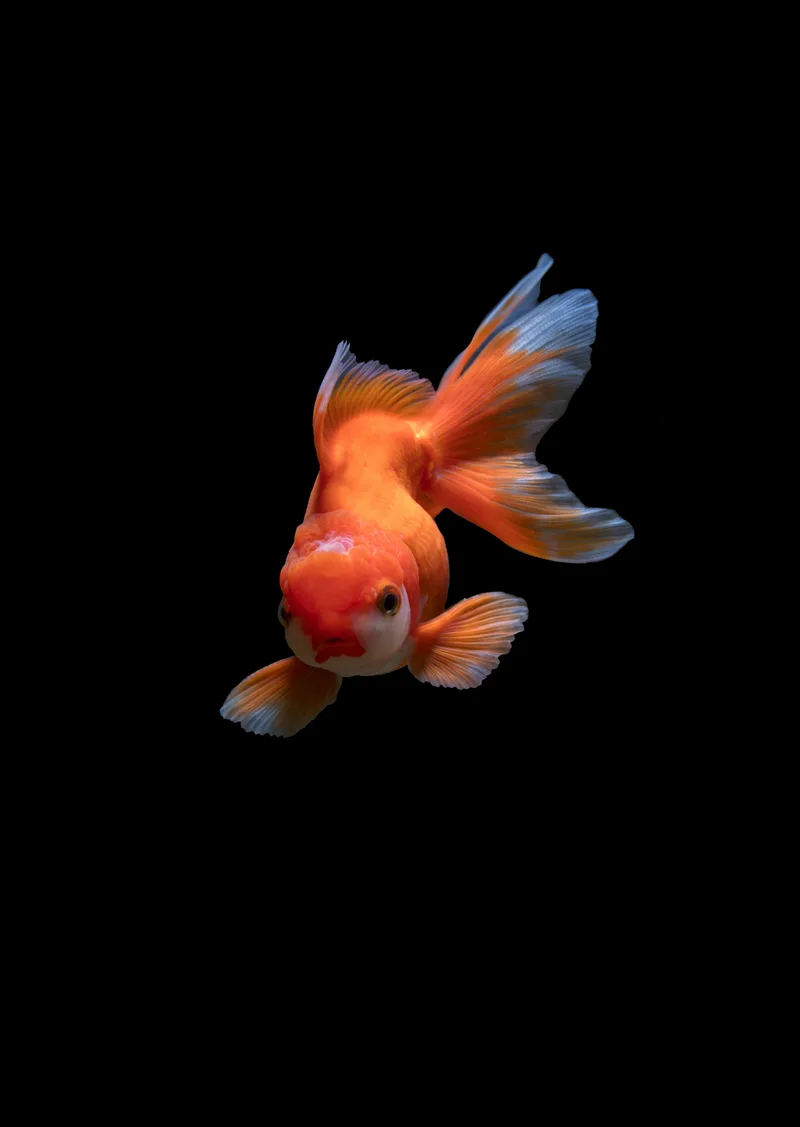
No, and a goldfish (Carassius auratus) never really stops growing at all. It keeps adding length and bulk for its entire life, so a fish that stalls out small in a cramped tank isn't capping its own size, it's being harmed into staying small. What makes the myth so sticky is that there's a real scrap of biology underneath it: goldfish do release chemicals into their water that slow growth. That kernel of truth is exactly what gets twisted into the comforting, dangerous version, and pulling the two apart is the whole job here.
So what's actually happening when a goldfish seems to stop growing?
A goldfish that stops growing in a small tank isn't full-grown. It's stunted.
Goldfish are what biologists call indeterminate growers. Unlike you, they don't hit an adult size and lock there. As long as a goldfish is healthy, it keeps adding length and bulk year after year, slowing down as it ages but never quite stopping. So when a goldfish quits growing while it's still small, that's not the fish reaching its natural ceiling. Something is interfering.
In a small or unfiltered tank, that something is usually the water itself. A goldfish is a heavy waste producer, and in a cramped space the ammonia and nitrate it makes climb fast. The fish ends up living in a low, constant chemical stress that suppresses growth and steadily damages its body. Its growth doesn't pause neatly, ready to resume. It's being shut down.
This is why stunting is better understood as an injury than a size cap. A stunted goldfish often develops a stubby, off-balance shape, with the head and internal organs growing out of proportion to a body that never got the room to keep pace. Stunted fish tend to die young. The small, stalled goldfish in the bowl isn't a fish that found its comfortable size. It's a fish that's slowly being made sick.
Did you know? Most fish are indeterminate growers, which means they never truly stop growing as long as they stay healthy. A goldfish given the right conditions is technically still getting a little bigger every year of its life.
How big do goldfish really get, and what tank do they need?
Once you accept that a goldfish keeps growing, the obvious question is: how big are we talking? Big enough to make the myth look silly.
A common goldfish or a comet, the long, slim, fast-swimming type you'd recognize from a fairground prize, reaches 10 to 14 inches as an adult. The fancy varieties, the round-bodied ones like the Oranda, Ryukin, and Black Moor, stay smaller, usually 6 to 8 inches, because their compact shape comes at the cost of length. Either way, these are not small fish. A full-grown common goldfish is roughly the length of your forearm.
That size is set by genetics, not by the tank. The fish carries an adult size in its genes, and your job is to give it the room to reach that size in good health rather than fighting against it.
| Goldfish type | Typical adult size | Minimum tank size |
|---|---|---|
| Fancy varieties (Oranda, Ryukin, Black Moor) | 6 to 8 inches | ~20 gallons for one, plus ~10 gallons per extra fish |
| Common and comet | 10 to 14 inches | 75+ gallons |
If your fish has clearly outgrown its setup, the next thing worth sorting out is how big a tank a goldfish actually needs, since the numbers climb faster than most people expect. And if you're keeping a fancy variety specifically, the adult size your particular fancy goldfish will reach depends a lot on which type you have.
Is there any truth to it? The growth-slowing hormone story
Here's the part that keeps the myth alive: goldfish really do release chemicals that slow growth. The myth didn't come from nowhere.
Goldfish, like other carp, put growth-inhibiting hormones and pheromones into the water around them. These chemicals can slow the growth of the fish that made them and of any tankmates sharing the water. In the wild, this works as a crowding signal. When a pond starts to shrink and fish pack in tighter, the rising concentration of these chemicals tells the population to ease off growing, so they're less likely to outgrow the water they have left. It's an elegant bit of self-management, and it's real.
But here's the correction the myth leaves out. Those chemicals only build up if the water sits. A routine water change washes them straight out, so a well-kept tank never lets them reach a level that matters. The crowding signal can only do its work in neglected, stagnant water.
So a goldfish that "stops growing" in a home tank is never doing the gentle, self-regulating thing the myth describes. One of two things is happening instead. Either the water is so neglected that growth-slowing hormones have accumulated to an unnatural degree, or the fish is simply stunting from bad water quality. Both are signs of a tank that needs attention. Neither is a healthy fish choosing to stay a convenient size. The hormone story is real, but it's easy to overstate, and it was never a license to keep a goldfish small.
Can a stunted goldfish recover if you move it to a bigger tank?
If you already have a goldfish that's been stuck in a small tank, the honest answer is: a bigger tank will almost certainly help, but it may not undo everything.
Move a stunted goldfish into a properly sized, well-filtered tank and you'll often see its outward growth pick back up. The fish visibly gets longer again over the following months, which is encouraging and real. The catch is that the damage done while the fish was young isn't always on the outside. A goldfish stunted early can carry permanent deformity in its internal organs and a shortened lifespan, even after it finally has the space to grow.
So treat the upgrade as a recovery, not a reset. It's almost always worth doing, and you should do it, because the alternative is leaving the fish in conditions that keep harming it. Just set your expectations honestly: you're giving the fish a real chance to improve and to live more comfortably, not turning back the clock. Stunting is also one of the main reasons behind the common worry over why pet goldfish so often die young, and a bigger tank is one of the few things that genuinely moves that needle.
The comforting version of the myth, the one where the fish quietly manages its own size so a small tank is fine, is exactly the belief that gets goldfish killed. The fish isn't choosing to stay small. It's being slowly harmed into it. Underneath all of this is something worth holding onto: a goldfish is an animal built to keep growing for its entire life, and giving it the room to actually do that is the whole point of keeping one well.