How old is a 2 inch goldfish?
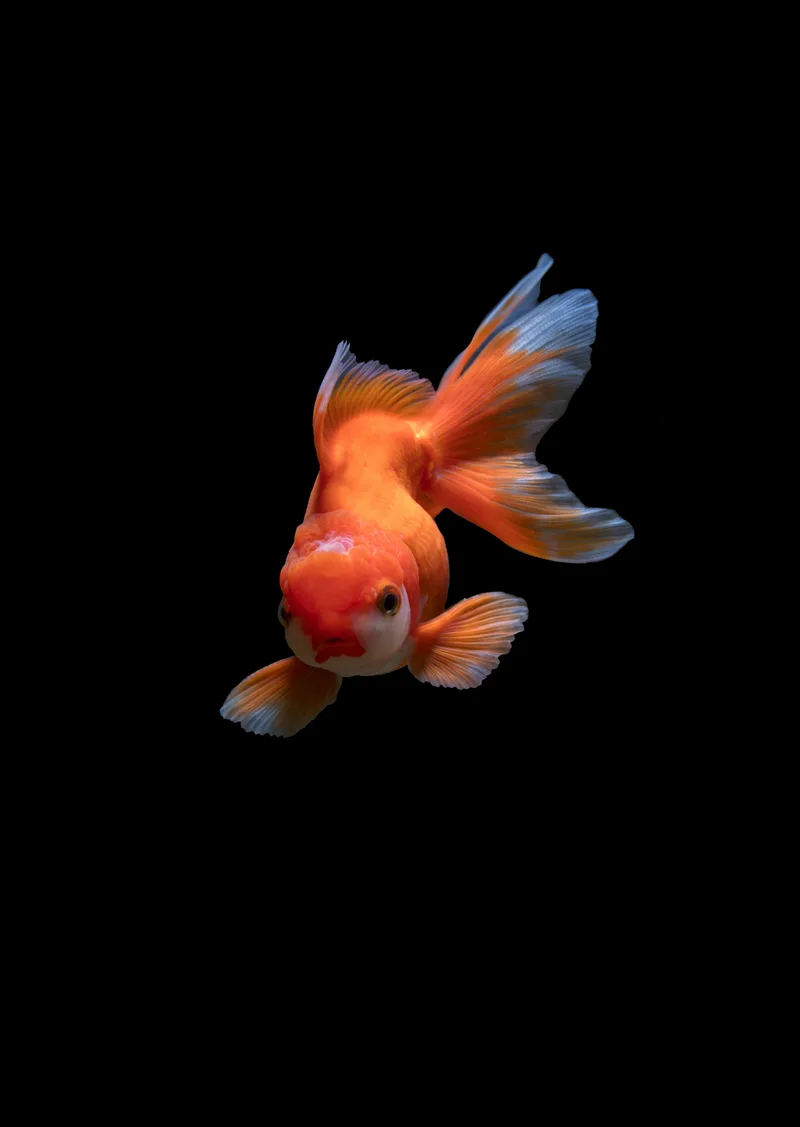
A 2-inch goldfish is usually somewhere between about six months and a year old, assuming it's a slim-bodied common or comet type. That's the ballpark, and for most people who just bought a fish it's close enough. But put two 2-inch goldfish side by side and one can be a six-month-old that grew fast in a roomy tank while the other is a two-year-old that was kept cramped and underfed. A goldfish's length tracks the life it's had far more than the number of birthdays behind it, which is why the same 2 inches can hide more than a year of age.
How Fast Does a Goldfish Grow in Its First Year?
A healthy, well-fed goldfish does most of its early growing in the first twelve months. By a month or two old it's around an inch long. By six months it's usually sitting somewhere between 1.5 and 2 inches, and by its first birthday a slim common or comet is often pushing 2.5 to 3 inches. That's why a 2-inch fish lands so neatly in the middle of the 6-to-12-month window.
Treat these as a trajectory, not a guarantee. A goldfish raised in a large tank with clean water and steady feeding will run toward the top of the range. One in a smaller setup will lag behind the same numbers while being exactly as old.
| Age | Approximate length |
|---|---|
| 1 month | about 1 inch (2.5 cm) |
| 6 months | about 1.5 to 2 inches (4 to 5 cm) |
| 12 months | about 2.5 to 3 inches (6 to 8 cm) |
| 18 months | about 3.5 to 4 inches (9 to 10 cm) |
These are typical figures for a healthy, slim-bodied goldfish, not fixed milestones. A well-fed fish in good water can outpace them, and a stalled one can fall well short.
Does It Matter Whether It's a Fancy or a Common Goldfish?
It does, and it can throw your estimate off by a year or more. Slim commons and comets are built to grow long and fast, so they hit those size markers on schedule. Fancy varieties like the oranda, ryukin, and fantail put their growth into a rounder, deeper body instead of length, so they stay shorter for their age. A 2-inch fancy is often older than a 2-inch comet sitting next to it, simply because it spent its growth filling out rather than stretching out.
Telling them apart is easier than it sounds. Look at the tail and the body shape:
- Single tail, slim torpedo body: a common, comet, or shubunkin. These are the fast, long growers, so 2 inches usually means six months to a year.
- Double (split) tail, round egg-shaped body: a fancy like a fantail, oranda, or ryukin. These grow shorter and rounder, so a 2-inch fancy may be a year old or more.
If you've got a slim single-tailed fish, the usual size-to-age math holds well. If it's a round-bodied double-tail, nudge your age estimate older and lean on the body, not the length.
Why Can't You Just Read a Goldfish's Age From Its Size?
Goldfish are indeterminate growers, which means they don't stop at a set adult size on a set schedule the way you or I do. They keep growing for years, and how fast they grow at any point depends on the conditions around them: water temperature, how much they're fed, how much space they have, and how clean the water is. Two fish from the very same spawn, split into different tanks, can end up inches apart within a year.
Food does most of the heavy lifting. The fish you find at a pet store were often pushed to size quickly on heavy feeding, because a bigger fish sells. The same variety, fed sparingly in a crowded tank, can take a year to reach a length its well-fed sibling hit in a couple of months. That's the whole reason size is a weak age proxy: you're really reading the fish's diet and its tank, and only indirectly its age.
Did you know? Goldfish release growth-inhibiting hormones into their water as they grow. In a small tank that doesn't get changed often, these chemicals build up and signal the fish to slow its own growth. A lot of the "stunted" goldfish people see aren't being physically limited by the tank walls, they're responding to their own crowded water.
What Else Can Help You Estimate a Goldfish's Age?
Length is the weakest cue, so reach for the others. Color is one of the clearest: goldfish fry start out a drab bronze or near-black and gold up over their first several months, so a fish that's still patchy or only partly colored is almost certainly young. Body shape helps too, since juveniles look lean and a little gangly before they fill out and the fins reach their adult proportions. And there's a simple practical truth worth holding onto: a goldfish from a pet store is almost always under a year old. They sell young, fast-grown fish, so if you bought yours small and recent, "under one" is a safe bet.
For most people, that's as precise as it gets, and that's fine. You'll likely never know the exact hatch date, and your fish doesn't need you to. What's actually worth your attention is how quickly a goldfish grows once it's in your care, since the right setup keeps that growth healthy rather than stalled. It also helps to know how long a goldfish lives in a tank, because a young fish like yours has a long road ahead.
The exact birthday almost never matters to the fish. A young goldfish needs space, cool water, and good filtration to keep growing well for the decade or more it can live, so the more useful question than "how old is it" is "is it set up to grow well from here." Get that right, and the age becomes a footnote.