What is the most common disease in goldfish?
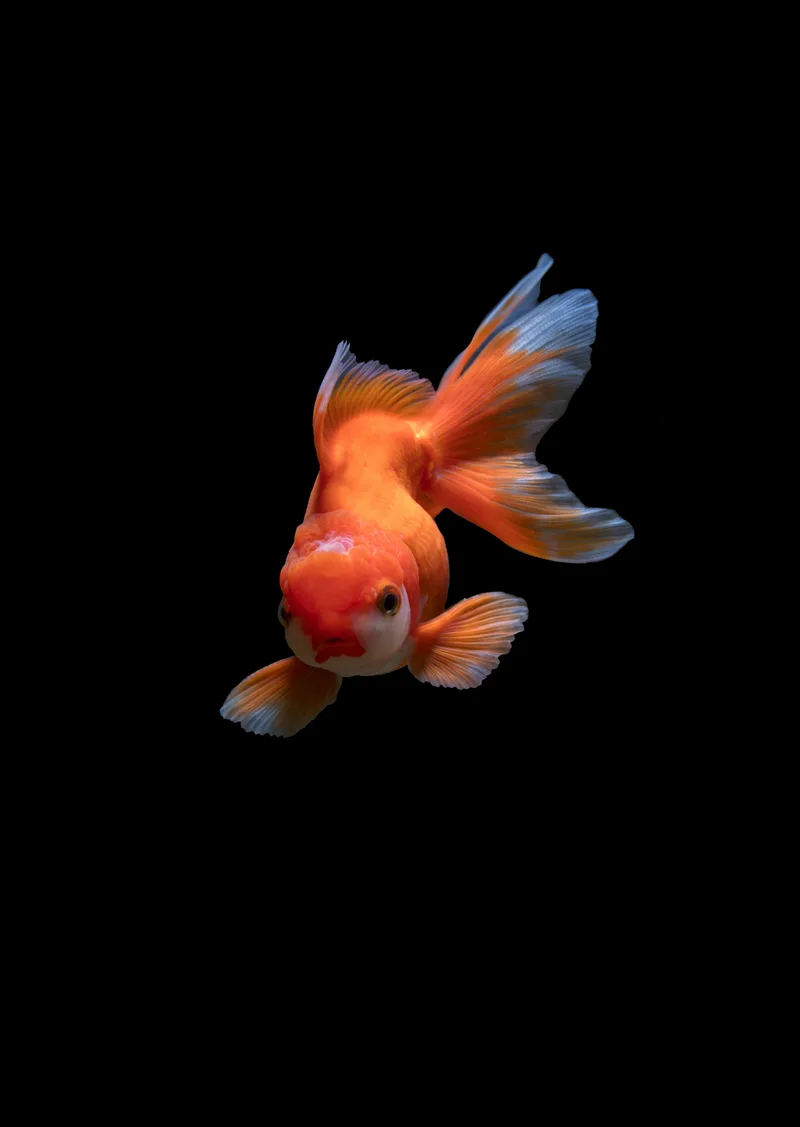
It looks like someone shook a salt cellar over your fish: tiny white grains scattered across the body and fins. That's ich, or white spot disease, caused by a parasite named Ichthyophthirius multifiliis, and it's the most common identifiable disease in goldfish. It's very treatable, and your fish is most likely going to be fine. But here's the part that surprises most people: ich is almost never the real problem. It takes hold on a goldfish whose defenses are already down, and what knocks them down is usually the water itself, in a tank too small and under-filtered for how much waste a goldfish makes. The most common goldfish "disease" turns out to be a water-quality failure that ich simply moves into.
How Do I Know If It's Actually Ich?
Look closely at the white spots. Ich looks like tiny raised grains of salt or sugar scattered across the body, fins, and tail, each one a distinct little dot you could almost count. The dots aren't flat patches or smears. They sit slightly proud of the skin, and there are usually several of them in different places rather than one cluster in a single spot.
Behavior often gives it away before you've finished counting. A goldfish with ich tends to flash, which is the word for darting sideways and rubbing its body against gravel, plants, or the glass, trying to scrape the irritation off. You may also see clamped fins held tight against the body instead of fanned out, and sometimes faster gill movement as the fish works harder to breathe.
Two harmless or different things get mistaken for ich all the time, so rule them out before you reach for any treatment:
- Breeding tubercles. On a male goldfish getting ready to spawn, small white bumps appear on the gill covers and the front edges of the side fins. They look a little like ich at a glance, but they're confined to those two spots and the fish is acting completely normal. These are a sign of a healthy, mature male, not a sick fish.
- Fungus. A fuzzy, cotton-like white or gray growth, usually sitting on one spot like an old scrape or a torn fin, is fungus, not ich. Ich is discrete dots; fungus is a tuft.
| Sign | Likely ich | Likely something else |
|---|---|---|
| Appearance | Distinct raised dots like grains of salt | Fuzzy cotton-like tuft (fungus), or smooth bumps only (tubercles) |
| Location | Scattered across body, fins, and tail | Fungus on one injured spot; tubercles only on gill covers and front side fins |
| Behavior | Flashing, clamped fins, faster breathing | Normal behavior (tubercles); often a visible wound or sore (fungus) |
What Should I Actually Do If My Goldfish Has Ich?
The first move is the one that's easy to skip in the rush to medicate: test your water and do a water change. Ich is almost always riding on a water-quality problem, and clean water is what lets the fish's own defenses get back in the fight. Check for ammonia and nitrite, which should both read zero, and bring nitrate down with a water change. This step alone does more than any bottle on its own.
Treat the whole tank, not just the spotted fish. The reason matters: the parasite spends part of its life cycle off the fish entirely, drifting in the water and multiplying before it latches back on. The white spots you see are only one stage. Pull out the visible fish and the parasites in the water are still there, waiting, which is why isolating the sick fish on its own usually fails.
You can raise the temperature to speed the parasite's life cycle along, because the free-swimming stage is the only one treatments can actually kill, and warmth makes the parasite cycle through to that stage faster. But goldfish are coldwater fish, so go gently. A slow rise of a few degrees over a day or two is the idea, not a push to tropical heat, which stresses a coldwater fish further. Fancy goldfish, with their rounder bodies and crowded internal organs, handle both stress and warming less well than slim-bodied common goldfish, so be especially conservative with them.
- Test the water and do a water change first. Get ammonia and nitrite to zero and knock nitrate back. This is the move that actually addresses the cause.
- Treat the whole tank, not just the visible fish. The parasite lives in the water for part of its cycle, so the water is where the battle is.
- Raise the temperature slowly and only a little. A few degrees over a day or two, kept within coldwater limits. Go easy on fancy varieties.
- Add aquarium salt or an over-the-counter ich treatment, following the label. These are the two common routes. Dose for your tank volume and don't eyeball it.
- Keep watching for several days. The parasite has to cycle through its free-swimming stage to be killed, so the spots won't vanish overnight. Stay the course through the full life cycle before you judge whether it's working.
Isn't Poor Water Quality the Real Most Common Problem?
If you go one layer deeper, yes. Ich and most other goldfish ailments are opportunistic. The parasite is often already present in the tank at low levels, kept in check by a healthy fish, and it only overwhelms that fish once something has worn its defenses down. The thing that does the wearing, far more often than not, is water quality.
Here's why goldfish in particular keep running into this. A goldfish is a big, hungry, heavy-waste fish that's almost always kept in a tank far too small and under-filtered for it. The bowl or the 10-gallon tank a goldfish so often lives in can't keep up with what the fish produces, so ammonia and nitrite spike between water changes and nitrate climbs steadily. The fish is essentially marinating in its own waste.
That waste does direct damage, and this is where the "why" becomes clear. Ammonia and nitrite are toxic to the gills, the delicate tissue where the fish takes in oxygen and offloads salts. Chronic exposure inflames and burns that tissue, so the fish is quietly fighting a chemical injury day and night. An animal spending its energy coping with poisoned water has little left over for an immune system, and a goldfish in that state is a goldfish with the door wide open. The parasite didn't get stronger. The fish got weaker.
This is also the most useful thing to know, because fixing the water is the one move that pays off everywhere. Getting tank size, filtration, and water changes right doesn't just treat one disease, it heads off most of the list at once, since they nearly all wait for the same opening. If you want the actual numbers to aim for, the water parameters a goldfish needs are worth dialing in, because hitting them is what keeps the immune system funded.
What If It's Not Ich? What Else Is Common?
If your goldfish has no salt-grain spots, the next step is to read what you are seeing, because the other common problems each have a recognizable look. The thread running through all of them is the same one from the section above: nearly every entry traces back to water quality, stress, and in fancy varieties, body shape.
Ragged or receding fins that look like they're fraying or melting away are usually fin rot, a bacterial infection that takes hold in dirty water. A fish that floats at the top, sinks to the bottom, or tilts and rolls is dealing with a swim bladder problem, which is especially common in round-bodied fancy varieties where the organs are packed tightly. Fuzzy white tufts, as covered above, are fungus, which tends to settle on an existing injury or appear in a tank that's been left dirty. And a fish gasping at the surface or flashing with no visible spots may have gill flukes, another parasite, or may simply be short on oxygen.
| What you see | Likely cause | First step |
|---|---|---|
| Ragged, fraying, or receding fins | Fin rot (bacterial, water-quality driven) | Test and fix the water, then treat if it keeps spreading |
| Floating, sinking, or tilting | Swim bladder issue (common in fancy varieties) | Check water, ease off feeding, soak food before feeding |
| Fuzzy white cotton-like growth | Fungus (on injury or in dirty water) | Clean the water, treat the spot with an antifungal |
| Gasping or flashing with no spots | Gill flukes or low oxygen | Test water and oxygen, add aeration, then treat for flukes |
If you want to get confident telling these apart by sight, learning what goldfish diseases look like across the range makes it much easier to catch a problem early. But notice the pattern in that last column. Every first step starts the same way, with the water, because the most common disease in goldfish is less a parasite than the predictable result of giving a big, waste-heavy coldwater fish a small, dirty bowl of water. Get the tank size, filtration, and water changes right, and ich and most of the rest of the list rarely get a foothold to begin with. The cure for the most common goldfish disease is mostly upstream of the medicine cabinet.