How do you cure goldfish diseases?
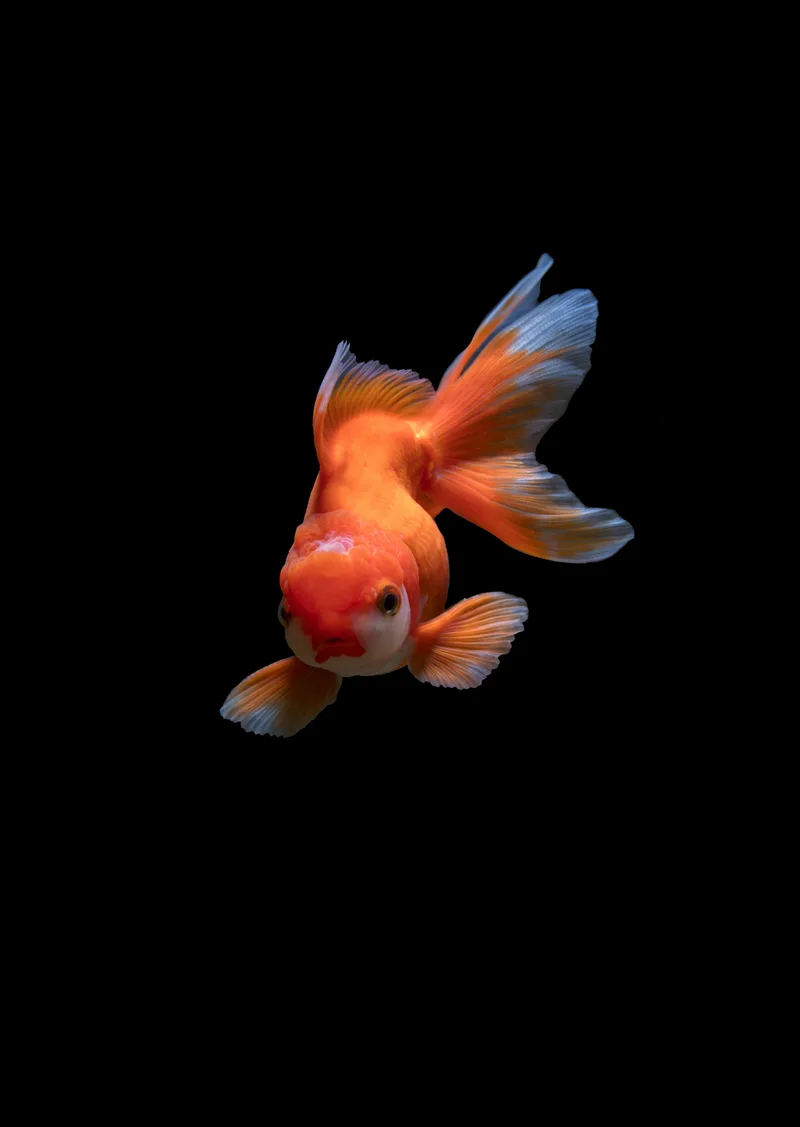
Most of what people call goldfish "disease" isn't an infection at all, and the cure isn't in a bottle. It's clean water. For almost any sick goldfish the first move is the same no matter what's wrong: get the fish into clean, well-oxygenated water, add a measured dose of aquarium salt, and fix whatever went wrong in the main tank. That one reset resolves a large share of cases without any medication at all. The exceptions are what you have to watch for. True parasites, dropsy, and swim-bladder trouble don't answer to clean water and need their own specific response, so the real skill is reading which problem you're actually looking at, because that one read decides whether water cures it or whether you have to escalate.
What's the first thing to do for any sick goldfish?
Get the fish into clean water and ease the load on its body. You can do this without knowing yet what's wrong, and it both treats the fish and buys you time to figure out the rest.
The fastest version is a hospital tank: a bare container with a sponge filter and gentle aeration, filled with dechlorinated water close to the temperature the fish came from. If you can't set one up today, do a large water change on the main tank instead. Either way, the goal is the same: surround the fish with clean water and good oxygen while you work out the cause.
Here is the order to work through:
- Ready a bare hospital tank. A plastic tub works fine. Use a sponge filter and an air stone for soft, steady aeration, and skip carbon in the filter, because activated carbon strips medication right back out of the water.
- Test ammonia and nitrite. These are the two numbers that matter most for a sick goldfish. Anything above zero on either one is an active poison and likely the whole problem.
- Do a large water change. Forty to fifty percent, matched for temperature and dechlorinated. This is the single fastest way to lower ammonia and nitrite.
- Add aquarium salt. Dissolve it in a cup of tank water first, then add it slowly. Aim for roughly one tablespoon per two to three gallons.
- Cut back feeding and watch. A sick goldfish needs little food, and uneaten food fouls the water further. Feed lightly, or not at all for a day, and watch how the fish responds.
How do you match the symptom to the right treatment?
Most goldfish problems announce themselves in a few recognizable ways, and what you can see points fairly reliably to what's wrong. Start from the symptom in front of you and work back to the cause.
White spots that look like grains of salt or sugar scattered across the body and fins are ich, a parasite. The fix is patience and warmth: raise the temperature slowly, a degree or two a day, toward the low 70s°F, hold it there, and keep salt in the water. The warmth speeds the parasite through its life cycle so the treatment can reach it.
Fins that look ragged, torn, or are receding with a red, inflamed margin are fin rot. This one is almost always water-quality driven rather than a primary infection, so clean water and salt do most of the work. Reserve an antibiotic for cases that keep advancing toward the body after the water is clean.
Cottony white or gray tufts growing on the body, mouth, or a wound are fungus. Fungus is opportunistic, meaning it takes hold on tissue that was already damaged, so the cure is two-part: clean the water and treat the wound it settled on.
Flashing, where the fish scratches itself against the substrate or decor, with no visible spots, usually points to flukes or another external parasite too small to see. Clean water won't clear these, so they need a targeted antiparasitic.
Clamped fins held tight against the body, plus gasping at the surface, is the one to read carefully, because it usually isn't a disease at all. It's ammonia or nitrite stress, and the cure is entirely in the water.
| What you see | Likely cause | First-line treatment |
|---|---|---|
| White salt-grain spots on body and fins | Ich (parasite) | Raise temperature slowly to low 70s°F, hold it, keep salt in the water |
| Ragged or receding fins, red streaks | Fin rot (usually water quality) | Clean water and salt; antibiotic only if it keeps advancing |
| Cottony white or gray tufts | Fungus (opportunistic) | Clean the water, treat the wound it settled on |
| Flashing or scratching, no visible spots | Flukes or other parasites | Targeted antiparasitic |
| Clamped fins, gasping at the surface | Ammonia or nitrite stress (not a disease) | Test and fix the water |
| Bloated, floating, or sinking, struggling to stay level | Swim-bladder problem | Fast, then sinking or pre-soaked food (see below) |
If you can see something is wrong but can't quite name it, it helps to know what the early signs of goldfish illness look like before you reach for a treatment. And when one condition keeps coming back, the single disease that shows up most often in home goldfish tanks is worth understanding on its own terms.
Do you need fish medication, or can clean water and salt cure it?
This is usually the question you're actually stuck on, and for most cases the answer is that clean water and salt are enough. Early fin rot, mild fungus, and plain stress all tend to resolve on water quality and a measured dose of salt alone. Medication is for the cases that don't.
Give the water-and-salt approach a real chance before you escalate. A week to ten days of clean water, with the salt held steady and small water changes to keep it dosed, is a fair trial. What you're watching for is improvement: ich spots dropping off and not returning, fin edges firming up and regrowing with a clean clear margin instead of a ragged red one, and the fish moving and eating like itself again. Those are the signs it's working, and if you see them, you keep going rather than adding anything.
Reach for medication when the trial fails or when the symptom points to something salt can't touch. A confirmed parasite that keeps the fish flashing, a bacterial infection that advances despite clean water, fin rot eating into the body: these earn an antibiotic or antiparasitic. For a stubborn parasite load, a short salt bath at a stronger concentration or a measured dose of potassium permanganate is a legitimate second-line tool, used deliberately and not as a default.
What to avoid is dosing blind. Pouring in a medication before you know what you're treating, or stacking two or three at once hoping something works, stresses an already sick fish and can do more harm than the disease. One change at a time, watched, beats a cabinet of bottles emptied at once.
What if it's already advanced: dropsy, swim bladder, or lying on its side?
Some cases are past the point where any of this reliably cures them, and you deserve an honest read rather than false hope. Two situations in particular need their expectations set plainly.
Dropsy is the hard one. You'll see it as a swollen body with the scales standing out from it, so the fish looks like a pinecone when you view it from above. By the time scales lift like that, it's usually a late sign of internal organ failure, and the success rate is low. There is supportive care worth trying: clean, slightly warm water, Epsom salt rather than aquarium salt, and an antibiotic. But go in understanding that you're giving the fish its best chance, not applying a cure. Sometimes a fish pulls through. Often it doesn't, and that isn't something you did wrong.
Swim-bladder and floating problems are a different story, more manageable than curable. A goldfish that floats at the surface, sinks to the bottom, or can't hold itself level is struggling with buoyancy, and in fancy goldfish this is often tied to their selectively bred round body shape and to diet rather than to an infection. The usual approach is to fast the fish for a couple of days, then switch to sinking food or pellets pre-soaked so they don't carry air into the gut. Many fancy goldfish live long, ordinary lives with a buoyancy quirk that's managed this way rather than fixed.
The honest dividing line: fin rot, fungus, ich, and water-quality stress are genuinely treatable and usually recover fully. Dropsy is mostly supportive care with a low success rate. Swim-bladder issues are often managed for life rather than cured. Knowing which side of that line your fish is on is what keeps you from chasing a cure that was never on the table.
Why does clean water and a little salt fix most goldfish disease?
Because most goldfish "disease" starts as an injury from the water itself, not as an invading pathogen. Goldfish are heavy waste producers. They eat a lot, they're large for the volume people keep them in, and they push a lot of ammonia into the water. In a tank that's undersized or under-filtered for that load, ammonia and nitrite climb fast, and both burn the delicate gill tissue and strip the protective slime coat off the body. That damage is the opening. Opportunistic bacteria, fungus, and parasites are almost always present in small numbers, and they take hold on tissue that's already been injured. Clean water removes the underlying insult so the fish can repair, and once the gills and slime coat recover, the body fights off the rest on its own.
The salt does something quieter and genuinely elegant. A freshwater fish is saltier inside than the water around it, so water is constantly trying to seep into its body across the gills, and the fish has to spend energy pumping it back out to hold its internal balance. This is steady, invisible work the fish does every second of its life. When the gills are damaged, that work gets harder and more costly at exactly the moment the fish can least afford it. Adding a small amount of salt to the water narrows the gap between inside and outside, so less water floods in and the fish spends less energy holding the line. It gets a little of its strength back to put toward healing. As a bonus, that same shift in the water is hostile to many external parasites, which can't tolerate it the way the fish can.
Did you know? A goldfish in bad water often turns pale or loses its color, and people reach for medication thinking it's a disease. Usually it isn't. It's stress and ammonia damage showing on the skin, and the color frequently comes back once the water is clean again. That's why color is one of the earliest things worth watching, often before any other sign appears.
That's the whole reason the cure is so often environmental rather than pharmaceutical. The water was the wound, so the water is the medicine.
Which points at the real lesson hiding inside every cure here. Nearly all of it is a course-correction back to the water and the space the fish needed in the first place. A clean-water reset works because it gives the fish what it was missing, and the most reliable treatment of all is simply never letting it go missing: enough tank volume for a fish that gets large and lives well over a decade, filtration sized to a goldfish's heavy load, regular water changes that keep ammonia and nitrite at zero, and a quarantine tank for new arrivals so nothing rides in on them. Do that, and the diseases mostly never start, which is the only cure that asks nothing of the fish.