What do goldfish diseases look like?
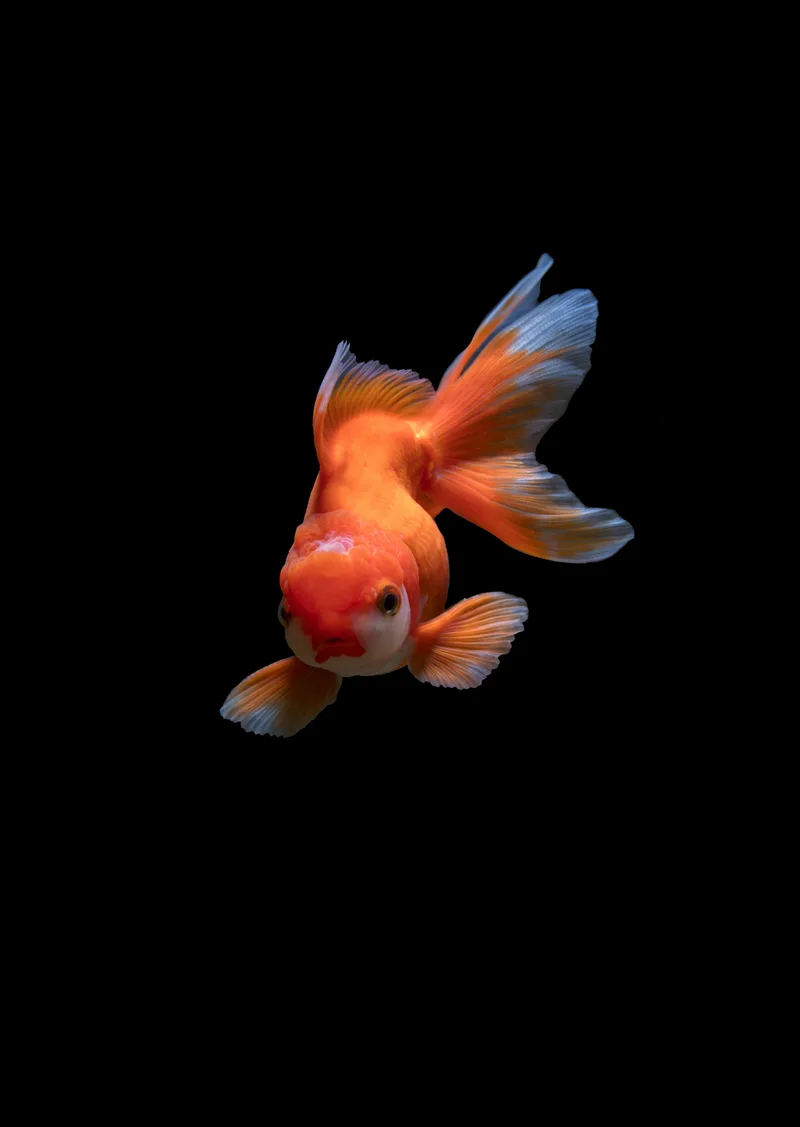
Most goldfish illness shows up as one of a small handful of looks: white salt-like specks, fuzzy cotton patches, scales lifting away like a pinecone, ragged fins, or a fish that can't hold its depth. But the most reliable early warning isn't a mark at all, and it's the one almost every owner looks straight past. Days before any spot or patch appears, a sick goldfish changes how it moves, and catching it at that stage is often the difference between a single water change and a full outbreak. Below is a sign-by-sign lookup, starting with that early behavior, so you can match what you're seeing and know your first move.
The First Sign Is Behavior, Not a Mark
Before a single spot shows up, a goldfish that's getting sick starts to move differently. It holds its fins clamped tight against its body instead of spread open. It sits on the bottom or hangs at the surface. It rubs and scrapes its sides against the gravel or decor, a behavior called flashing. It stops eating, or its gills pump faster than usual. None of this is the fish "feeling down." These are observable, physical responses, and they are the earliest stage you can catch.
This is the part most owners look right past, and it's the part that matters most. A fish you catch at the behavior stage is often a fish a single good water change can save. By the time the visible signs arrive, the problem has usually had a few days to settle in. Learning to notice the shift in movement is the difference between a quick fix and a full outbreak.
Watch for these early signs:
- Fins clamped tight against the body instead of held open
- Sitting on the bottom and staying there
- Hanging at the surface or gasping near the top
- Flashing: rubbing or scraping the sides against gravel, decor, or glass
- Refusing food it would normally rush to eat
- Listing to one side or tilting at rest
If you're not sure whether what you're seeing is the start of an illness or just an unsettled fish reacting to its tank, the rest of this lookup will help you tell the two apart by what shows up next.
White Spots Like Grains of Salt (Ich)
Ich is the most common goldfish disease and the easiest to recognize. The look is unmistakable once you've seen it: distinct, raised white dots scattered across the body and fins, each one about the size of a grain of salt or sugar. They often appear on the fins first, then spread. Unlike a general cloudiness or a film, these are separate, countable specks that sit slightly proud of the skin.
That raised texture is the tell, and it comes straight from how the parasite works. Ich is caused by Ichthyophthirius, a single-celled parasite that burrows just under the surface of the skin and feeds there. Each white speck is the parasite itself, dug in beneath a thin layer of tissue, which is why the spots look bumpy rather than flat and painted-on. An outbreak is usually set off by stress or a sudden chill in the water, which lowers the fish's defenses and lets the parasite take hold.
One look-alike trips up a lot of owners. In spawning season, a healthy male goldfish grows small white bumps called breeding tubercles on his gill covers and the front edges of his pectoral fins. They look a little like ich at a glance, but they sit only in those specific spots, they're a sign of a fish in good condition, and there's nothing to treat. If the white bumps are confined to the gill covers and leading fins on a male, that's almost certainly tubercles. If they're scattered all over the body, think ich. Ich also happens to be the condition most goldfish keepers run into first, so if you're trying to place an unfamiliar white-spotted fish, this is the likeliest answer.
Fuzzy Cotton-Like Patches (Fungus and Columnaris)
This one looks like someone stuck a tuft of cotton wool or a smear of mold on your fish. The patches are soft, fuzzy, and white to grayish, and they usually turn up on the body, the fins, or around the mouth. Two different problems produce this look, and telling them apart changes how worried you should be.
True fungus is the more obvious of the two. It grows as a raised, cottony tuft, almost always on top of an existing injury or a patch of damaged skin, like a scrape from sharp decor or a nip from a tank mate. It looks three-dimensional, like a little ball of fluff anchored to the fish.
Columnaris, sometimes called mouth fungus, looks similar but behaves very differently. It shows up as a flatter, grayish-white film, often around the mouth or along the edges of the fins, and despite the nickname it isn't a fungus at all. It's a bacterial infection, and it moves fast, which is why it's the more urgent of the two to act on.
Both take hold for the same underlying reason. A goldfish is coated in a thin layer of slime that acts as a barrier against infection. When poor water quality or an injury damages that slime coat, fungus and columnaris find an opening they wouldn't otherwise get. That's why the first move with either one is to test and fix the water, not just to dab on medication. Treat only the patch and you've treated the symptom; fix the water and you've closed the door that let it in.
A Fine Gold or Rust-Colored Dust (Velvet)
Velvet is the condition most often mistaken for ich, and the difference is worth getting right. Instead of distinct salt-like specks, velvet looks like a fine, even dusting laid over the fish, gold, yellow, or rusty in color, sitting just under the skin. It's much finer and more uniform than ich. Where ich gives you countable dots, velvet gives you a sheen.
The easiest way to confirm it is to dim the room and shine a flashlight along the fish's body at an angle. Under direct light, the coating throws back a velvety, metallic shimmer that's hard to see in normal tank lighting. That telltale gold dust is how velvet earned its name.
Separating it from ich matters because it's a different parasite, and treating it as "just a bad case of ich" can waste time you don't have. Velvet tends to move quickly and hit the gills hard, so a fish that looks dusted in gold and is breathing fast at the surface needs to be taken seriously as its own problem, not filed under ich and treated halfheartedly.
Ragged, Frayed, or Red-Edged Fins (Fin Rot)
Fin rot looks like the fish's fins are being slowly eaten away. The edges turn torn and frayed, sometimes with a white or reddened margin, and over several days the fins visibly shrink. It usually starts at the outer edge and works inward. Caught early, it stops at a ragged border; left alone, it can eat into the body of the fin.
Fin rot is almost always bacterial, and it's almost always downstream of poor water quality. That's the key thing to know about it: a goldfish with fin rot is usually telling you the tank needs attention, not just the fish. Ammonia or nitrite building up between water changes weakens the fish and gives the bacteria their opening. Sort the water out and you've addressed the actual cause.
There's a simple look-alike to rule out. If your fish snagged a fin on a sharp ornament or a rough plant, you'll see a clean tear that heals over within a week or two, with the edges looking normal as they close up. Fin rot is the opposite: the damage keeps advancing day after day, and the frayed edges look inflamed or discolored rather than clean. If the fin is getting worse instead of better, it's rot, not a tear.
Floating, Sinking, or Swimming Sideways (Swim Bladder Trouble)
This is the one where the fish is clearly still alive and alert but can't control where it sits in the water. It might float helplessly at the surface, sink to the bottom and struggle to rise, or roll onto its side or even upside down while still looking around. It's most common in the round-bodied fancy goldfish, the fat little orandas, ranchus, and fantails rather than the long slim common and comet types.
The body shape is exactly why fancies are prone to it. Generations of selective breeding for that rounded, egg-shaped body have crowded the internal organs into a much smaller space, and the swim bladder, the gas-filled organ a fish uses to hold its depth, gets pinched along with the gut. When the gut behind it swells, the swim bladder can't do its job.
Most of the time the swelling comes from digestion, not infection. Constipation from a diet of dry flakes or pellets, or simple overfeeding, is the usual culprit, because dry food expands as it absorbs water inside the fish. That's good news, because it means the fix is often dietary rather than medical. Stopping food for a few days and then switching to something that's easier to pass, like a thawed pea with the skin removed or other soft foods, frequently resolves a buoyancy problem that no medication would have touched.
Scales Standing Out Like a Pinecone (Dropsy)
Of every look on this list, this is the one to take most seriously. The fish's belly swells and bloats, and as it does, the scales lift away from the body so that the fish looks like a pinecone, each scale standing out at an angle. The eyes often bulge too. Seen from above, the swollen body with its raised scales is unmistakable.
Dropsy isn't really a disease in itself. It's a symptom of something failing inside the fish. The body can no longer manage its own fluid balance, so fluid builds up under the skin and in the body cavity, pushing the scales outward and bloating the belly. The cause behind it is usually internal, often the kidneys or other organs failing. Once the pineconing is pronounced, the outlook is poor and recovery is uncommon.
That's hard to hear when you're looking at a fish you've kept for years, so here's what's actually worth doing rather than just sitting with the bad news. Move the fish to its own isolated tank so it isn't stressed by tank mates, keep the water pristine, and act quickly, because the early stages have a better chance than the advanced ones. If the swelling and raised scales are only just starting, prompt action gives the fish its best shot. If the pineconing is already severe, the kindest path may be to keep the fish comfortable rather than to keep chasing a cure.
Did you know? The "pinecone" look comes from the same system that normally keeps a freshwater fish from swelling up in the first place, running in reverse. A goldfish constantly takes on water through its skin and gills because its body is saltier than the tank around it, and it works around the clock to pump that excess water back out. When that balancing act breaks down, the water it can no longer expel collects under the skin and lifts each scale away from the body.
How to Tell What You're Seeing and What to Do First
Here's the whole list pulled into something you can use right now, standing in front of the tank. The pattern is the same for almost every condition: don't reach for medication first. Test the water and do a water change, because poor water is behind most of these and fixing it is often the whole treatment. Then, if a fish is clearly sick, move it to its own tank so it can recover without competing or spreading anything. Finally, match what you're seeing to the row below.
| What you see | Likely condition | First thing to do |
|---|---|---|
| Clamped fins, bottom-sitting, scraping against decor | Early stress or onset of illness | Test and change the water; watch closely for the next 24 to 48 hours |
| Distinct raised white specks like grains of salt | Ich | Test and change the water; isolate and treat for ich |
| Fuzzy cotton or grayish film on body, fins, or mouth | Fungus or columnaris | Fix the water first; isolate, then treat (columnaris moves fast) |
| Fine even gold or rust-colored dust under the skin | Velvet | Dim the room to confirm; isolate and treat as its own parasite |
| Frayed, shrinking fins with red or white edges | Fin rot | Test and change the water; the tank is usually the real problem |
| Floating, sinking, or rolling while still alert | Swim bladder trouble | Fast the fish, then feed a skinned pea or soft food, not medication |
| Bloated belly with scales lifted like a pinecone | Dropsy | Isolate immediately, keep water pristine, act fast |
| Something visibly stuck to the fish, or one bulging eye | Anchor worm, fish lice, or popeye | Isolate; identify the attached parasite or treat the eye |
That last row is the catch-all for the looks that don't fit the main list. Anchor worm shows up as a thin thread, often greenish-white, hanging off the body where it has burrowed in. Fish lice are flat, disc-shaped creatures you can actually see moving across the skin. Popeye is a single eye swelling and bulging outward on its own, usually from an injury or infection behind it. If your fish matches one of these instead, you're not stranded, you've just found a less common parasite or injury rather than one of the big-five looks.
The most useful thing to understand about all of this is that a single snapshot rarely diagnoses anything. What tells you what you're dealing with is the trend over a few days. Are the white spots spreading or holding steady? Are the frayed fins still fraying, or have the edges gone clean and started to heal? Is the belly still swelling? A fish watched across a week tells you almost everything you need to know, which is exactly why the behavioral shift back in the first section matters more than any single mark. Recognition isn't about memorizing a gallery of photos. It's about noticing change early, while it's still easy to fix. Once you've placed what you're looking at, the next step is matching the condition to the right treatment and getting your fish back on track.