What are the signs of a stressed goldfish?
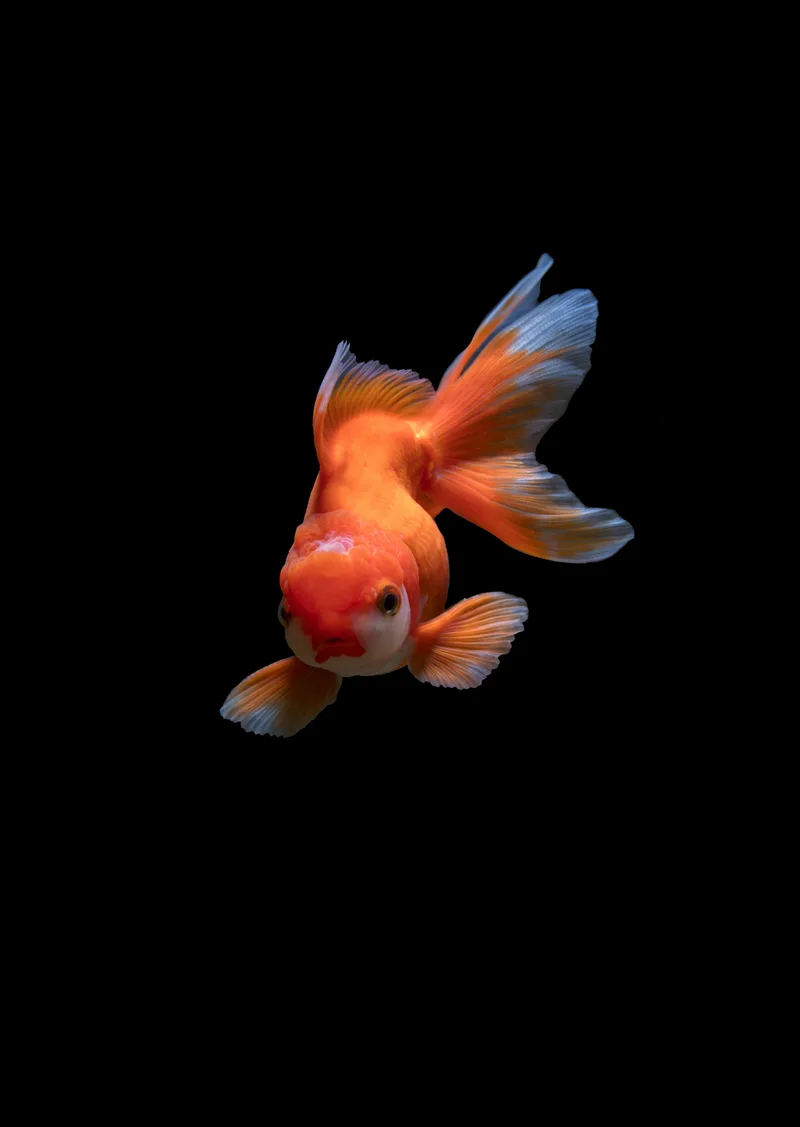
A stressed goldfish hangs near the surface gulping air, holds its fins tight against its body, hides all day behind a piece of decor, fades from orange to washed-out, or sits on the bottom and stops eating. None of that means your fish is fragile. Goldfish are one of the hardiest pet fish in the hobby, which is why almost every case of stress turns out to be the tank, not the fish, and almost every case is fixable in a week or two once you find which part of the tank is the problem.
What Should I Look For?
The quickest way to read a goldfish is to scan the body and the behavior separately. One odd thing in one column on an otherwise active fish usually is not an emergency. Two or three signs together, or any of the urgent ones on their own, means you should test the water today.
Behavior signs:
- Gasping at the surface. The fish hangs at the top and gulps air. This is urgent.
- Lying listless on the bottom. Not resting between laps, just settled and still. Also urgent.
- Hiding constantly. A normally visible fish tucked behind decor all day.
- Darting or crashing into decor. Sudden bursts of swimming that bump into the glass or ornaments.
- Flashing. Rubbing the body against gravel, rocks, or decor as if scratching an itch.
- Loss of appetite. Food hits the water and the fish does not come up for it.
- Clamped fins. Fins held tight against the body instead of spread out while swimming.
Body signs:
- Faded or darkened color. An orange fish that has gone washed-out, or a lighter fish showing new dark patches.
- Red streaks in the fins. Thin red lines running through the fin tissue.
- Frayed or ragged fin edges. Tears and rough edges that were not there last week.
- White film or patches on the skin. A cloudy sheen, cottony tufts, or pale spots.
A single mild sign, like one slow morning of eating or a slightly less vivid color, on a fish that is otherwise swimming around normally, is almost always a non-event. Keep watching for a day. If nothing else joins it, you can relax.
What's Actually Causing the Stress?
The overwhelming majority of goldfish stress traces to four things: water quality, tank size, temperature, and tank mates. Before you reach for a bottle of anything, work backward from the sign to the most likely cause and run one concrete test.
| Sign | Most Likely Cause | First Thing to Check |
|---|---|---|
| Gasping at the surface | Low oxygen or ammonia poisoning | Test ammonia, check temperature (warm water holds less oxygen) |
| Clamped fins with faded color | Poor water quality or chronic stress | Test ammonia and nitrite |
| Hiding and loss of appetite | New tank, wrong temperature, or a bullying tank mate | Check temperature, watch interactions for 10 minutes |
| Darting or flashing | Irritation from ammonia, nitrite, or early ich | Test water and inspect the body for white spots the size of grains of salt |
| Sitting on the bottom motionless | Severe water quality problem or cold shock | Test water and check the heater or room temperature |
| Torn fins | A fin-nipping tank mate or sharp decor | Observe the tank and feel decor edges for sharpness |
The pattern under this table is that most stress signs point to the water before they point to anything else. A liquid test kit (not strips) for ammonia, nitrite, nitrate, and pH is the single most useful thing you can own as a goldfish keeper. If the numbers come back clean, then you look at temperature, tank mates, and the tank itself.
One cause the table does not cover: sudden swings. A big cold water change, a jump in temperature, a fresh dose of untreated tap water, or a water chemistry shift during cleaning can stress a fish even when the final numbers look fine. Stress from fish husbandry is cumulative, so a fish that seemed okay after one rough water change may show it after the next one.
What Should I Do Right Now?
Start with the environment, not the medicine cabinet. Most goldfish stress is environmental, and medication on top of bad water makes it worse, not better.
For the next hour:
- Test the water. Ammonia, nitrite, nitrate, and pH. Write the numbers down so you can see them move later.
- Check the temperature. Goldfish want 65 to 72°F (18 to 22°C). Anything above 75°F (24°C) is low-grade stress on its own.
- Do a water change if readings are bad. If ammonia or nitrite is anything above zero, change 25 to 50 percent of the water with dechlorinated, temperature-matched replacement water. Do not skip the dechlorinator.
- Reduce disturbances. Turn the light off or dim it, skip a feeding, and leave decor where it is. Every new thing is another thing for the fish to process.
- Observe for 24 hours. Give the fish quiet water and watch whether the signs soften.
For the week that follows, test the water every day or two and do another water change whenever ammonia or nitrite reads above zero. Feed lightly, once a day, and only as much as the fish finishes in a minute. Keep the tank boring on purpose.
Escalate past stress territory if you see any of these: the fish is lying on its side and staying there, breathing has visibly stopped and restarted, or white patches are spreading across the body by the day. Those are signs of active illness rather than stress, and they need a different response.
Why Are Goldfish So Prone to Stress in the First Place?
Goldfish are not fragile. Their wild cousins are Prussian carp, a fish that survives winter under pond ice, thrives in murky farm ponds, and shrugs off water that would kill most tropical species. So the stress almost never lives in the fish. It lives in the gap between what goldfish actually need and the setups they usually get sold into.
Three things stack the deck against them:
Bioload. A goldfish eats hard and produces waste at a rate most beginner tanks are not ready for. A pair of fancy goldfish in an unfiltered bowl can push ammonia into the danger zone in under a week, which is exactly why bowl-kept goldfish so often look "always a little off." The gasping, the faded color, the clamped fins in the signs list above usually trace back here before they trace anywhere else. Getting the filter and tank size right from the start is the single biggest stress-prevention move you can make.
Coldwater biology. Goldfish (Carassius auratus) are coldwater cyprinids. They run best between 65 and 72°F, and they are one of the few popular aquarium fish that do not want a heater. Warm water speeds up their metabolism, which raises how much food they want and how much waste they produce, and warmer water also holds less dissolved oxygen. A goldfish in a heated tropical community tank is running hot while breathing thin air. That is where the gasping at the surface often comes from, even when the ammonia test reads clean.
Growth mismatch. A comet goldfish sold as a two-inch fish is a future twelve-inch fish. A fancy goldfish sold as an inch-long pea is a future six-inch softball. Outgrowing the tank is stress wearing a different name: the fish runs out of swimming room, waste concentrates faster in the smaller volume, and every water change becomes a bigger chemistry shift for the fish to absorb. The hiding and the loss of appetite in a once-active fish sometimes mean nothing more than "this tank got too small a year ago."
Did you know? Goldfish have a rare ability among aquarium fish to sense dissolved oxygen dropping in their environment and slow their metabolism in response, which is part of how they can survive briefly under ice-covered ponds. That same toughness is why a goldfish in a bad bowl can hang on for months before the stress catches up with it. The hardiness is what makes the neglect possible, not what makes it harmless.
All three reasons point the same direction. The signs you just learned to recognize are almost never the fish being weak. They are the fish being honest about a setup it is working too hard to survive. A goldfish that has been burning through its reserves for months will also have its natural lifespan cut sharply short by the same conditions, which is why fixing the tank is worth doing sooner rather than later. Once you get the water, temperature, and space right, the signs do reverse, often within a week or two. Watching a faded fish pull its color back and its fins back open is one of the clearer confirmations that a goldfish in a good tank behaves differently from a stressed one.
You already did the hard part by noticing. A stressed goldfish is not a verdict on you or the fish, it is information about the tank, and the fix lives in the tank too. Clean water, the right temperature, enough room, and calm tank mates resolve almost every case on the list above, and goldfish are tough enough to meet you most of the way there.