What are the 10 most common goldfish illnesses?
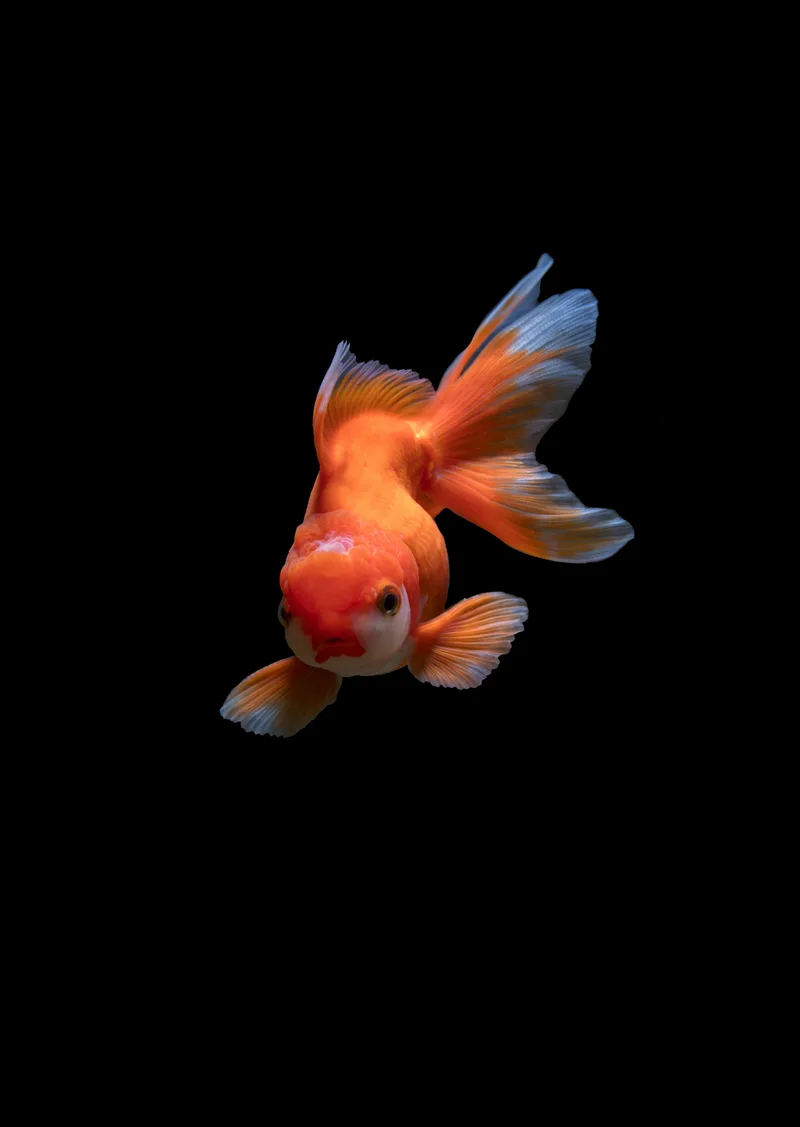
White spots scattered like salt, ragged fins shrinking by the day, a fish stuck floating sideways at the surface: almost all goldfish illness comes down to a short list of recognizable signs, and ich, fin rot, and swim bladder trouble are the three you'll actually meet most. The good news is that most of it is fixable when you catch it early. The part that surprises people is that these ten illnesses aren't ten separate strokes of bad luck. A goldfish (Carassius auratus) puts out more waste than almost any popular aquarium fish, and it's usually kept in a tank far too small to keep up, so most of this list is really one root cause wearing different faces. Here's how to tell which face you're looking at.
Ich (White Spot Disease)
If your goldfish is covered in tiny white dots that look like grains of salt or sugar sprinkled across its body and fins, that's ich. It's the single most common goldfish illness, and it's the easiest to recognize because the spots are right there on the skin. You'll often see the fish "flashing" too, scraping its sides against the gravel, ornaments, or glass as if it's trying to scratch an itch it can't reach.
Ich is a parasite (Ichthyophthirius multifiliis) that buries into the fish's skin, where it shows up as those white cysts, then drops off to multiply in the water before the next generation finds a host. That life cycle is why it spreads through a tank so fast, and why one or two spots on a Monday can be dozens by Friday.
What sets it off is almost always stress. A sudden drop in water temperature, a new fish added without quarantine, or a tank that's already running dirty all weaken the fish enough for the parasite to take hold. A goldfish you treat at the first few spots almost always recovers. Raising the temperature speeds up the parasite's life cycle so that aquarium treatments can reach it during the brief window it spends in the water, and most fish that are otherwise healthy pull through.
Because ich is so common, it's worth knowing the single most common goldfish disease in more depth than a one-line entry can give it.
Fin and Tail Rot
Fins that look ragged, frayed, or shorter than they were last week, sometimes with a white or reddened edge creeping inward, are showing fin rot. The fins can look like torn tissue paper, and in a bad case the rot eats back toward the body.
Fin rot is rarely the real problem, though. It's a sign that bacteria have moved in on a fin that was already weakened, almost always because the water is dirty or because the fin got nipped or snagged and the wound got infected. The bacteria are opportunists. They don't attack a healthy fish in clean water; they wait for an opening.
That's why chasing the fin with medication while ignoring the water gets you nowhere. The fastest way to stop fin rot is to fix the cause: test the water, do a large water change, and keep the tank clean while the fish heals. Goldfish regrow fin tissue surprisingly well once the underlying problem is gone, and the new growth often comes back clear before it colors in.
Fungus (Cotton Wool Disease)
Fungus looks exactly like its other name suggests: fluffy, cotton-like tufts of white or grayish growth, usually on the skin, fins, or around the mouth. Unlike the flat white dots of ich, these stand up off the fish like little clumps of wool or mold.
Fungus is an opportunist, the same way fin rot is. It almost never starts on its own. It takes hold on a spot that was already damaged, an old wound, a patch scraped raw, or a fish run down by stress or cold. The fungus follows the damage; it doesn't cause it. That's the key to treating it: clean up the conditions that let the fish get injured or stressed in the first place, and treat the fungus itself with an aquarium antifungal. Caught early, it clears up well.
One look-alike is worth flagging. A bacterial infection called columnaris can also produce a cottony, off-white patch, and people mix the two up constantly. True fungus is usually fluffier and more three-dimensional, like a cotton ball. Columnaris tends to look flatter and more like a film or a saddle-shaped patch across the back, and it moves and kills much faster. If a "fungus" is spreading by the hour rather than the day, treat it as the more serious bacterial problem.
Velvet (Gold Dust Disease)
Velvet is a fine dusting of gold, rust, or yellowish powder over the fish's body, as if someone shook cinnamon or pollen onto it. It's harder to see than ich because the grains are much finer, and on an already-golden goldfish the color blends right in. The trick is to turn off the room lights and shine a flashlight at the fish from the side. The dusting catches the beam and gives the skin a faint metallic sheen it doesn't have when it's healthy.
The fish will often have its fins clamped tight against its body and may flash against surfaces the same way it does with ich. Velvet is caused by a parasite (Oodinium) that, unlike ich, can also draw energy from light, which is part of why it forms that even, dust-like coating rather than distinct spots.
Velvet is easy to miss in the early stage precisely because it blends in, and it's more dangerous than ich because it attacks the gills hard. If you've got a goldfish that's clamped, breathing fast, and flashing but you can't find clear white spots, get the flashlight out before you rule out a parasite.
Gill and Skin Flukes
Flukes are the illness with no visible symptom, which is exactly what makes them tricky. These are microscopic parasites that latch onto the gills and skin, and you will not see them on the fish no matter how closely you look. You read them entirely from behavior: heavy flashing and scraping, rapid or labored gill movement, a fish gasping at the surface, and often a coating of excess slime that gives the skin a dull, grayish sheen.
The diagnostic trap is that those exact signs (gasping at the surface, fast gill movement, lethargy) are also what you see when the water is low on oxygen or high in ammonia. So a fish that's hanging at the surface and breathing hard might have flukes, or it might be telling you the water is the problem. The way through is to test the water first. If your ammonia and nitrite read zero and there's plenty of oxygen but the fish still gasps and flashes, flukes climb up the list of suspects, and a proper anti-parasite treatment is the next step.
Anchor Worm and Fish Lice
These are the two parasites you actually can see, and they're both small crustaceans rather than the microscopic kind. Anchor worm shows up as thin, thread-like strands hanging off the body, often with a small red, inflamed spot where they've burrowed in. Fish lice are flat, roughly disc-shaped, and crawl around on the skin like little translucent dots that move; catch one against the light and you can watch it travel.
The most useful thing to know about both is where they come from. You almost never get anchor worm or fish lice out of thin air in an established indoor tank. They arrive on new fish or on plants and fish brought in from ponds, where these parasites are common. That's why the fix isn't a medication so much as a habit: quarantine anything new for a couple of weeks before it joins your main tank. Both can be treated, but treating a parasite you brought home on a new fish is a lot more work than spotting it in quarantine first.
Swim Bladder Disorder
This is the classic goldfish problem, the one that sends most worried owners searching: a fish that floats sideways, bobs helplessly at the surface, tips upside down, or sinks to the bottom and can't rise. The swim bladder is the small internal organ that controls buoyancy, and when something interferes with it, the fish loses its ability to sit level in the water.
The most important thing to understand is that swim bladder disorder is a symptom, not a single disease. Plenty of different things produce that same off-balance swimming, which is why there's no one cure for it. In the deep-bodied fancy varieties especially (orandas, ryukins, fantails, the round-bellied breeds), it's usually not an infection at all. Their compressed, rounded body shape crowds the internal organs and makes the swim bladder easy to throw off, and the most common triggers are digestive: overfeeding, gulping air from floating pellets, and constipation.
That last one matters because it's so often what's actually going on, and it's so easy to fix. Before you assume the worst, look at how and what you're feeding, because a floating fish very often traces straight back to the food going into the tank.
Constipation
Behind a lot of those struggling, floating fancy goldfish is something far more ordinary than disease: the fish is constipated. The signs are a swollen, rounded belly, a noticeably reduced appetite, and droppings that come out stringy and trailing, often pale, hanging off the fish instead of dropping away cleanly.
Fancy goldfish are especially prone to it because of that same compact, deep body. The gut is folded into a tight space, food moves through slowly, and a blockage backs up easily, which is exactly what can press on the swim bladder and tip the fish off balance. Overfeeding dry pellets is the usual cause. Dry food expands as it absorbs water, and a fish that fills up on it can clog like a drain.
The fixes are simple and they work. Soak dry pellets for a minute or two before feeding so they're already swollen by the time the fish eats them. Add some fiber: a blanched, deshelled pea or a bit of cooked, peeled zucchini does the job well. And give the fish a fast, two or three days with no food, which sounds harsh but is completely safe for a goldfish and often clears the blockage on its own. If a "swim bladder" case improves after a fast and a few peas, it was constipation all along.
Dropsy
Dropsy is the one that looks the most frightening, and there's no gentle way to describe it: the fish's body swells up, and its scales lift away from the body and stick straight out, so that looking down from above the fish resembles a pinecone. It usually comes with a bloated belly and sometimes bulging eyes.
Dropsy isn't really a disease in itself. It's a sign that the fish's internal organs, often the kidneys, are failing, and that fluid is building up inside the body faster than it can be cleared. By the time the scales are pineconing, the problem is usually advanced, and dropsy is frequently fatal even with treatment.
Still, "frequently fatal" is not "always," and there are calm, sensible things to try. Move the affected fish to a separate quarantine tank, both to reduce stress and to protect the others in case an infection is involved. Keep that water pristine. Some keepers add aquarium salt to help draw out the excess fluid, and a vet or an aquarium antibiotic aimed at internal bacterial infection is the next step if you want to fight it. Catch it at the very first sign of swelling, before the full pinecone, and the odds improve. But if you've done everything right and the fish keeps declining, dropsy is often the body telling you the damage was already done.
Ammonia Poisoning Isn't a Disease, but It's the Killer Behind Most of This List
Here's the entry that reframes all the others. A goldfish with red or purple, inflamed-looking gills, gasping at the surface, sitting listless on the bottom with its fins clamped, often isn't fighting an infection at all. It's being poisoned by its own water. Ammonia and its close cousin nitrite are waste products that build up in a tank when the biological filter can't keep pace, and in high enough concentrations they burn the gills, starve the fish of oxygen, and kill it outright.
The reason this belongs at the heart of a goldfish disease list is that goldfish produce an enormous amount of waste, far more per fish than the tropical fish most tanks are designed around, and they're routinely kept in tanks and bowls far too small to process it. The math doesn't work. A foot-long fish making that much waste in a few gallons of water poisons itself, and no medication fixes that because it isn't an infection. You don't medicate ammonia. You test for it, you do an immediate large water change to dilute it, and you fix the underlying setup so it stops climbing: a bigger tank, a stronger filter, fewer fish, and regular water changes.
And here is why ammonia sits underneath nearly everything above it. Ammonia and nitrite don't just kill directly; at lower levels they keep a fish in a state of constant low-grade stress, and a stressed fish has a weakened immune system. That stressed, run-down fish is exactly the one that ich takes hold of, that fungus colonizes, that fin rot eats into. Most of the parasites and bacteria on this list are always present in small numbers; what decides whether they become an outbreak is whether the fish is healthy enough to fend them off, and poor water is what tips that balance. Getting the water-quality fundamentals right is what makes most of this list never happen.
How to Tell Which One Your Goldfish Has
The fastest way to narrow it down is to start from what you can actually see and work backward to the cause. Look at the fish, match the most obvious sign to the table below, and use the first column to point you at the likely illness and the immediate next move.
| What you see | Likely illness | First thing to do |
|---|---|---|
| Tiny white grains, like salt, on body and fins | Ich (white spot) | Treat for ich; raise temperature gradually |
| Fine gold or rust dusting (use a flashlight) | Velvet | Treat for parasites; dim the lights |
| Fluffy, cotton-like white tufts | Fungus | Antifungal treatment; check for the wound underneath |
| Ragged, frayed, or shrinking fins | Fin and tail rot | Test and clean the water before medicating |
| Flashing and gasping, but nothing visible on the fish | Gill or skin flukes (or bad water) | Test water first; if clean, treat for parasites |
| Thread-like strands or flat crawling discs on the skin | Anchor worm or fish lice | Remove visible parasites; quarantine new arrivals |
| Floating, sinking, or swimming sideways | Swim bladder (often constipation) | Fast the fish, then feed a soaked pea |
| Swollen belly, scales sticking out like a pinecone | Dropsy | Isolate the fish; keep water pristine; act fast |
| Red or purple gills, gasping at the surface | Ammonia or nitrite poisoning | Test water; do a large water change now |
Once you've matched the symptom to an illness, the next question is what to actually do about it, and most of these have a clear set of treatment steps once you know what you're treating.
But step back from the list for a moment, because the real takeaway isn't any single entry. It reads like ten separate enemies, and for most owners it's one. Nearly everything here, the parasites that take hold, the bacteria that move in on a frayed fin, the poisoning that starts it all, traces back to a tank that's too small, too dirty, or too warm for a fish that produces this much waste. Get the tank big enough, keep the water clean, hold the temperature cool, and the fish that lives in it rarely meets any of these at all. The goal isn't to keep a well-stocked goldfish first-aid kit on the shelf. It's to get the water right so the kit mostly stays closed.