Can different types of goldfish live together?
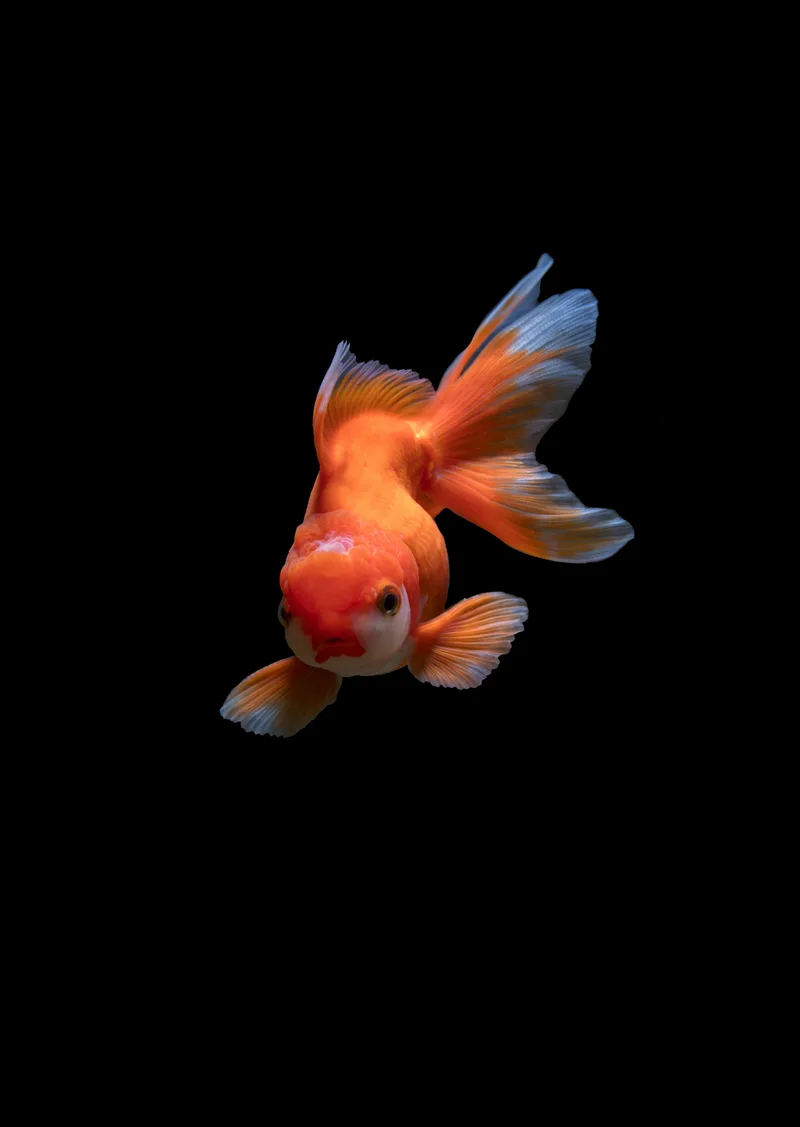
Yes, as long as you match body types. A common goldfish and a ranchu are the same species, Carassius auratus, but a thousand years of selective breeding turned one into an athletic swimmer and the other into a slow, round-bodied fish that can barely keep up at feeding time. Put them in one tank and the comet reaches the food first at every meal while the ranchu trails behind and slowly loses condition. The split that keeps everyone fed runs along one line: single-tail goldfish belong with other single-tails, and fancies belong with other fancies.
Which Goldfish Types Can Share a Tank?
The rule is one line long: match the body shape. Goldfish fall into two groups based on how they're built, and fish within the same group do well together.
| Single-tail group | Fancy group | |
|---|---|---|
| Common varieties | Common goldfish, comet, shubunkin | Oranda, ryukin, fantail, black moor, ranchu, telescope, pearlscale, bubble eye, lionhead |
| Body shape | Long, streamlined, built like their wild carp ancestor | Round-bodied, compact, often with a double tail |
| Swimming speed | Fast and athletic | Slower, less agile |
| Adult size | 10 to 14 inches | 6 to 10 inches (varies by variety) |
A single-tail goldfish in a tank with fancies will dominate every feeding. It will eat more, grow faster, and push the fancies out of the way without even trying. The fancies, meanwhile, have no way to keep up. The mismatch only gets worse as the fish grow.
Space matters too. Goldfish are heavy waste producers, and crowding amplifies every compatibility problem. For a group of two or three goldfish, you want at least 40 gallons, with another 10 to 15 gallons per fish after that. The right tank size for your goldfish makes the difference between a group that thrives and one that slowly falls apart.
Why Can't Fancy and Common Goldfish Live Together?
All goldfish are the same species, Carassius auratus. The physical differences between a comet and a ranchu are entirely the product of selective breeding over more than a thousand years. But those differences are big enough to make them incompatible in a shared tank.
Common goldfish were bred to stay close to the original wild carp body plan: long, tapered, with a single tail fin and a build designed for sustained swimming. They're athletic fish. A healthy common in a large tank moves with real speed and stamina.
Fancy goldfish were bred in the opposite direction. Breeders selected for round, compressed bodies, double tails, head growths, protruding eyes, and other features that look striking but slow the fish down. A ryukin's deep body creates drag. An oranda's head growth (called a wen) can partially block its vision. The bulging eyes on a telescope eye goldfish make it harder to spot food quickly. All of that costs mobility.
Put both types in the same tank and the result is predictable. At feeding time, the commons reach the food first and eat more of it. The fancies trail behind. None of this is aggression in the usual sense. The commons are not trying to bully anyone. They are just faster, and the walls of a tank make that speed gap inescapable. Over weeks and months, the fancies eat less, grow more slowly, lose body condition, and sometimes develop torn fins from being bumped or chased away from food.
Did you know? The wild ancestor of every goldfish variety is the Prussian carp, a dull, olive-colored fish from East Asian rivers. Over a thousand years of selective breeding in China and Japan turned that single species into everything from the streamlined common goldfish to the round-bodied, wen-capped oranda. They can still interbreed, which is part of why pet stores sometimes sell accidental hybrids.
What About Mixing Different Fancy Varieties?
Most fancies get along fine together. Orandas, ryukins, fantails, and black moors are all similar enough in speed and body shape that they can share a tank without anyone regularly losing out. This is the sweet spot for a mixed goldfish setup: different varieties, same general capability.
The exception is the most extreme body shapes. A few fancy varieties are slower or more visually impaired than the rest of the group, and they can struggle even among other fancies:
- Bubble eye goldfish have fluid-filled sacs under their eyes that are fragile and obstruct their downward vision. They swim slowly, find food last, and the sacs can be damaged by tank decorations or pushy tank mates.
- Celestial goldfish have upward-locked eyes and essentially no forward vision. They locate food by bumping into it, which means faster fancies will clean up before they arrive.
- Heavily developed telescope eye goldfish (especially those with very large, protruding eyes) have compromised depth perception and are slower to react at feeding time.
- Extreme ranchus and lionheads with fully overgrown wens can have their vision almost entirely blocked, putting them in the same position as celestials.
If you keep any of these with more moderate fancies, target-feeding is the fix. Drop food directly in front of the slower fish, or feed in two spots so the faster fancies go one way while the vulnerable ones eat in peace. If one fish stays thin while the others fill out, a separate tank (even a simple 20-gallon setup) is worth it.
What Are the Signs That Goldfish Aren't Getting Along?
Goldfish are social fish. Brief jostling around food is normal, especially right after you drop food in. What you're watching for is a pattern that doesn't resolve after the food is gone.
Signs that a mixed setup is not working:
- Uneven body condition. One fish stays noticeably thinner while the others are round and full. This is the clearest indicator of a feeding imbalance and the one most people notice too late.
- Persistent chasing beyond feeding time. Brief chasing when food hits the water is standard goldfish behavior. Chasing that continues throughout the day, or one fish consistently driving another into a corner, is not.
- Torn or frayed fins. Goldfish are not fin-nippers by nature. Damaged fins in a goldfish tank almost always mean one fish is physically pushing another around, or the stressed fish is scraping against decor trying to get away.
- Hiding or hovering in corners. A goldfish that spends most of its time behind the filter or pressed into a corner has given up competing for open space. Healthy goldfish are active and use the full tank.
- Rapid gill movement or gasping at the surface. Sometimes a sign of water quality problems, but in a tank with good parameters it can indicate chronic stress.
If you're seeing these in a tank that mixes single-tails and fancies, the answer is straightforward: separate them into matched groups. Adding more fish, rearranging decorations, or feeding more often won't fix a fundamental speed mismatch. Watching for the full range of stress signals in goldfish can help you catch problems before they get serious.
Goldfish genuinely do better with company. The point of matching body types is not to make keeping multiple goldfish harder. It is to make sure the company actually helps. A well-matched pair or group of goldfish is more active, more confident at feeding time, and more interesting to watch than a fish sitting in a tank alone.