What is the most popular breed of goldfish?
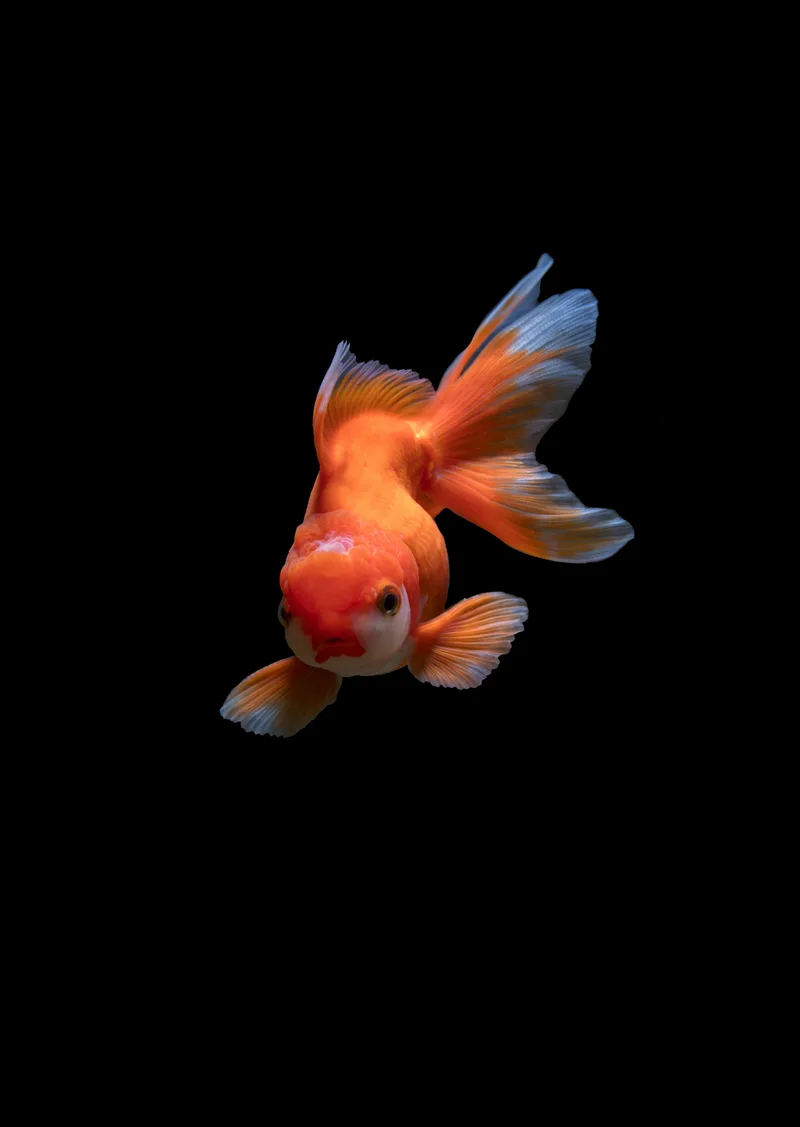
The most popular breed of goldfish is the plain orange goldfish you saw in your dentist's waiting room: the common goldfish, single-tailed, streamlined, the one that comes home in a plastic bag from the fair. Ask a serious hobbyist the same question, though, and you get a different answer. They'll point you at the oranda, or maybe the ranchu, the variety Japanese breeders call the "king of goldfish." Two worlds, two answers, and the gap between them is most of the goldfish story.
Which fancy goldfish are the most popular?
In the fancy world, three names come up again and again. The oranda is the most widely kept of the group, recognized by the fleshy head growth on top of its skull (called a wen) that develops as the fish matures. It manages to be both dramatic-looking and genuinely hardy, which is a rare combination in this category.
One step down in difficulty sits the fantail. Round-bodied and double-tailed like the others, but without the extreme features that make some fancies fragile, it is the entry point to the fancy world. Fantails tolerate a wider range of conditions, eat without difficulty, and are the variety most long-time goldfish keepers recommend to someone who wants a fancy but has only kept commons before.
The ranchu is the prestige pick. In Japan, where it was developed, it is called the "king of goldfish" and judged at competitions by criteria as specific as the curve of its back and the density of its wen. It is harder to keep well than an oranda or fantail, and a show-quality ranchu costs more than most people expect to pay for a fish. You see it mentioned more than you see it in tanks.
| Breed | Why it's popular | Care difficulty | Best for |
|---|---|---|---|
| Oranda | Striking wen growth, relatively hardy for a fancy | Moderate | Keepers wanting a dramatic fancy without extreme fragility |
| Fantail | Forgiving temperament, the most accessible fancy | Beginner-friendly | First-time fancy keepers stepping up from a common |
| Ranchu | "King of goldfish" in breeding circles, show prestige | Advanced | Experienced hobbyists focused on a single specialty fish |
| Black Moor | Dark velvet color, protruding telescope eyes | Moderate | Keepers who want visual contrast in a fancy-only tank |
Beyond these four, goldfish come in well over a dozen recognized varieties, grouped roughly into single-tail, egg-shaped, and dorsal-less body types, with each group developed for different traits.
Which goldfish breed is best for beginners?
For a first goldfish, the choice splits on one question: how much space do you have? A common or comet goldfish is the sturdiest option, but they grow to 10 or 12 inches and need either a pond or a tank that most beginners do not realize is required. A fancy is better scaled for a home aquarium, and the fantail is the one to start with.
Beginner-friendly breeds:
- Common goldfish. Sturdy and forgiving, but only if you have a large tank or outdoor pond. A 20-gallon setup is not enough for an adult common.
- Comet goldfish. Same hardiness as the common, with a longer, flowing tail. Same space requirements apply.
- Fantail. The beginner fancy. Handles a standard heated indoor tank, eats without fuss, and has no extreme body features that create health problems.
- Black moor. Slightly trickier than a fantail because of the protruding eyes, but still well within reach for a first fancy.
Some breeds are not first fish. The bubble eye has fluid-filled sacs under its eyes that tear easily on décor. The celestial has upward-locked eyes and essentially no forward vision, so it struggles to find food in a mixed tank. The pearlscale is prone to swim bladder problems because of its round body shape. All three are beautiful fish, and all three belong with keepers who already know the rhythms of a goldfish tank.
Matching the breed to your actual setup matters more than any "best" ranking, which is why the right first goldfish for a beginner depends on tank size, filtration, and whether the tank will eventually become a pond.
Why is the common goldfish so dominant?
The common goldfish has been bred for over a thousand years. Its ancestor is the Prussian carp, a dull, olive-colored fish from East Asian rivers, and Chinese breeders started selecting color mutations during the Tang and Song dynasties. By the time goldfish reached Europe in the 1600s, they were already a fixed domestic variety. That is a longer domestication history than most dog breeds.
Hardiness was selected alongside color the whole time. The common goldfish tolerates a very wide range of water temperatures (it can live outdoors in a pond that goes from near-freezing to mid-summer warm), handles fluctuations in water quality that would kill a neon tetra, and eats almost anything. That resilience is the reason it ends up in fairground prize bags, classroom tanks, and pet store display tanks everywhere. The supply chain is cheap because the fish is easy to breed in huge numbers.
Ubiquity feeds popularity. Because the common is stocked everywhere and sold cheap, it is the first goldfish most people meet, and it becomes the default mental image of the species. Every new buyer walking into a pet store to pick up "a goldfish" sees rows of commons and assumes that is what one looks like. The fancy varieties, by comparison, are often behind glass in smaller numbers or not stocked at all. Popularity compounds on itself.
Did you know? Goldfish were originally silver-gray, the color of their wild Prussian carp ancestor. The orange coloration everyone associates with the species is a genetic mutation that Chinese breeders noticed and selected for during the Song dynasty, over 800 years ago. The bright orange goldfish in a pet store tank is the end result of eight centuries of deliberate breeding for a color that does not exist in the wild.
Can you keep different goldfish breeds together?
The rule is simple: match the body shape. Single-tail goldfish (common, comet, shubunkin) do not belong in the same tank as fancy goldfish (oranda, fantail, ranchu, black moor, and the rest). The single-tails are faster, stronger swimmers, and they will outcompete fancies at every feeding. The mismatch is not aggression. It is just that a streamlined fish built like a wild carp reaches the food before a round-bodied fish with a double tail can get there, and that gap widens as the fish grow.
Fancies can generally live together. An oranda, a fantail, and a black moor in the same tank work well because their swimming speeds and feeding styles are comparable. The exceptions are the most fragile varieties: bubble eye, celestial, and heavily developed telescope eye goldfish are slow and visually impaired enough that even other fancies can push them out at mealtime. If you keep one of these, target-feed it or give it a species-only tank.
When you are choosing a goldfish, the popular pick is not always the right pick for your tank. A ranchu is magnificent, but it does not belong in a tank with a comet. A common is the most popular breed in the world, but it does not belong in a 20-gallon on a bookshelf. The best goldfish breed for you is the one that fits your setup and the fish already in it. Thinking about what can live together among goldfish breeds before you bring one home saves the fish the stress of being moved later.