Can pond goldfish live indoors in a tank?
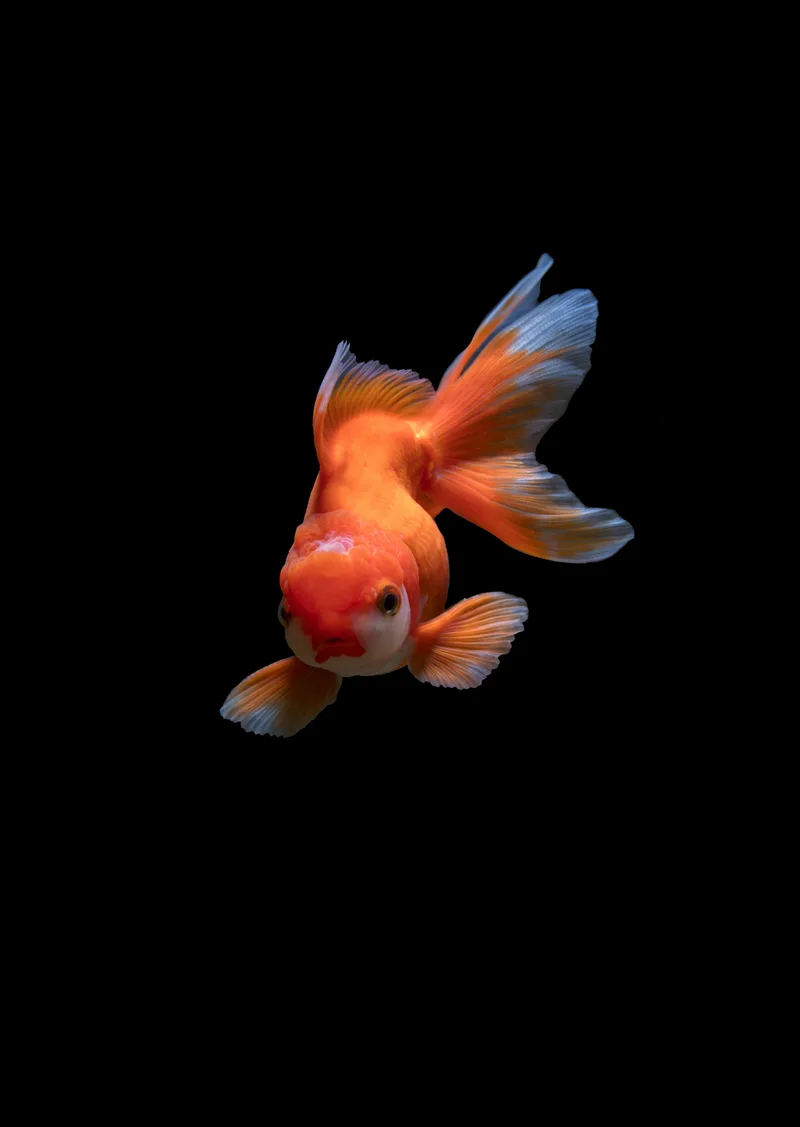
Yes, your pond goldfish can live indoors, because a pond goldfish and an aquarium goldfish are the same species (Carassius auratus). There is no biological line between them, only a difference in where they grew up and how big the space let them get. That's the catch: years of open water turn a single-tailed common or comet into a 10-to-14-inch swimmer that needs a far bigger tank than most people picture, and a fish netted out of a 45°F pond is half-dormant, so dropping it straight into a 72°F living room is the move that kills. Whether you're bringing the fish in for good or only until spring changes how you handle both problems, so decide that first.
How Big a Tank Do Pond Goldfish Actually Need?
For a single-tailed pond goldfish (a common, comet, or shubunkin), plan on 75 gallons (285 L) or more for one fish, with strong filtration. Fancy varieties like orandas and fantails are smaller and slower, and a 20-gallon (75 L) tank works for one, plus about 10 gallons (38 L) for each additional fish.
Those numbers sound high until you remember what the fish has been doing outside. A goldfish that grew up with pond volume produces pond-scale waste, and it doesn't stop just because the water around it shrank. Goldfish are heavy eaters and heavy waste producers for their size, and a foot-long comet in a 30-gallon tank will push ammonia up faster than a filter sized for that tank can clear it. The tank isn't just living space. It's dilution.
| Variety | Typical adult size | Minimum tank for one | Per additional fish |
|---|---|---|---|
| Common goldfish | 10–14 in (25–36 cm) | 75 gal (285 L) | +30 gal (115 L) |
| Comet | 10–13 in (25–33 cm) | 75 gal (285 L) | +30 gal (115 L) |
| Shubunkin | 9–12 in (23–30 cm) | 75 gal (285 L) | +30 gal (115 L) |
| Oranda | 7–9 in (18–23 cm) | 20 gal (75 L) | +10 gal (38 L) |
| Fantail | 6–8 in (15–20 cm) | 20 gal (75 L) | +10 gal (38 L) |
If no aquarium in your budget is big enough, a stock tank or a large food-safe tub indoors is a completely legitimate home. It's not as pretty as glass, but a 100-gallon (380 L) stock tank costs less than a 75-gallon aquarium and gives a big single-tail the room it needs. And if you have several pond fish, bringing in fewer of them is better than crowding all of them; how big a goldfish tank really needs to be depends on the fish's adult size, not the size it is today.
How Do I Move a Goldfish From a Pond to a Tank Safely?
Two things kill goldfish during this move: temperature shock and an uncycled tank. Everything in the process is built around avoiding those two.
The tank's filter needs to be cycled (grown a working colony of waste-processing bacteria) before the fish arrives, because a large pond fish produces more ammonia in a day than a brand-new filter can handle. And the water temperatures need to match within about 10°F (5°C) at the moment of transfer, with the remaining gap closed slowly over hours, not minutes.
The move, in order:
- Cycle the tank first. Set it up weeks ahead, seed the filter with media from an established tank if you can, and confirm with a test kit that it processes ammonia to nitrate before any fish goes in.
- Test and match the water. Check pH and temperature in both the pond and the tank. Get the tank within 10°F (5°C) of the pond before you catch anything.
- Catch the fish calmly. Use a large, soft net, move slowly, and transfer the fish in a bucket or bag of pond water. A panicked chase stresses the fish before the hard part has even started.
- Equalize the temperature gradually. Float the bag, or let the transport bucket sit in the room, until the water inside matches the tank. With a cold pond fish this can take several hours. Don't rush it.
- Acclimate to the new water. Add a little tank water to the transport water every 15 minutes or so until it's mostly tank water, then move the fish over.
- Watch the water for two weeks. Test ammonia and nitrite daily at first. A big fish can overwhelm even a cycled filter in its first days, and catching a spike early means a water change instead of a sick fish.
If ammonia or nitrite reads above zero in those first weeks, do a partial water change that day and feed less until the readings settle. The filter catches up; it just needs the load to stay survivable while it does.
Will My House Be Too Warm for a Pond Goldfish?
No. A normal room at 65 to 72°F (18 to 22°C) is comfortable goldfish territory, and the fish will stay active and feed all year at those temperatures. Don't add a heater. Goldfish are coldwater fish, and room temperature is already at the warm end of their happy range.
What makes goldfish different from a tropical fish is that their whole pace of life is set by the water around them. A goldfish doesn't hold a steady internal temperature the way you do. Warm water runs the fish faster: more swimming, more appetite, more waste, more oxygen needed. Cold water slows everything down, until somewhere below 50°F (10°C) the fish drifts toward dormancy and stops eating altogether. The same fish, at two different temperatures, is almost two different animals.
The real danger in your house isn't the warmth. It's the jump. A fish netted out of a 45°F (7°C) pond in November is half-dormant, its body running at winter speed, and warming it to room temperature too fast demands more from its system than it can deliver. That sudden jump, not the warmth itself, is what does the damage, and it's why the slow temperature equalization during transfer matters more for a pond fish than for any fish you'd bring home from a store. Once the fish is in and settled, the question of whether goldfish need a heater has a short answer: at room temperature, no.
Can I Just Bring Them Inside for Winter and Put Them Back in Spring?
Yes, and this is the version most pond owners are weighing. There are two ways to run it, and both work.
The cold version: set up a tank or stock tank in an unheated garage or basement that stays below 50°F (10°C). The fish remain dormant, just as they would under pond ice. They don't eat, so you don't feed them. All they need is clean, oxygenated water, which in practice means an air stone running and an occasional water check. It's less an aquarium than a safe place to sleep.
The warm version: bring them into a normal-temperature room, where they'll wake up, swim, and feed all winter. This is more work (active fish means feeding, waste, and water changes all season) but you get to watch your fish through the winter. The full tank-size and filtration demands apply too, 75 gallons (285 L) and up for an active single-tail.
For the return trip in spring, wait until the pond holds 50°F (10°C) or warmer, not just on a sunny afternoon but steadily. Then re-acclimate just as carefully in reverse: the 10°F (5°C) rule applies both ways, and a fish that spent the winter at room temperature has just as far to travel going back out as it did coming in.
Did you know? Below about 50°F (10°C), a goldfish's metabolism slows so far that it stops eating entirely and can live for months off its reserves. Pond goldfish do this under the ice every winter, which is why a cold-garage overwintering tank needs an air stone but no food.
Are Goldfish Better Off in a Pond Than in a Tank?
For a full-size common or comet, honestly, yes. A pond offers swimming room no aquarium matches, natural light that deepens a goldfish's color, live foods drifting in for free, and the seasonal rhythm the species is built around. If you're weighing where the fish should live long-term, a big single-tail in a good pond is hard to beat.
But tanks have real advantages of their own. You can see your fish every day, control the water completely, keep herons and raccoons away from them entirely, and enjoy them in February. Fancy varieties, with their slow swimming and delicate fins, often do better indoors than they ever would outside. And since pond goldfish and aquarium goldfish are the same fish, neither home is "wrong" for the species. The deciding factor is the fish's adult size against the volume you can offer indoors, not pond versus tank in the abstract.
The fish itself can't tell the difference. It doesn't experience "pond" or "tank," only gallons, temperature, and water quality. The question was never whether a pond goldfish can live indoors. It's whether you can bring a pond-sized share of water inside with it. Give it that, and the same fish that thrived outside the window will do just as well on this side of the glass.