Are goldfish happier in a pond?
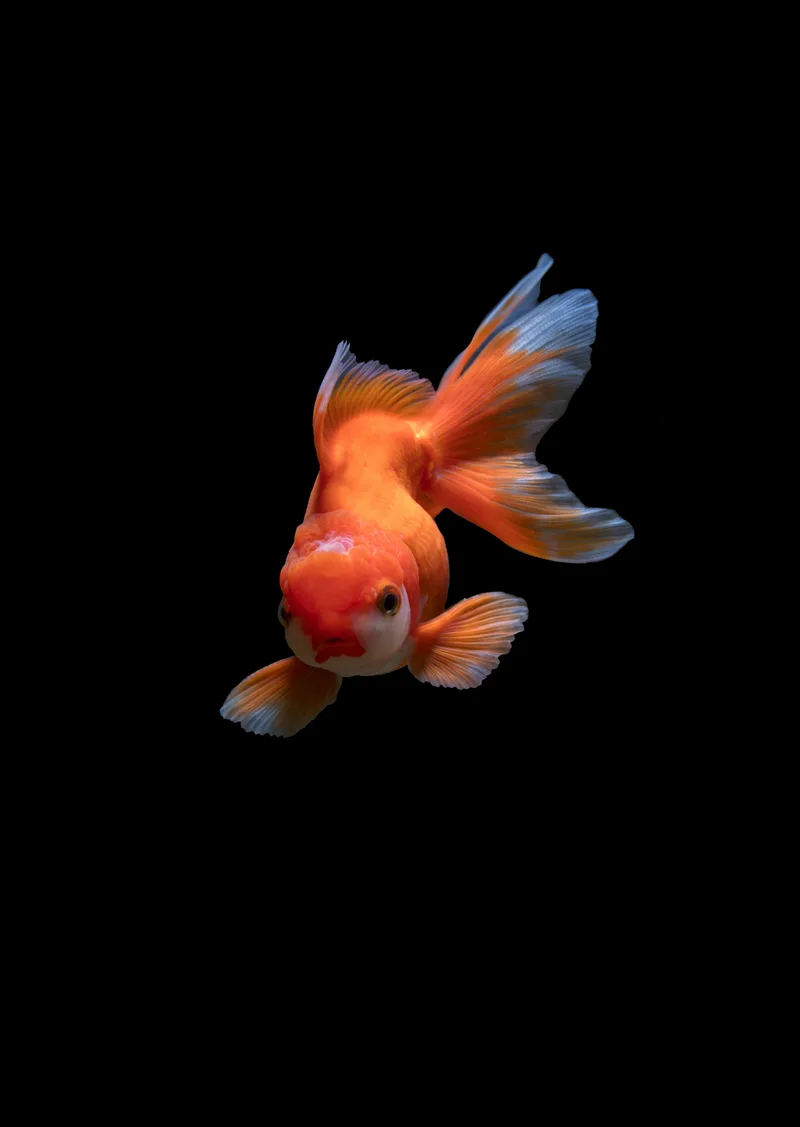
If your goldfish is a single-tail (a common, comet, or shubunkin), a good pond is usually the better home. If it's a fancy, it usually isn't, and a hard winter outdoors can kill it. The strange part is that the foot-long comet that rides out winter under pond ice and the round Oranda that falls ill below 55°F are the same species, often sold from the same store tank. So the answer hangs on which fish you have, and on one more fact: a goldfish doesn't miss a pond it has never seen; it registers space, cool clean water, and food. Whether your tank delivers those is something you can check this afternoon.
How Can I Tell If My Goldfish Is Doing Well in Its Tank?
A goldfish can't tell you it's content, but its body and behavior can. One that's doing well spends most of the day in motion, mouthing the gravel, working the glass, and investigating anything new. That constant low-grade foraging is the baseline. Goldfish are built to graze all day, so a fish that's out and busy is a fish whose home is working.
Here's what thriving looks like:
- Active foraging through the day, picking at the substrate and exploring rather than hovering in one spot
- Fins held up and open, with the back fin standing rather than folded flat
- A steady, eager appetite, coming to the front at feeding time
- Ongoing growth, since a healthy goldfish keeps growing for years
- Strong, saturated color instead of fading or gray patches
- Easy company with tank mates, swimming near the others without chasing or hiding
The stress signs are the reverse: fins clamped tight against the body, hanging near the surface or sitting on the bottom for long stretches, and refusing food for more than a day or two. Those signal a water or space problem worth investigating, not a fish that secretly wants a pond.
Then check the tank itself against three things. Volume first: a single fancy goldfish needs about 20 gallons with another 10 per extra fish, while a single-tailed goldfish needs far more, realistically 40 gallons and up for one fish. A tank sized correctly for your goldfish prevents most of the problems that get blamed on the fish itself. Second, filtration that's oversized for the tank, because goldfish produce more waste than almost any other common aquarium fish. Third, cool water: goldfish are a coldwater species and do best around 65 to 72°F (18 to 22°C), with no heater needed in a normal home.
If your fish shows the thriving signs and the tank passes those three checks, the worry that brought you here isn't justified. Reading the behavioral signs of a goldfish doing well gets easier with practice, and a fish that forages, eats, and grows is getting what it needs, whether the water around it is glass-walled or not.
What Does a Pond Give Goldfish That a Tank Can't?
Quite a lot, if yours is a single-tail. A goldfish (Carassius auratus) is a domesticated temperate carp, and the single-tailed varieties still carry the original carp build. A common or comet goldfish grows to 10 to 14 inches and swims fast and hard, and a 300-gallon pond gives that body the running room a 55-gallon tank can't. Pond-kept single-tails routinely grow larger than their tank-kept siblings for exactly this reason: more room, more food, more exercise.
A pond also gives them something no heater or light timer reproduces: a real seasonal cycle. Water that warms through spring, peaks in summer, and cools into fall is the rhythm their carp ancestors lived by, and their bodies still run on it. The spring warm-up after a cold winter is what brings them into spawning shape. Sunlight grows algae and waterborne insect larvae, so a pond fish spends the whole day grazing on live food, the way the species fed for thousands of years before anyone owned a tank. None of this means a tank is unnatural in some disqualifying way. It means the single-tailed body plan simply has more room to do what it does in a pond.
Pond goldfish and tank goldfish are the same species of fish, too: a comet in a tank and a comet in a pond differ only in where they live and how large that home lets them grow.
Did you know? Below about 50°F (10°C), pond goldfish go semi-dormant. They stop eating, drop to the deepest part of the pond, and hover there for months, their whole body running at a fraction of its summer pace. That winter cool-down isn't just survival, it's part of the trigger: when spring warms the water again, the temperature swing helps bring them into spawning condition.
When Is a Tank the Better Home?
For fancy goldfish, almost always. Orandas, Ryukins, Black Moors, Ranchus, Bubble Eyes and the other round-bodied varieties were selectively bred for shape, not function. The compressed body that makes a Ryukin striking also makes it a slow, unsteady swimmer that loses every food race against a faster fish. Telescope eyes and bubble sacs are easily injured and easily targeted. The fancy body also handles cold poorly: where a common goldfish rides out winter under the ice, a fancy struggling through water below about 55°F (13°C) is prone to swim bladder trouble and infection. A heron sizing up a pond will take the slowest, most visible fish in it, and that's the fancy every time.
| Variety group | Adult size | Swimming ability | Winter hardiness | Better home | Why |
|---|---|---|---|---|---|
| Single-tails (Common, Comet, Shubunkin) | 10–14 in | Fast, strong, constant cruisers | Hardy; overwinter under ice in a deep pond | Pond | Adult size and activity level outgrow most home tanks; suited to a full outdoor seasonal cycle |
| Fancies (Oranda, Ryukin, Black Moor, Ranchu, Bubble Eye) | 6–8 in | Slow, unsteady, lose food races | Poor below ~55°F; prone to winter illness | Tank | Bred bodies need stable temperature, calm water, and no competition or predators |
A pond can also be the worse choice for any goldfish, single-tails included, when the pond itself falls short. A pond that's too shallow freezes solid or overheats in summer. An unfiltered pond turns into a waste problem with fish in it. And a pond that drains into a creek, ditch, or storm system is not an option at all, because escaped goldfish are a genuinely destructive invasive species in natural waterways.
So if you're keeping a fancy goldfish, or a single-tail in a spacious, well-filtered, unheated tank, you are not shortchanging your fish. A cool, clean, roomy tank is a good goldfish home, full stop. The pond advantage is real, but it belongs to a specific kind of goldfish in a specific kind of pond.
How Do I Move a Goldfish From a Tank to a Pond Safely?
If you have a single-tailed goldfish and a pond worth moving it to, the move is straightforward, but the order matters: the pond has to be ready before the fish goes anywhere near it.
Run through this checklist first:
- Volume: about 50 gallons per goldfish, more if you expect them to spawn (and in a pond, they will)
- Depth: at least 18 to 24 inches, deeper in regions where the surface ices over, so the fish have a stable zone at the bottom
- Filtration and aeration in place and running for a few weeks before fish arrive, so the pond can process waste from day one
- Predator cover: plants, ledges, or depth that gives fish somewhere to disappear when a heron or raccoon shows up
- Timing: move fish in spring, once the pond holds above roughly 60°F (16°C), so they get a full growing season before facing their first winter
- Fish size: at least 4 inches or so, since smaller fish are easy prey and handle the transition worse
One hard rule sits on top of all of it: the pond must not drain into any natural waterway, and a lake, creek, or canal is never a place to release a goldfish. Not under any circumstances.
The move itself is a slow temperature handoff. Float the fish in a container of its tank water on the pond surface, add pond water bit by bit over 30 to 60 minutes, then release it. Expect it to hide for a few days while it learns the new space; that's normal. The same patience applies in reverse when pond goldfish come indoors to a tank for the winter.
And if you reach the end of the checklist without a pond that qualifies, keep your fish where it is and put the effort into the tank instead. "Happier" was always your word, not the fish's. A goldfish doesn't pine for a pond it has never seen; it registers space, clean cool water, and steady food. Match the home to the fish's build, pond for the long hardy single-tails, tank for the slow round fancies, and either one adds up to a good goldfish life.