Are pond goldfish the same as aquarium goldfish?
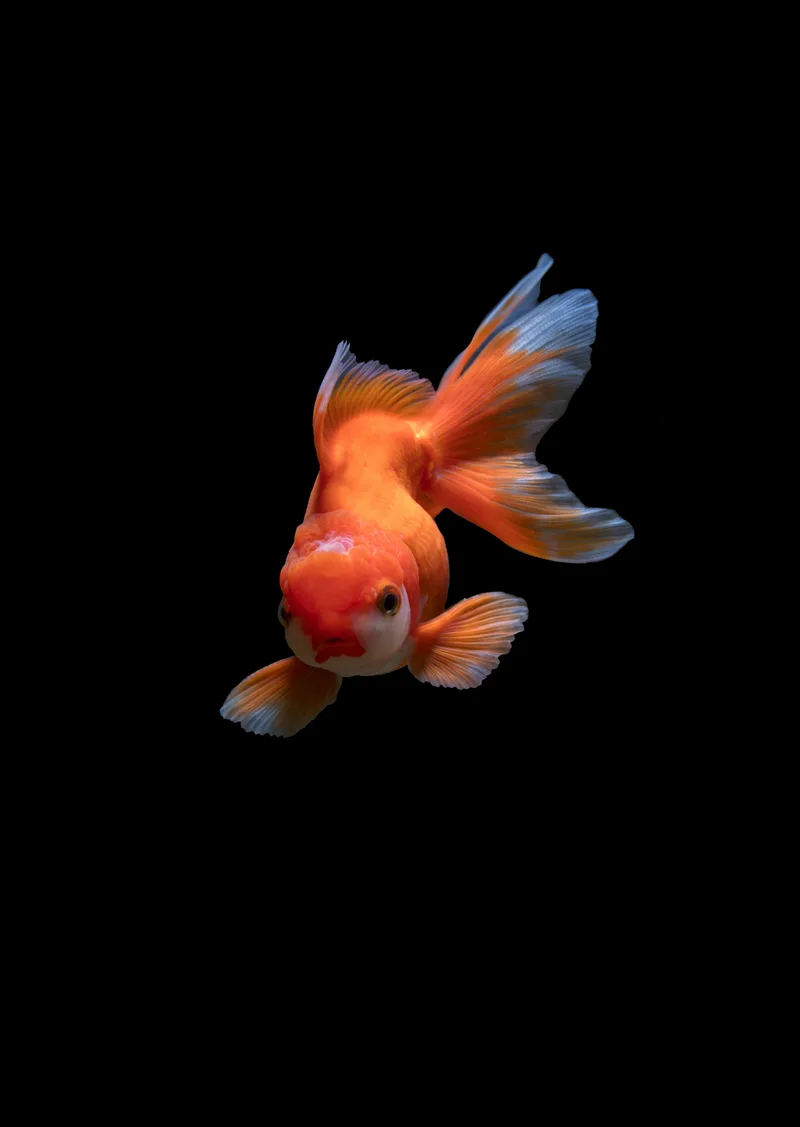
Yes. A pond goldfish and an aquarium goldfish are the same species (Carassius auratus), not two different fish. "Pond goldfish" sounds like a breed, but it isn't one. It's a goldfish that happens to live in a pond, the way "house cat" describes where a cat lives, not what kind of cat it is. The catch is that the label still tells you something useful, because the goldfish usually sold for ponds are the hardy single-tailed types while the ones sold for tanks are usually the rounder, delicate fancy types. So whether you can safely swap one for the other depends entirely on which variety you actually have, not where it was swimming.
Can You Move a Pond Goldfish Into a Tank?
You can, as long as two things are true: the tank is big enough for the variety, and you move the fish over slowly.
Size is the part most people get wrong. If your pond goldfish is a common or a comet, it is a strong-swimming, foot-long fish at adulthood, and it needs 75 gallons or more. A 20-gallon tank that looks roomy with a small fish in it will be cramped within a year or two. A fancy goldfish like an oranda or a fantail stays smaller and fits a 20-gallon tank, with another 10 gallons for each additional fish.
The move itself is a slow-it-down job. Indoor tank water is usually warmer and chemically different from pond water, and a goldfish that gets dropped straight in can go into shock. Float the bag, mix in tank water gradually, and give the fish time to adjust to the new temperature before it goes in for good.
Pond fish also carry the parasites and bugs that live in any outdoor body of water, so a pond goldfish should spend a couple of weeks in a separate quarantine tank before it ever meets fish already living in your aquarium. That keeps anything it brought along from spreading.
- Confirm which variety you have and how big it gets as an adult (a common or comet reaches 10 to 14 inches; a fancy stays around 6 to 8).
- Size the tank to that adult fish, not the small one in front of you: 75+ gallons for single-tails, 20+ for a single fancy.
- Match the temperature when you transfer it. Float the bag, then add tank water a little at a time over 30 to 60 minutes.
- Quarantine a pond fish for two to three weeks before adding it to an established tank.
- Watch for stress in the first few days: clamped fins, hiding in a corner, or refusing food. These usually settle as the fish acclimatizes.
The same logic runs the other way, and this one catches people out. A fancy goldfish bought for a tank should not go into an unheated outdoor pond if you live somewhere with real winters. Fancies were bred for looks, not cold, and a pond that freezes at the top is a death sentence for an oranda or a moor in a way it isn't for a common goldfish.
Common, Comet, or Fancy: Which One Do You Actually Have?
This is the line that actually matters, and it has nothing to do with where the fish was living. "Pond goldfish" almost always means one of the hardy single-tailed varieties: the common goldfish, the comet, or the shubunkin. These are slim, fast, single-tailed fish that grow long, grow quickly, and shrug off cold water. "Aquarium goldfish" almost always means a fancy: an oranda, ryukin, fantail, or black moor. Fancies are the round-bodied, double-tailed goldfish bred for shape rather than speed, and they stay smaller and handle cold far less well.
Same species, completely different needs. The variety is what decides tank size, whether the fish can handle a pond, and how cold is too cold. So the useful question isn't "is this a pond goldfish or an aquarium goldfish," it's "is this a single-tail or a fancy."
You can usually tell at a glance. Look at the body and the tail. A long, torpedo-shaped body with a single flowing tail is a common, comet, or shubunkin. A short, egg-shaped body with a split double tail is a fancy.
| Variety group | Typical body and tail | Adult size | Cold and pond hardy? | Best home |
|---|---|---|---|---|
| Common, comet, shubunkin | Slim, torpedo-shaped, single tail | 10 to 14 inches | Yes, tolerates cold year-round | Pond, or a very large tank (75+ gallons) |
| Fancy: oranda, ryukin, fantail, black moor | Round, egg-shaped, double tail | 6 to 8 inches | No, needs milder, stable conditions | Large indoor tank (20+ gallons for one) |
Why a Pond Goldfish Looks So Much Bigger
Put the same goldfish in a pond and in a small tank, and the pond fish ends up bigger. The fish didn't change. Its surroundings did.
A pond gives a goldfish three things a small tank can't. It has far more water volume, so the fish has room to keep growing instead of bumping into glass. It runs through wider, natural temperature swings across the seasons, and those swings cue the strong summer growth spurts goldfish are built for. And it offers a richer, more varied food supply, with insects, algae, and plant matter on top of whatever you feed. More room, more seasonal rhythm, more food, so the same fish grows larger and faster outdoors.
Did you know? Every goldfish variety, from the foot-long common to the palm-sized bubble eye, descends from the same dull-olive Prussian carp that people in China began domesticating over a thousand years ago. "Pond goldfish" and "fancy aquarium goldfish" are just two branches of one very old family tree.
There's an old idea worth clearing up here, because it does real harm. You may have heard that a goldfish only grows to the size of its container, so a small tank simply keeps it small. That's not how it works. A goldfish in a tank that's too small doesn't politely stop growing. Its body keeps trying to grow while poor water quality and tight space hold it back, and the result is a stunted fish with a shortened lifespan and often a deformed spine. Stunting is harm, not a built-in size limit. A common goldfish in a 75-gallon tank will reach the same impressive length it would in a pond, because the room was the whole point.
How Big Will a Pond Goldfish Get in a Tank?
A common or comet keeps growing in a tank as long as the tank is large enough to allow it. It doesn't shrink to fit a small one. It just suffers in one, growing slower and unhealthier while its body strains against the space.
So the size a pond goldfish reaches indoors is a question about the tank you give it. If you want the specifics on how fast they grow and how big they ultimately get, the way tank size shapes a goldfish's final length is worth knowing before you commit to a tank.
In the end, "pond goldfish" isn't a kind of fish at all. It's a job a goldfish has been given. That same fish would have grown just as long and lived just as well in a tank big enough to hold it. The dividing line was never pond versus tank. It was only ever whether the goldfish was given the room it was always built for.