What are the signs of a pregnant goldfish?
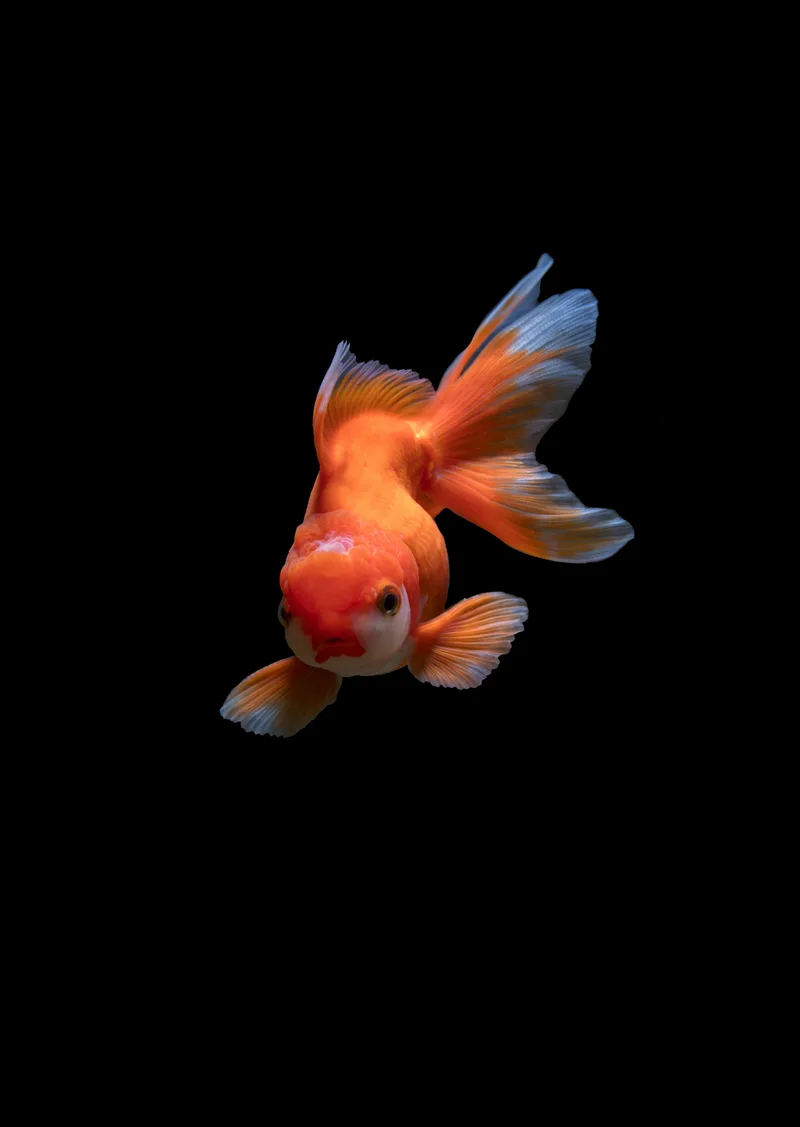
A goldfish can't get pregnant. Goldfish are egg-layers, so a female never carries developing babies the way a guppy does; she builds up a batch of unfertilized eggs inside her and holds them until she scatters them all at once. The swollen belly you're looking at is almost always a female loaded with eggs. But that exact same swelling is also how the dangerous problems announce themselves, and a belly full of eggs and a belly full of dropsy can look nearly identical from across the room. Knowing which one you're seeing is the whole question.
What Does a Goldfish Full of Eggs Actually Look Like?
A female carrying eggs gets rounder slowly. Over a few weeks her belly fills out and looks plumper, and the change is slow enough that you might only notice it when you compare her to your other goldfish. The fullness is often easiest to spot from directly above, looking down into the tank: she'll look broad and rounded through the middle, sometimes a little fuller on one side than the other.
The thing that should reassure you is how she acts. A female heavy with eggs keeps eating, keeps swimming, and goes about her day like nothing has changed. The belly is the only thing that's different.
An egg-carrying female typically shows:
- A belly that's grown rounder and fuller over weeks, rather than appearing overnight
- Plumpness that's most obvious when you look down at her from above
- A healthy appetite, she's still eager at feeding time
- Easy swimming and activity, no struggling or hanging at the surface
- A shape that can look slightly fuller on one side than the other
None of this means "pregnant." It means she's carrying eggs and may be getting close to releasing them.
Is It Eggs, or Is Something Wrong?
This is the question under the question. A swollen belly has a few possible causes, and the difference between them is the difference between watching and waiting and acting now.
Eggs build up slowly and evenly, and the fish stays herself. The problems look different. Constipation or bloat tends to come with stringy waste or no waste at all, and the fish may sit listlessly. Dropsy is the serious one: the belly swells and the scales lift away from the body so the fish looks like a pinecone when you view it from above. Swim bladder trouble shows up as a fish that can't hold its position in the water, floating up, sinking, or rolling sideways.
| Cause | What the belly or body looks like | How the fish behaves | What to do |
|---|---|---|---|
| Carrying eggs | Gradually, evenly rounded over weeks | Eating and swimming normally | Watch and wait; this is normal |
| Constipation or bloat | Swollen, sometimes uneven | Sluggish, stringy waste or no waste, may stop eating | Fast for a day or two, then try a bit of cooked, deshelled pea |
| Dropsy | Swollen with scales sticking out like a pinecone | Lethargic, often sitting on the bottom, may stop eating | Act now; isolate the fish and treat, the outlook is serious |
| Swim bladder disorder | Belly may look full | Floating, sinking, or swimming upside down or sideways | Fast briefly; if it persists, look at diet and water quality |
The single sign that should move you from watching to acting is the pinecone look. Scales that stand out from the body point to dropsy, and that needs attention right away. If the swelling came on fast rather than over weeks, lean toward illness rather than eggs. When it builds up slowly and the fish is otherwise herself, eggs are by far the likeliest answer, but if you suspect the belly is illness rather than eggs, it helps to know what the common goldfish illnesses look like so you can match the symptoms.
How Can You Tell a Female from a Male, and Whether They're Spawning?
Only a female carries eggs, so the first step is working out which fish you're looking at. Outside of breeding season this is genuinely hard, because goldfish don't have obvious differences. When a female is in spawning condition she tends to look rounder and broader through the body, while males stay slimmer.
The clearest tell shows up on the male during breeding season. He grows tiny white bumps called breeding tubercles on his gill covers and along the front edges of his pectoral (side) fins. They look like a sprinkle of fine white dots. A female doesn't get these, so if you see them, you're looking at a male.
Did you know? Those white dots on a breeding male's gill covers and side fins are sometimes mistaken for ich, the white-spot disease. But breeding tubercles only appear on males, only during breeding season, and they feel like sandpaper rather than spreading across the body the way ich does. One is a sign of a healthy, ready male; the other is a sickness.
The behavior is the other half of the picture. When a female is ready to spawn, the males chase her, often hard, nudging and bumping her in the sides. This usually happens in the morning and can go on for hours. If you have a single goldfish, or a tank of all females, the eggs may still build up, but with no male to fertilize them, nothing will come of it. She'll release them anyway and reabsorb or scatter what's there.
Why Can't a Goldfish Be Pregnant in the First Place?
Pregnancy means carrying developing young inside the body, and goldfish just don't do that. They're egg-layers. A female grows a batch of eggs internally, but they're unfertilized while they're inside her. When she's ready, she scatters them across plants, decorations, or any surface she can find, and the male fertilizes them out in the open water afterward. The young develop outside her body entirely, in the eggs stuck to those surfaces.
That's why "pregnant" is the wrong word, and it's also why the swelling is temporary. Once she spawns, the eggs are gone and her belly goes back to normal. What triggers the whole thing is the season: as water warms in spring, females come into spawning condition, which is why you tend to see this in the warmer months rather than the dead of winter.
So a goldfish slowly rounding out with eggs is doing one of the most ordinary, healthy things a goldfish does. The swelling that reads as alarming is, when it builds over weeks and the fish is eating and swimming as usual, a sign the fish is thriving. The thing worth watching for isn't the eggs. It's the fast or pinecone-shaped swelling that means something else entirely. If the chasing and nudging have started and you think eggs are about to be released, it's worth knowing how to tell when goldfish are actively breeding so you can recognize a spawning event as it happens.