How do you trigger goldfish to breed?
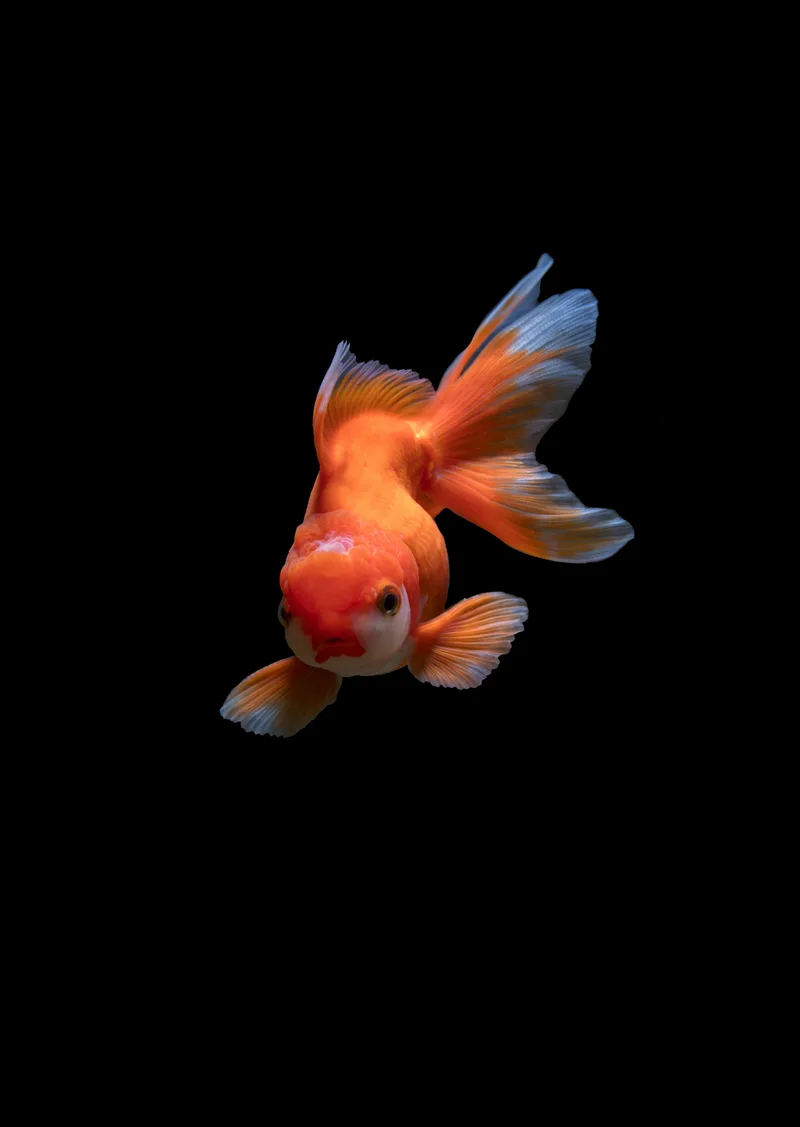
You trigger goldfish to breed by convincing them it's spring in central Asia. A four-to-six-week cool rest at 50 to 60°F (10 to 15°C), a gradual warm-up to around 72°F (22°C), heavy protein conditioning, and daily cool water changes that imitate spring rain is the cue stack a thousand-year-old domesticated fish still reads the same way its wild Prussian carp ancestor did. The protocol itself is short and predictable. Whether it fires depends on conditions most owners never check first: the fish have to be old enough, sexable as a real male-female pair, and athletic enough to actually finish the spawning chase, which is where fancy varieties quietly stop being able to do this on their own.
What's the actual sequence to trigger spawning?
Think of it as a stack of cues rather than a fixed recipe. Each one matters, the order matters, and the timing flexes with your setup.
- Cool rest, 4 to 6 weeks at 50 to 60°F (10 to 15°C). Turn the heater off, let the room cool the tank, and feed lightly, every other day or so. This is the "winter" the fish need to mature eggs and milt on the wild timeline.
- Gradual warm-up, 2 to 3 weeks toward 68 to 72°F (20 to 22°C). A degree or two per day is plenty. A sudden jump reads as stress, not spring.
- Heavy conditioning food once the water starts warming. Live or frozen bloodworms, daphnia, brine shrimp, twice a day. The gonads draw protein and lipids from this to finish maturing.
- Daily 25 to 30% cool water changes once you hit the target temperature. Use water a few degrees cooler than the tank, and do it in the evening. This is the spring-rain cue.
- Add a spawning medium. Yarn mops, a mat of java moss, or fine-leaved live plants like hornwort. The eggs are sticky and need somewhere to land.
- Expect spawning within 1 to 2 weeks of hitting target temperature. You'll see early-morning chasing, the male nudging the female's flanks, eggs scattered on the medium by mid-morning.
If nothing happens in three or four weeks at the target temperature, the trigger isn't going to fire on this round. Hold the conditions, recheck the upstream conditions covered below, and consider another cool rest if the fish were on the young side.
Are my goldfish even old enough, and how do I sex them?
Goldfish reach sexual maturity at one to two years for commons, comets, and shubunkins, and two to three years for fancies. Younger fish can show all the breeding behavior and still produce no viable eggs, so the protocol can look like it's working when it isn't. If you're not sure of the age, the body size is a rough proxy: a common under about four inches or a fancy under about three inches is probably still too young.
You also need at least one confirmed male and one confirmed female, and outside of breeding condition this is genuinely hard to tell. The reliable cues only appear once the fish are running up to spawn, which is part of why a small group of four to six is the simplest insurance: a group that size almost always contains both sexes.
The cues to watch for during conditioning:
| Trait | Male | Female |
|---|---|---|
| Breeding tubercles | Small white bumps appear on the gill covers and along the leading rays of the side fins | None |
| Body shape from above | Slimmer, more even | Rounder, often visibly asymmetric when full of eggs |
| Vent | Small, flat, inset | Slightly extruded, pinkish in spawning condition |
| Leading ray of the side fin | Thicker, stiffer, often noticeably stout | Thinner |
All four are easiest to read in the last week or two of conditioning. Outside that window the body shape is the only cue you can usually call confidently, and even that is hard with a single fish.
Why does this temperature-and-water-change routine work?
The goldfish (Carassius auratus) is a domesticated form of the Prussian carp, a temperate Eurasian cyprinid whose breeding is tied to the seasonal cycle of cold winters, spring thaw, and rising daylight. A thousand years of pond breeding has changed how the fish looks. It has not changed the calendar the fish runs on.
The cool rest does real biological work. The gonads in goldfish mature on a temperature-gated schedule, and a stretch of cold water at the right point in the year is what lets eggs and milt ripen on the wild timeline. Skip it and the trigger has nothing to trigger.
The warm-up plus fresh, cool water changes is the part the fish reads as "breeding window open." In a wild pond, spring rain dilutes a thawed body of water and drops its temperature briefly. The hormonal axis that runs goldfish reproduction is wired to that combined signal of warming overall water with intermittent cool, fresh dilution. The protocol is a small-scale forgery of it.
Conditioning food is the fuel. Eggs and milt are protein-and-lipid-heavy, and a fish on flake food alone usually can't put enough into them to finish maturing under the cue stack. Bloodworms, daphnia, and brine shrimp give the gonads what they need to draw from.
Did you know? Goldfish have been kept in human ponds for over a thousand years, but they still inherit the spawning calendar of the wild Prussian carp they descend from, a fish that breeds in central Asian rivers and ponds in the weeks after spring thaw. Every successful indoor spawn is a small-scale forgery of a Eurasian spring.
Why isn't it working, what's blocking the trigger?
When the protocol fails it usually fails for one of a small set of predictable reasons. Walk through them in order.
- Fish too young. Most fancies need two to three years before they'll spawn reliably. Behavior alone is not proof of maturity.
- No confirmed male. A group bought without sex differences in mind often turns out to be all one sex. Look for tubercles during the warm-up; no tubercles, no male.
- Cool rest too brief or not cold enough. Two weeks at 65°F is not winter. Aim for four to six weeks at 50 to 60°F and don't shortcut it.
- Warm-up too fast or too slow. A jump of five degrees overnight is a stress event. A creep of half a degree a week never registers as spring. Two to three weeks across the range is the sweet spot.
- Water-change temperature gap too small. Water changes at tank temperature do not carry the rain cue. You want the replacement water a few degrees cooler.
- Tank too cramped for the chase. Goldfish spawn through a high-speed chase around the tank. A pair in a 20-gallon doesn't have the room to do it.
- Conditioning food too light. Flake-only conditioning rarely works. Live or frozen protein is what fuels the final maturation.
- Heavily inbred show stock. Some fancy lines, especially ones bred hard for body shape, will not spawn naturally even under perfect cues. That's the lineage, not the keeper.
If you've ruled all eight out and still nothing, give the fish a long warm rest at 72 to 75°F for a couple of months and try the whole sequence again the following season. Sometimes the trigger just needs another full cycle to land.
Does the protocol change for fancy goldfish versus commons?
Yes, and the difference is mechanical, not behavioral. Commons, comets, and shubunkins are streamlined, athletic swimmers built on the wild carp body plan. Once the cues are in place they do the natural chase-and-bump spawning on their own, and your job is mostly setting the stage and netting eggs out before the adults eat them.
Fancies, the orandas, ranchus, ryukins, telescope-eyes, bubble-eyes, are bred for body shape rather than athleticism. Short, round bodies, modified swim bladders, head wens that block vision, and oversized eyes all interfere with the high-speed chase the spawn depends on. The cues still work. The fish still get into spawning condition. They just often can't complete the act mechanically, and serious fancy breeders end up hand-spawning, gently stripping eggs and milt from conditioned adults into a clean tub of water.
That's a bigger commitment than the common-goldfish version of this, and it's worth being honest about before you start. The cue stack is the same. The expectation of what the fish can finish on their own is not. A pair of athletic comets in a big tank is the most forgiving setup for a first try. The body-shape and athleticism gap between fancy and common goldfish is the thing to pay attention to: the more your fish departs from the wild carp build, the more help it needs to finish a spawn.
You're not really bossing the fish into reproducing. You're recreating a stack of cues the animal evolved to read, in roughly the order it evolved to read them, and watching to see whether the calendar it inherited a thousand years ago still works in your living room. Most of the time, in a pair of healthy adults, it does. That's the small, durable wonder of it.