How do I know if my goldfish are breeding?
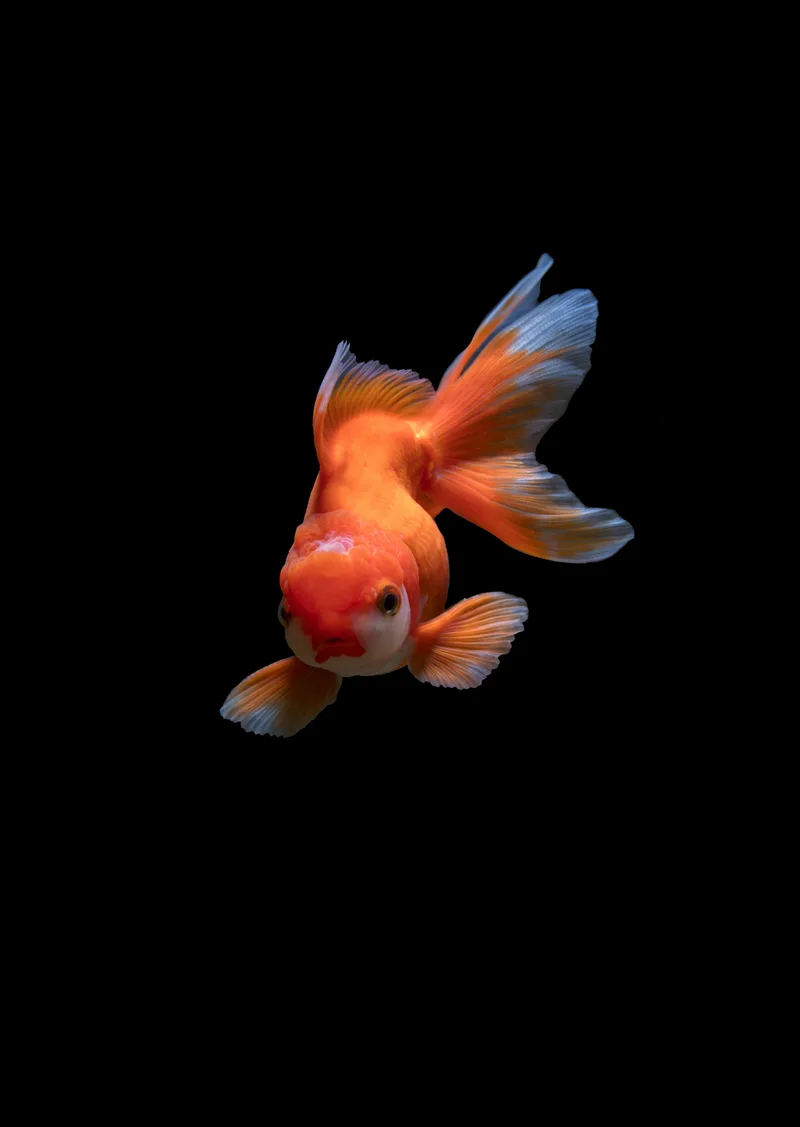
A goldfish breeding chase and a goldfish being bullied look almost identical: a rounder fish gets pursued around the tank, nudged at the sides, and followed relentlessly with no break. If that's what you're watching, it's almost certainly breeding, especially in the early morning and a few days after the water warms. What tells the two apart isn't the chase itself but the bodies and the aftermath: in a real spawn, tiny white bumps appear on the chasing fish's gill covers and front fins, and sticky eggs turn up scattered across the plants and glass within a day.
Is the Chasing Breeding or Bullying?
The fish being chased is very likely fine. A spawning chase is driven and persistent, with several males following one female, pushing her into plants, the glass, and any decor. It peaks at dawn and usually settles within a day or two. The female isn't being injured by the chase itself, even though it can look rough. This is normal goldfish behavior, and it means your fish are healthy and in spawning shape.
What you're watching tips over into a real problem only when the signs change. Genuine aggression or a sick fish being harassed looks different: a single fish is singled out, it hides instead of swimming out, its fins are clamped against its body, it stops eating, and you can see actual damage like torn fins or raw patches. The spawning chase doesn't leave a victim cowering in a corner the next morning. It ends, and the fish go back to normal.
Here's how to read which one you're seeing:
- Timing. Spawning chases fire up in the early morning and ease off as the day goes on. Aggression has no clock.
- Numbers. In a spawn, several fish chase one. Bullying is usually one fish hounding another.
- The body. Look at the chasers for tiny white bumps on the gill covers and front fins. Those are a breeding sign, and aggression won't produce them.
- The target's condition. After a spawn the chased fish eats and swims normally. A bullied or sick fish keeps hiding, keeps its fins clamped, and refuses food.
- The aftermath. A real spawn leaves eggs. If you find sticky clumps on the plants and glass a few hours later, that settles it.
What Should the Fish Themselves Look Like?
The clearest signs are written on the fish themselves, and once you know what to look for you can sex your goldfish at a glance.
On the males, look for spawning tubercles. These are tiny raised white bumps that appear on the gill covers and along the leading edge of the side fins (the pectoral fins, the pair just behind the gills). They show up when a male is ready to breed and fade afterward. People often mistake them for ich, the white-spot disease, but tubercles sit only on the gill covers and front fins in a neat, symmetrical pattern, while ich scatters tiny white dots randomly all over the body and fins. If the bumps are confined to those two spots and the fish is otherwise behaving normally, they're a breeding sign, not an illness.
On the females, the tell is the belly. A female filling with eggs gets noticeably fuller and rounder, and the swelling is often lopsided, heavier on one side than the other. Her vent, the small opening near the base of her underside fin, can look slightly rounded and protruding too. Seen from above, an egg-laden female is unmistakably plump compared to the lean, torpedo shape of a male. The body changes that mark a female heavy with eggs get more pronounced as she ripens, with the belly going from a slight roundness to an obvious one-sided bulge over a few days.
What Do Goldfish Eggs Look Like, and Where Will I Find Them?
Eggs are the confirmation that turns "I think they're breeding" into "they definitely spawned." Goldfish don't build a nest or lay in one tidy spot. They scatter, so the eggs end up everywhere the female was pushed during the chase.
Each egg is small, round, and clear to amber, roughly the size of a pinhead. They're sticky on contact, which is the whole point: they cling wherever they land. Check the fine-leaved plants first, then the glass, the decor, the filter intake, and any spawning mop if you've added one. You'll usually find them in loose clumps rather than singly.
Within a day you can tell which eggs were fertilized. Fertilized eggs stay clear and develop, while unfertilized ones quickly turn opaque white and grow a fuzzy coat of fungus. If most of what you find goes white and fuzzy within a day, the spawn happened but little or nothing was fertilized, which is common when a female releases eggs without a male in good condition to follow.
Wait, Are My Goldfish Pregnant?
No, and this is worth getting straight because it changes what you do next. Goldfish are egg-layers, not livebearers. There's no pregnancy, no gestation, and no babies growing inside the fish the way they do in a guppy or a molly. A "fat" female isn't carrying developing young. She's full of eggs she'll scatter into the tank to be fertilized outside her body, by the male's milt released over them as she lays.
That distinction explains a confusing case. A lone female with no male in the tank can still swell up with eggs and even release them on her own. They simply won't be fertile and will fungus over within a day. So a single bloated goldfish, on its own, isn't proof that breeding has happened. It only means she's carrying eggs. The breeding part takes a male following her and fertilizing the eggs as they drop.
Did you know? Goldfish give their eggs no parental care at all. The parents will hunt down and eat their own eggs within hours of laying them. That's exactly why a single wild spawning can release hundreds to thousands of eggs at once: with no protection on offer, sheer numbers are the survival strategy, and a few survivors out of thousands is a win.
They Spawned, Now What?
If you found eggs and you want fry, you have to move fast. The adults will start eating the eggs within hours, and they're efficient at it, so the window is short. You either move the eggs out (lift the plants or spawning mop they're stuck to into a separate container of the same water) or move the parents back to their own tank and leave the eggs where they are. Either way, do it the same morning you spot them. If you want to deliberately bring on a spawn next time instead of catching one by luck, warming the water and conditioning the fish on a richer diet is how breeders set the timing on purpose.
If you don't want fry, doing nothing is a complete and perfectly fine answer. The parents will eat the eggs, the tank goes back to normal in a day, and nothing is wrong with letting that happen. No intervention is required and no harm is done.
It helps to flip how you think about the whole thing. Breeding a goldfish isn't really something you make happen. Healthy, well-conditioned goldfish spawn on their own when the water warms, and they'll do it again and again through the warmer months. The real decision in front of you isn't how to get them to breed. It's whether to rescue the eggs before the parents eat them. If you do save them, goldfish eggs hatch in roughly four to seven days at typical tank temperatures, and the fry need feeding within a couple of days of that.