What is the difference between fancy and common goldfish?
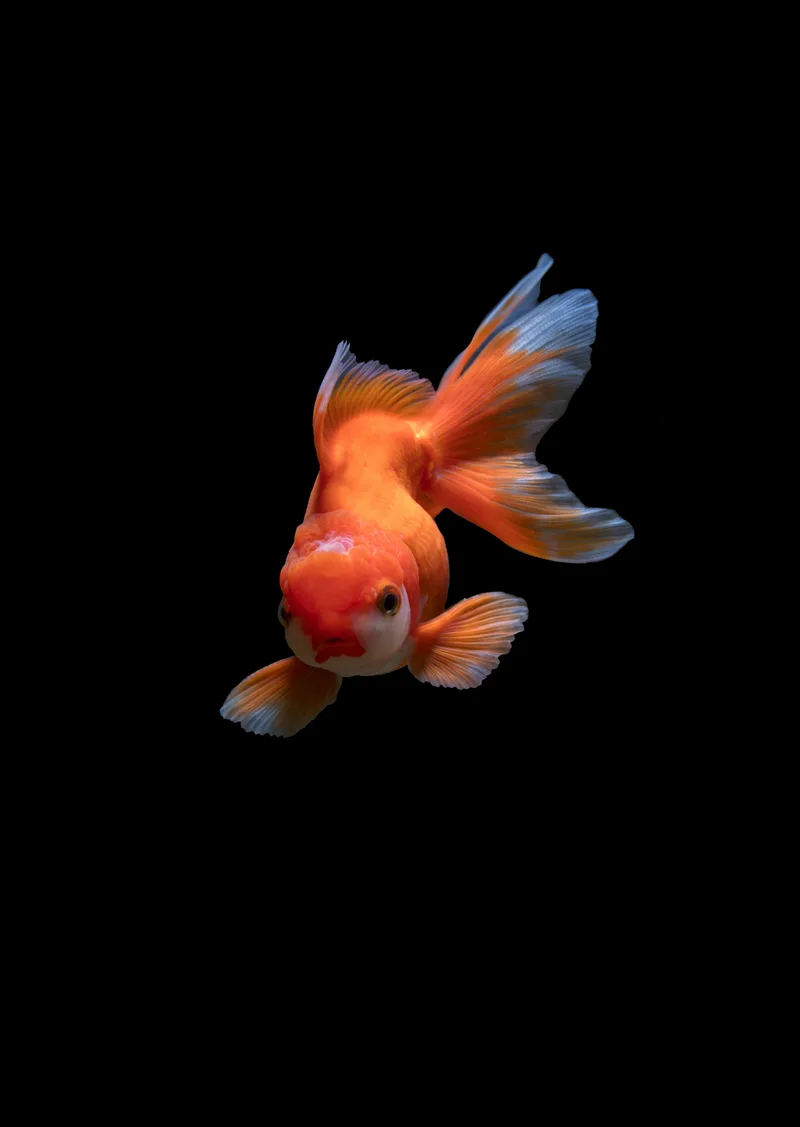
The slim, single-tailed goldfish at the pet store and the round, split-tailed one in the tank next to it are the same species, Carassius auratus, living two very different lives. The slim ones (commons, comets, shubunkins) are pond-scale fish that reach 25 to 35 cm (10 to 14 in) and routinely live 15 to 20 years. The round ones (fantails, orandas, ryukins, black moors) stay half that size, swim slower, bloat more easily, and rarely make it past ten. The body shape is what splits them, and once you can read the shape on sight you can tell what kind of tank, water, and tank mates the fish in front of you actually needs.
Do They Need Different Tanks and Water Conditions?
Yes, and the gap is large enough that a tank that suits one will be wrong for the other.
A single adult common, comet, or shubunkin needs 75 gallons or more as an indoor tank, and most keepers end up moving them to a pond because they grow to 25 to 35 cm (10 to 14 in). They tolerate cold water down into the low 50s°F (around 10°C), handle strong filter flow without trouble, and will swim laps in a tank all day. A pond that freezes over at the top in winter is fine for them as long as there's depth and an unfrozen hole for gas exchange.
Fancies are a different animal in the same skin. Start at 20 gallons for the first fantail, oranda, or ryukin, add about 10 gallons for each additional fish, and keep the temperature in a narrower band of roughly 65 to 74°F (18 to 23°C). Their round bodies are clumsy in a current, so tune your filter for gentle flow or add a spray bar to break up the outflow. They don't belong in a pond in most climates and they don't belong in a tropical community tank either, because both goldfish groups are coldwater fish that will stress out above 75°F (24°C).
Neither fancy nor common belongs in a bowl. A bowl holds too little water to buffer temperature and waste, and even a small common will outgrow it within months.
| Feature | Common / comet / shubunkin | Fancy (oranda, ryukin, fantail, black moor, etc.) |
|---|---|---|
| Minimum tank (per fish) | 75 gallons indoor, pond preferred | 20 gallons first fish, +10 per extra |
| Temperature range | 50 to 75°F (10 to 24°C) | 65 to 74°F (18 to 23°C) |
| Adult size | 25 to 35 cm (10 to 14 in) | 15 to 20 cm (6 to 8 in) |
| Flow preference | Strong flow fine | Gentle flow, no strong current |
| Pond-suitable? | Yes | No (in most climates) |
| Typical lifespan | 15+ years, sometimes 20 to 30 | 5 to 10 years |
Why Are Fancy Goldfish More Fragile?
The round body is the answer. Every fancy variety is the result of over a thousand years of selective breeding, starting in China and continuing in Japan, for shape rather than for function. Breeders selected for a shorter spine, a deeper and more egg-shaped body, a fanned or split tail, and in some lines extra features like a raspberry-textured head growth (the wen on an oranda), sideways-projecting telescope eyes, fluid-filled eye sacs (bubble eyes), or no dorsal fin at all (ranchus, lionheads).
A shorter body has to house the same length of intestine and the same swim bladder as a common goldfish, just folded into less space. That crowding changes how the swim bladder sits and how the gut clears food, which is why fancies are prone to the cluster of problems keepers call "swim-bladder disorder": a fish floating sideways, sinking to the bottom, or swimming with its head angled down. It's also why fancies bloat easily and respond badly to dry flake food that sits and expands in the stomach.
Commons kept the original body plan and, with it, the lifespan. A healthy common in a pond or large tank routinely lives 15 years or more, and the oldest documented ones have pushed into their twenties or even thirties. A fancy rarely makes it past ten, and the more extreme shapes often land closer to five. The shape also costs them resilience. A fancy that survives a ten-degree temperature swing or a spike in ammonia is having a bad week. A common in the same conditions shrugs it off.
None of this is a judgment on breeding. It is the mechanics: a fancy goldfish is a fish that people shaped, and the shape comes with real trade-offs. Knowing the trade-offs is what lets you keep one well.
Did you know? Feeding fancies sinking or pre-soaked gel food instead of dry flakes that float on the surface cuts swim-bladder problems dramatically. The round body plan makes it easy to gulp air at the surface along with the food, and that trapped air in the gut is what tips them over onto their side. Soaking pellets for thirty seconds before dropping them in, or using a sinking formula, keeps the fish eating below the surface where it stays upright.
Can You Keep Fancies and Commons Together?
It is almost always a bad idea, even though they are the same species. A fast, constantly moving comet will reach the food first every single time, and a full-grown common can hit 30 cm (12 in) while the fantail next to it tops out around half that. The size mismatch turns into a feeding-time mismatch, which turns into slow starvation for the slower fish.
Bullying isn't exactly the right word for what commons do either, but the effect is the same. A common isn't aggressive in the sense a cichlid is. It is just relentlessly active, and a slower fancy reads that activity as pressure and stops eating. Fancies with reduced vision (bubble eyes, telescope eyes, celestial eyes that point straight up) lose any chance of competing because they can't see food that doesn't land directly in front of them.
The working rule that experienced keepers use is not "same species, same tank." It is "same body type, same tank." Keep commons with commons, comets with comets, fantails with orandas and ryukins, and the most delicate fancies (ranchus, bubble-eyes, celestials) with their own kind or alone. A handful of mixed-variety combinations can still share a tank safely when body shapes and swimming speeds are close enough. The goldfish pairings that hold up at feeding time are narrower than a first look at the fish store suggests.
Which One Is Right for Your Setup?
Match the fish to the water you can actually give it.
If you have or want an outdoor pond, or a large indoor tank at 75 gallons or more, and you want a fish that will live 15 years or longer with less day-to-day worry, a common, comet, or shubunkin is the honest answer. These are pond-scale fish at heart, and they reward being given the room to grow into what they are.
If you have an indoor tank in the 20 to 40 gallon range, want a fish that stays smaller and is easier to watch up close, and are willing to feed sinking or pre-soaked food and keep stable water, a fantail, ryukin, or oranda is the better fit. The fantail is the most forgiving of the three and a sensible first fancy. If you are new to goldfish, start there. A beginner-friendly goldfish pick that stays small and eats well usually comes back to the fantail for the same reasons.
The more extreme fancy shapes (bubble-eye, celestial, pearlscale, the dorsal-less ranchus and lionheads) need steadier hands. They eat slowly, see poorly, and handle water-quality mistakes badly. Skip them as a first goldfish and come back once you've kept a fantail alive and healthy for a year. Every named goldfish variety you'll find at a fish store falls into one of these two body groups, so once you can tell a common body from a fancy you can place any new fish on sight.
The deeper thing to hold in your head is that the common and the fancy are the same species living two different lives. The common is the goldfish as it started out, a hardy coldwater cyprinid that belongs in pond-scale water and still remembers how to live there. The fancy is the goldfish that people shaped over a thousand years into something smaller, rounder, slower, and dependent on the stable indoor tank they were bred for. Neither is better than the other. They are answers to different questions, and once you know which one you are looking at, you know what kind of home it actually needs.