What not to put in a goldfish tank?
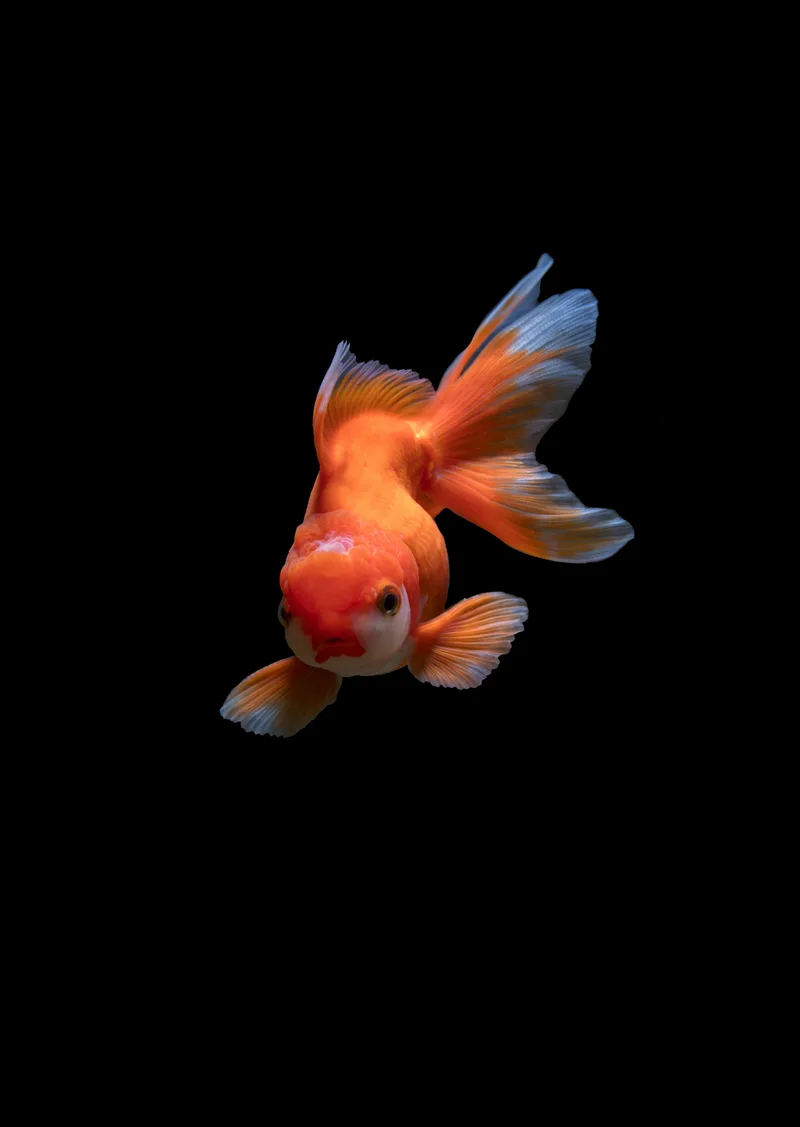
A bowl, a tropical heater, a few neon tetras for company, the bag of pretty crushed-glass gravel from the front of the shop, a soft-leaved plant, a tub of floating flakes, and tap water straight from the kitchen. That's the most common goldfish setup in the world, and most of it shouldn't be in the tank. The list of things to leave out is short: bowls and any tank under 20 gallons, a heater set to tropical temperatures, tropical tank mates, sharp or swallowable substrate, decor with narrow gaps or pointed corners, most live plants, floating-only food (for fancies), and untreated tap water. The reason every item is on that list is the same one fact, written out eight times: goldfish are big, cool-water, slow-moving, plant-grazing fish that produce more waste than almost anything else you can keep in a home tank.
A bowl or any tank under 20 gallons
This is the most common goldfish mistake by a wide margin, and it is rarely about swimming room. A single fancy goldfish needs at least 20 gallons (75 L), with another 10 gallons for each additional fish. A common or comet, which can grow to 8–12 inches, needs a 75-gallon (285 L) tank or an outdoor pond.
The reason is bioload. Goldfish produce more waste than almost any other fish you can keep in a home tank. In a small volume of water, the ammonia and nitrite they generate climb fast enough to burn the gills inside a single afternoon. The fish that "lived a few weeks" in a bowl on the kitchen counter usually died from invisible water chemistry, not from anything obvious.
A bowl fails at the chemistry level long before it fails on swimming room, which is why even a small upgrade to a 5-gallon doesn't really help. The working numbers are 20 gallons for one fancy, 30 for two, and 75 for a single common or comet.
A heater set to tropical temperatures
Goldfish are coldwater fish. They want 65 to 72°F (18 to 22°C), which most rooms in a normal home already sit in without help. A standard tropical heater set to 78°F speeds the fish's metabolism, shortens its lifespan, and is especially hard on fancy varieties whose bodies aren't built for the extra demand.
There is one exception. If you keep the tank in a cold room, an unheated garage, or a basement that drops below 60°F in winter, a heater set as a low safety floor (around 60°F) keeps the water from getting truly cold. The mistake isn't using a heater at all. The mistake is treating a goldfish like a tetra or a betta and dialing the heater up to tropical numbers.
In a typical home that stays above 65°F year-round, a goldfish tank doesn't need a heater at all, which is the exact opposite of what tropical-fish habits would tell you.
Tropical or temperature-mismatched tank mates
Neon tetras, guppies, bettas, angelfish, and most of the fish people picture when they think "community tank" can't share water with goldfish. Those species need 76 to 80°F to keep their immune systems running, and at goldfish temperatures their slime coat thins, color fades, and infection follows.
Going the other way is the same problem in reverse. Pushing the tank to 78°F to suit the tropical fish stresses the goldfish, and the goldfish are the ones who lose first.
A few species do actually share goldfish parameters: white cloud mountain minnows (Tanichthys albonubes), hillstream loaches, and some dojo loaches all sit happily in 65 to 72°F water. They are options, not defaults. For most casual setups, a goldfish-only tank is the calmer answer.
Most of the standard community fish, including bettas, angelfish, and the corydoras catfish people often add as cleaners, don't tolerate goldfish-temperature water. The few species that genuinely do share goldfish parameters, white cloud minnows and a couple of cool-water loaches, need the same 65 to 72°F range and don't mind the messier water.
Sharp, abrasive, or swallowable substrate and decor
Goldfish forage along the bottom. They pick up gravel, work it through their mouths, and spit it back out. That is normal goldfish behavior, and it makes two kinds of substrate dangerous.
The first is gravel small enough to swallow. A pebble that fits past the throat is a real choking and impaction risk, and goldfish are not careful about what they pick up. The second is anything with sharp edges: crushed-glass decorative gravel, jagged lava rock, or aquarium ornaments with rough corners. These scrape the inside of the mouth and the soft skin under the belly when the fish is digging.
The safe options are bare-bottom (popular with serious goldfish keepers because waste siphons off in seconds), smooth fine sand, or river pebbles too big for the fish to fit in its mouth. The quick rule when you're standing in the substrate aisle: if it would fit and the edges aren't smooth, leave it on the shelf.
A bare-bottom tank or a layer of pool-filter sand sidesteps the whole problem and makes weekly cleaning quicker as a bonus.
Decorations with narrow gaps or pointed corners (especially for fancy varieties)
Fancy goldfish are not built to dodge things. Telescope, black moor, bubble eye, and celestial varieties have eye sacs that protrude from the head. Ryukin and oranda have trailing tail fins. Most fancies have round, compact bodies that don't pivot quickly. A narrow castle window, a sharp plastic-plant edge, or a hole in a decoration that the fish enters but doesn't quite fit through becomes a fin tear or an eye injury the fish never sees coming.
Stick to smooth, large, open-shape decor: driftwood with no jagged ends, large smooth rocks, ceramic ornaments with rounded openings the fish can fit through completely or skip entirely. Common and comet goldfish tolerate sharper decor better, but the same rule still saves them from torn fins.
Did you know? Bubble-eye goldfish can rupture their fluid-filled eye sacs against decor, and once popped, the sacs don't grow back. The fish recovers, but lopsided. It's one of the clearest cases in the hobby of selective breeding outrunning what the body can keep safe.
Most live plants
Goldfish graze. Anything soft-leaved (elodea, cabomba, hornwort, vallisneria) gets shredded and eaten within days, and rooted plants get uprooted while the fish digs through the substrate. The short list of plants that survive a goldfish tank is anubias, java fern, and bolbitis, because their leaves are tough enough that goldfish lose interest and try the algae on the glass instead. Even those three get uprooted unless you glue or tie them to wood or rock.
The honest trade-off: you can have a heavily planted tank, or you can have a goldfish tank, and rarely both. Plastic plants are a fair compromise if you want greenery without the war of attrition, but go with silk over hard plastic so the leaves don't catch fancy fins.
The three plants that survive long-term, anubias, java fern, and bolbitis tied to driftwood, still get nibbled at first and only earn their place once the goldfish move on. The grazing itself is normal foraging behavior the fish keeps up even when it's well-fed, which is why no amount of extra pellets stops it.
Floating-only food
This one matters mainly for fancy goldfish. Their compact, round body shape pushes the swim bladder into a tight space, and gulping air at the surface while eating floating pellets is the most common cause of buoyancy problems. A fancy goldfish floating sideways or stuck on the bottom is usually a feeding issue, not a disease.
The fix is sinking pellets, or pre-soaked food that drops below the surface before the fish gets to it. Common and comet goldfish handle floating food without trouble, but for the reader most likely to be asking this question (someone with a single fancy in a 20-gallon at home), default to sinking. Blanched veggies are a useful weekly add as well: a deshelled green pea or a slice of zucchini softened in hot water gives the gut something to push against and helps motility.
A goldfish does best on a sinking-pellet base with blanched vegetables a couple of times a week, fed in amounts the fish can finish in about two minutes.
Untreated tap water
Tap water in most municipalities is treated with chlorine or chloramine. Both kill the bacteria living in the filter (the ones doing all the work of keeping ammonia and nitrite at zero) and burn fish gills on contact. A bottle of dechlorinator (any aquarium-brand water conditioner, sometimes labeled "tap water conditioner") handles it in 60 seconds.
The next mistake from there is reaching for bottled or distilled water instead. Goldfish need the minerals (GH and KH) that ordinary tap water carries, and stripping those minerals out crashes the pH and leaves the fish in chemically unstable water. The right answer is plain tap water plus dechlorinator, dosed to the volume you're adding.
Most municipal water is perfectly fine for goldfish once it's been through a dechlorinator, even when it tastes heavily chlorinated to you. The temptation to substitute bottled or distilled water during a water change backfires because stripped-out water can't hold a stable pH.
The one rule under all of these
The whole list collapses into four traits.
Goldfish are big. They are cool-water fish. They move slowly. They graze on plants. Every "don't" above is a specific case of stocking against one of those four. Bowls fight the size and the waste it produces. Heaters and tropical tank mates fight the cool water. Sharp decor and narrow gaps fight the slow movement. Soft plants fight the grazing.
Once those four traits are in your head, the list itself stops being useful. The next time you're in the pet store and you pick something up wondering whether it belongs in your tank, you already know how to answer. That's the goal here. The article is most useful when you no longer need it.