What are the dos and don'ts of keeping goldfish?
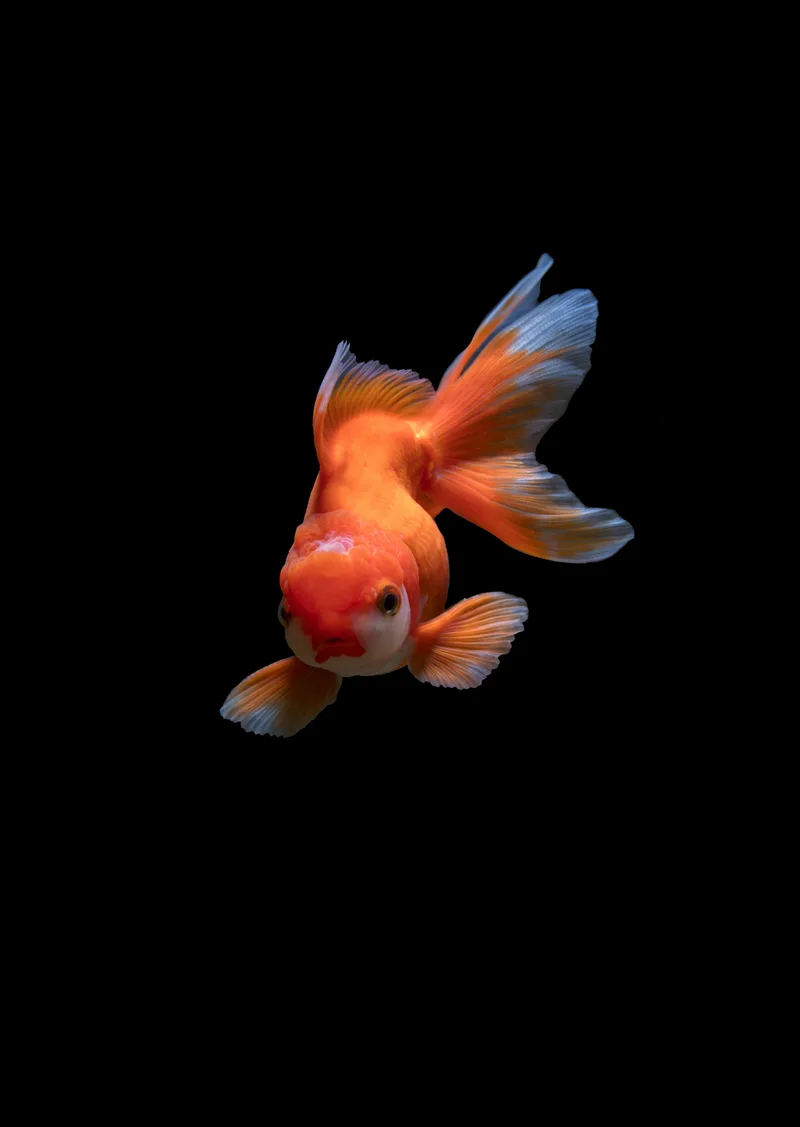
A goldfish is supposed to live 10 to 15 years, and the fairground-bowl version of the species almost never makes it past two. The fish isn't fragile. The setup is wrong. Six rules do almost all the work of fixing that: get the fish out of the bowl into the right size tank, cycle the tank, keep the water cool, over-filter for the bioload, change 25 to 30 percent of the water every week, and feed sparingly with sinking food. The strange one (most care guides get it backwards) is the temperature rule, because goldfish are coldwater fish, not tropical, and the heater most new keepers reach for is quietly cutting their fish's life in half.
Don't keep them in a bowl, and size the tank for the variety
A goldfish bowl has no filter, no stable temperature, and not enough water to dilute waste. Goldfish are heavy waste producers, much heavier than a tropical fish of the same size, so a bowl turns into a poison-spike machine within days. The fix is a real tank, sized for the variety of goldfish you actually have.
There are two broad varieties, and they need very different footprints. Fancy goldfish (Oranda, Ryukin, Fantail, Black Moor, Telescope) are short, round-bodied, slow swimmers that top out around 6 to 8 inches. Common goldfish, comets, and shubunkins are streamlined, long-bodied, fast swimmers that routinely hit 10 to 14 inches and live more like small carp than ornamental fish.
| Variety | Minimum tank size | Why |
|---|---|---|
| Fancy (Oranda, Ryukin, Fantail, Black Moor, Telescope) | 20 gallons for the first fish, +10 gallons per additional | Adults reach 6 to 8 inches, slow swimmers, lower oxygen demand than commons |
| Common, Comet, Shubunkin | 75+ gallons indoors, pond ideal | Adults routinely reach 10 to 14 inches, fast swimmers, need open swim length |
The "fish grow to the size of the tank" myth is one of the most persistent in the hobby and it isn't true. What actually happens is that the fish stunts: the body stops growing on the outside while the internal organs keep going, the spine deforms, and the fish dies young of organ failure. A stunted goldfish is not a small healthy goldfish. It is a sick one.
A useful rough check: the tank should hold roughly 10 gallons per inch of adult goldfish, which is why a single 12-inch comet really does need a 75-gallon tank rather than a 30 that "looks big enough" while the fish is still small.
Do cycle the tank before the fish goes in
Cycling is the silent killer most casual owners have never heard of, and it is the single most common reason a brand-new tank kills its fish in the first month. The short version: a healthy aquarium needs a colony of beneficial bacteria living in the filter that converts the goldfish's waste from ammonia (toxic) into nitrite (also toxic) into nitrate (mostly harmless, removed by water changes). A new tank doesn't have that colony yet, so the fish poisons itself with its own waste while the bacteria slowly grow in.
Did you know? A goldfish doesn't smell its waste building up the way you'd smell a bin going off. Ammonia is invisible, odorless to a casual sniff, and at 0.25 ppm (already enough to burn a fish's gills) the water in the tank still looks clean. That gap between what the keeper sees and what the fish is breathing is exactly what cycling closes.
The right move is to cycle the tank fishless, before the fish comes home, by adding a small dose of pure ammonia daily and waiting four to six weeks until the bacteria can process it. If your fish is already in an uncycled tank, you can run a "fish-in cycle" instead: water-change your way through it.
What that looks like in practice:
- Get a liquid ammonia / nitrite / nitrate test kit. Test strips drift fast and miss the low end, which is the range that matters.
- Test the water daily for the first 4 to 6 weeks.
- Whenever ammonia or nitrite reads above 0.25 ppm, do a water change big enough to bring it back down (often 30 to 50 percent).
- The cycle is finished when ammonia and nitrite both read zero and nitrate is climbing.
Once the cycle is in, your weekly water change will keep the nitrate down and the bacteria do the rest on their own.
Don't add a heater, goldfish are coldwater fish
Goldfish are not tropical fish. They are descended from temperate East Asian carp and they thrive between 65 and 72°F (18 to 22°C). A heater set to a tropical 76 to 80°F is one of the most common quiet mistakes in the hobby, and it is doing real damage even when the fish looks okay.
Warmer water holds less oxygen, which already matters more for goldfish than for most species because of their high waste output. It also raises their metabolism, so the fish eats more, produces more waste, ages faster, and burns through its lifespan in roughly half the time. A goldfish kept at 78°F often makes it five years; the same fish at 68°F often makes it fifteen.
So leave the heater out. Room temperature does the job. The only exception is a room that drops below 60°F all winter, where a heater set to a coldwater range (around 65°F) just keeps the tank from getting colder than the fish handles well. The default, though, is no heater.
Did you know? Goldfish were domesticated in China from Prussian carp more than a thousand years ago, originally kept in outdoor ponds that froze at the surface in winter. Their bodies are still tuned to that life. Their metabolism slows as the water cools, which is part of why they routinely live ten to fifteen years in a cool tank and burn out in five in a warm one.
Do over-filter for the bioload, not the tank size
Filter ratings on the box assume tropical community fish: small tetras, a few cories, a couple of guppies. Goldfish produce roughly two to three times the waste of an equivalent-sized tropical fish, so a filter "rated for 30 gallons" is not actually rated for 30 gallons of goldfish.
The working rule is to pick a filter rated for at least double your actual tank volume, or run two filters in parallel. A 40-gallon goldfish tank wants an 80-gallon filter, or a 40 plus a 30. Running two filters has a useful side benefit: when one needs cleaning or breaks, the other keeps the cycle alive.
What you are buying with the extra capacity is biological filtration, the volume of media (sponges, ceramic noodles, bio-balls) that the bacteria colony can grow on. Mechanical filtration (catching debris) and chemical filtration (carbon) are nice to have, but the bacteria are doing the actual life-support job.
One thing to watch is flow. The filter should turn the tank over four to five times an hour, but the current it puts out shouldn't push the fish around the tank. Fancy varieties especially, with their long flowing fins, prefer a gentler current than commons and comets do. If your oranda is constantly fighting the flow to stay in place, baffle the outlet with a sponge or aim it at the glass.
You don't really need to worry about over-oxygenating a goldfish tank with a strong filter; oxygen saturates at the surface and the fish takes what it needs, so if your oranda is fighting the current, the fix is the flow direction, not the air going into the water.
Do change 25 to 30 percent of the water every week
Even a well-cycled, well-filtered goldfish tank accumulates nitrate and dissolved organics fast, because the bioload is just that high. The single most consistent thing a goldfish keeper can do to add years of life is a 25 to 30 percent water change every week, with dechlorinated tap water at roughly the same temperature as the tank.
The mechanics are simple. Use a gravel siphon to vacuum the substrate while you drain, which pulls out trapped waste at the same time. Refill with tap water that has had a dechlorinator (Seachem Prime, API Tap Water Conditioner, anything similar) added at the dose on the bottle. Match the temperature roughly with the back of your hand. That is the entire job.
Skip the romance of the "self-sustaining" or "balanced" tank. Planted shrimp tanks can sometimes get away with less. A goldfish tank can't. The fish is too big, eats too much, and produces too much waste for the system to balance itself, no matter how many plants you add.
Tap water treated with a dechlorinator is safe for goldfish in almost every municipal supply, with the exceptions being well water that's high in nitrate or copper, and a few towns where the supply is dosed with chloramine instead of chlorine (chloramine needs a conditioner like Prime, plain dechlorinator alone won't break it down).
Don't overfeed, and do use sinking food
These two rules are inseparable, which is why they live in the same section. Goldfish will keep eating long after they're full. They evolved as opportunistic foragers in slow ponds where food was scarce, and "I'm not hungry" is not an instinct they have. Undigested food is also the fastest way to spike ammonia in a freshly cycled tank.
The rule is once or twice a day, only what the fish finishes in one to two minutes. Anything still floating after two minutes is too much. A goldfish that looks "always hungry" at the front glass is not actually starving. It is begging, and the right thing to do is ignore it.
The food itself matters as much as the amount. Use sinking pellets, or pre-soak floating flakes in tank water for a minute before they go in. Fancy goldfish especially gulp air at the surface chasing floating flakes, and that swallowed air ends up in the swim bladder, which causes the upside-down or sideways floating that sends new keepers into a panic.
Did you know? Goldfish are physostomes, which means they have a small duct connecting their swim bladder directly to their gut. Most fish don't. That duct is why a swallowed bubble of air actually shifts a goldfish's buoyancy: an oranda that gulped flakes at lunch can be tipping sideways an hour later. A sinking pellet sidesteps the whole problem.
A few times a week, swap out a pellet meal for blanched zucchini, deshelled peas, or spinach. Fiber helps digestion and the variety covers the gaps a pellet diet has. Frozen bloodworms once a week are a treat, not a staple.
The rule under all the rules: build for a fish that lives 15 years
Every rule on this list is really one principle. A goldfish is a long-lived, large-bodied, high-waste, coldwater fish that was never adapted for a small warm container. When the setup matches what the fish actually is (cool, big, well-filtered, regularly maintained, fed with restraint), the goldfish takes care of the rest, and routinely lives well into its teens.
Most goldfish that die young didn't die because they were unlucky or fragile. They died because the tank was built for a different fish: a small tropical that doesn't need 75 gallons, doesn't mind 78°F, eats less, and produces less waste. Get the setup right for the goldfish you actually have, and you stop having a goldfish problem. You just have a goldfish.