What do I need to put in a goldfish tank?
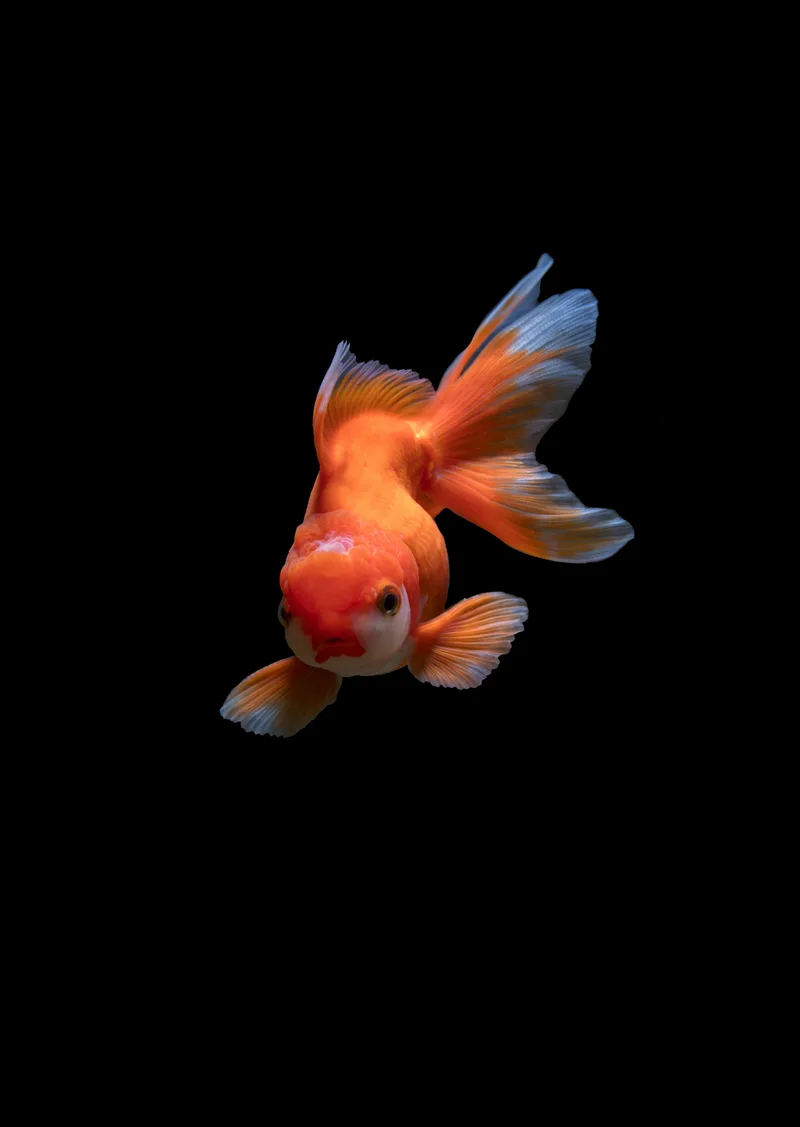
A goldfish setup needs a tank far bigger than people expect, a filter rated well above that tank's size, a choke-safe substrate, hardy plants or smooth decor for cover, water conditioner, and a liquid test kit. It does not need a heater. The thing almost every beginner checklist gets wrong is treating a goldfish like a tropical community fish, when in gear terms it's closer to the inverse: bigger volume, stronger filter, colder water, and substrate sized so the fish can't swallow it.
A Tank That's Bigger Than You Think
Tank size is the one choice that decides whether everything else on the list will work. A single fancy goldfish (orandas, ryukins, telescopes, anything with the rounded body and twin tail) needs at least 20 gallons (75 L), with another 10 gallons for each additional fancy. A single common or comet, the slim torpedo-shaped goldfish from the feeder tank, needs 75 gallons (285 L) or more, because they keep growing into adult bodies that are 8 to 12 inches long and built to swim hard.
Bowls and 5-gallon tanks fail for three connected reasons. Waste concentrates almost instantly because there is no volume to dilute it, so ammonia spikes between water changes. Surface area is too small for the oxygen exchange a high-metabolism fish needs. And the fish cannot grow into its adult body, which leads to the stunted, hunched, short-lived goldfish most people have seen in pet stores.
If your tank meets the goldfish-specific size requirements, the rest of this list becomes possible. If it doesn't, none of the other gear will save the fish.
A Filter Rated Well Above Your Tank Size
Goldfish produce roughly three times the waste of a tropical fish of the same size, so the filter on a goldfish tank has to be sized for the bioload, not the volume. The working rule is to pick a filter rated for at least double the tank's gallons in turnover per hour. A 40-gallon tank wants a filter rated for 80+ gallons. A 75-gallon tank wants two filters or one canister sized for 150+.
The picks that actually hold up are canister filters, oversized hang-on-back filters (Aquaclear 70 or 110 on a smaller tank), or a sponge filter paired with a stronger main filter. Sponge filters alone are fine for fry or quarantine but are rarely enough as the sole filter on a stocked goldfish tank.
Underpowered filtration is the most common reason beginner goldfish die. The tank looks clear, the fish looks fine, and the ammonia or nitrite reading creeps up between water changes until the gills start to fail. An oversized filter sized for a goldfish bioload buys margin against this exact failure.
Substrate That Won't Choke Them
Three substrates are safe for goldfish: bare-bottom, fine sand, or smooth river stones too large to fit in the fish's mouth. The one to avoid is the standard pea-sized aquarium gravel sold for community tanks. Goldfish forage with their mouths, picking gravel up and spitting it back out, and pebbles in the 5 to 15 mm range get lodged in the throat. The risk is highest in fancies, whose deep, compressed bodies make the choke harder to clear.
Fine sand (pool filter sand or play sand, washed) is the most natural-looking option, and the fish will sift through it the way they would sift through silt in the wild. It also supports anubias and java fern roots if you decide to add plants. Bare-bottom looks clinical but makes waste removal trivial, which is why grow-out tanks and breeder setups often skip substrate entirely.
For what to put at the bottom of a goldfish tank, the size of the individual grain or stone matters more than the material itself. Anything finer than a grain of rice or larger than a marble will pass safely; the danger zone is everything in between.
Plants and Decor for Cover, Not Decoration
Goldfish are intelligent and curious, and they benefit from cover the same way most fish do, but they will eat or uproot almost any plant you put in front of them. The few that survive a goldfish tank are tough-leaved species attached to wood or rock rather than planted in substrate: anubias, java fern, hornwort (which floats and grows fast enough to outpace nibbling), and large amazon swords. Tying or gluing the rhizome to driftwood keeps the fish from yanking the plant out by the base.
For decor, pick smooth caves, rounded driftwood, and large stones. Anything sharp, anything with narrow gaps, anything with rough edges will catch a fancy goldfish's flowing fins and tear them. Plastic plants with stiff edges are a common offender. If you can run your finger across a piece of decor and feel a sharp point, it doesn't belong in a goldfish tank.
There are a handful of plants that survive a goldfish tank, and the common thread is that they're all robust enough to take the abuse and rooted in something the fish can't dig up.
Water Conditioner and a Test Kit
These are the two consumables every goldfish tank runs on. Water conditioner (Seachem Prime, API Tap Water Conditioner, or any equivalent) neutralizes the chlorine and chloramine in tap water before it goes into the tank. Skip it on a single water change and you can wipe out the beneficial bacteria in the filter, which means an ammonia spike a few days later. Treat every drop of water that goes in.
The test kit is how you know what's actually happening in the water. Use a liquid drop kit, not test strips. The API Freshwater Master Kit is the standard choice and will last most owners over a year. A goldfish tank should be tested weekly during the first two months and then whenever something looks off.
Did you know? A test kit is what tells you the tank is "cycled." The moment ammonia and nitrite both read zero while nitrate reads above zero is when the bacterial colony in the filter has caught up with the bioload. There is no other way to know. The fish doesn't show you, the water doesn't smell different, and the filter doesn't behave any differently. The numbers are the only signal.
A basic kit measures four things, and each one tells you something specific about the tank:
- Ammonia. Toxic at any reading above zero. Spikes from feeding, from a dead fish, or from an overwhelmed filter. Should always read zero in a cycled tank.
- Nitrite. Also toxic, also should read zero. Nitrite shows up in the middle of the cycling process and during a "mini-cycle" if the filter takes a hit.
- Nitrate. The safe end product of the cycle. Drives how often you do water changes. Aim to keep it below 40 ppm in a goldfish tank.
- pH. Goldfish are flexible between 7.0 and 8.4. The number itself matters less than whether it's drifting, because a sudden swing usually means something else has gone wrong.
Together these turn "I hope the tank is fine" into "I know the tank is fine," which is the difference between fishkeeping and watching a fish slowly decline.
What You Should Skip: a Heater
The heater is the most common over-buy on a beginner goldfish list. Goldfish are coldwater fish. Their preferred range is 65 to 72°F (18 to 22°C), which is normal indoor room temperature for most homes. A heater set to tropical temperatures of 76 to 80°F speeds the goldfish's metabolism, accelerates aging, lowers the dissolved oxygen in the water (warmer water holds less), and shortens the fish's lifespan considerably.
If your room temperature stays between the low 60s and mid 70s year-round, you don't need a heater at all. The exception is a room that drops below 50°F in winter, where a small heater set to the low 60s prevents the water from getting cold enough to slow the immune system.
The same logic applies to airstones and bubblers. They're useful in a hot summer when oxygen drops, or as filter backup during a power outage, but they're not strictly required if the filter outflow creates surface movement. Surface agitation is what gets oxygen into the water; bubbles themselves contribute very little.
The simple answer to whether goldfish need a heater is no, not in a normal room. Cold-blooded fish that already prefer coldwater do not benefit from being warmed up to tropical temperatures, and the heater itself becomes a way to shorten their lives faster than the rest of the tank can save them.
Putting It All Together
Most generic "what you need for a fish tank" lists are written for a tropical community: a 20-gallon with neon tetras, a heater set to 78°F, an under-spec filter, and whatever decorative gravel matches the room. A goldfish tank is the inverse of almost every line in that list. Bigger volume, oversized filter, substrate chosen for safety rather than looks, no heater, plants and decor picked to survive the fish.
| Item | Goldfish-specific note |
|---|---|
| Tank | 20 gal minimum for one fancy, +10 gal per extra; 75+ gal for a single common or comet |
| Filter | Rated for at least double the tank's gallons per hour; canister or oversized HOB |
| Substrate | Fine sand, smooth large stones, or bare-bottom. Avoid 5–15 mm gravel (choke risk) |
| Plants/decor | Anubias, java fern, hornwort, amazon sword on hardscape; smooth caves; nothing sharp |
| Water conditioner | Every water change, no exceptions |
| Test kit | Liquid drop kit (not strips); ammonia, nitrite, nitrate, pH |
| Heater | Skip. Goldfish are coldwater, room temperature is the target |
| Bubbler | Optional. Useful in a hot summer or as filter backup |
The gear that goes into the tank on day one is what decides whether this fish lives two years or fifteen. A common goldfish in the right setup can outlive a dog. The same fish in the wrong tank will be dead in a season, not because anyone meant any harm, but because the checklist they were handed was written for a different animal.